
Ever wondered why some business owners lose their houses when...
 Business Studies2 wyświetleń·Zaktualizowano May 27, 2026·8 strony
Different Types of Business Organizations
1 / 8
1
of 8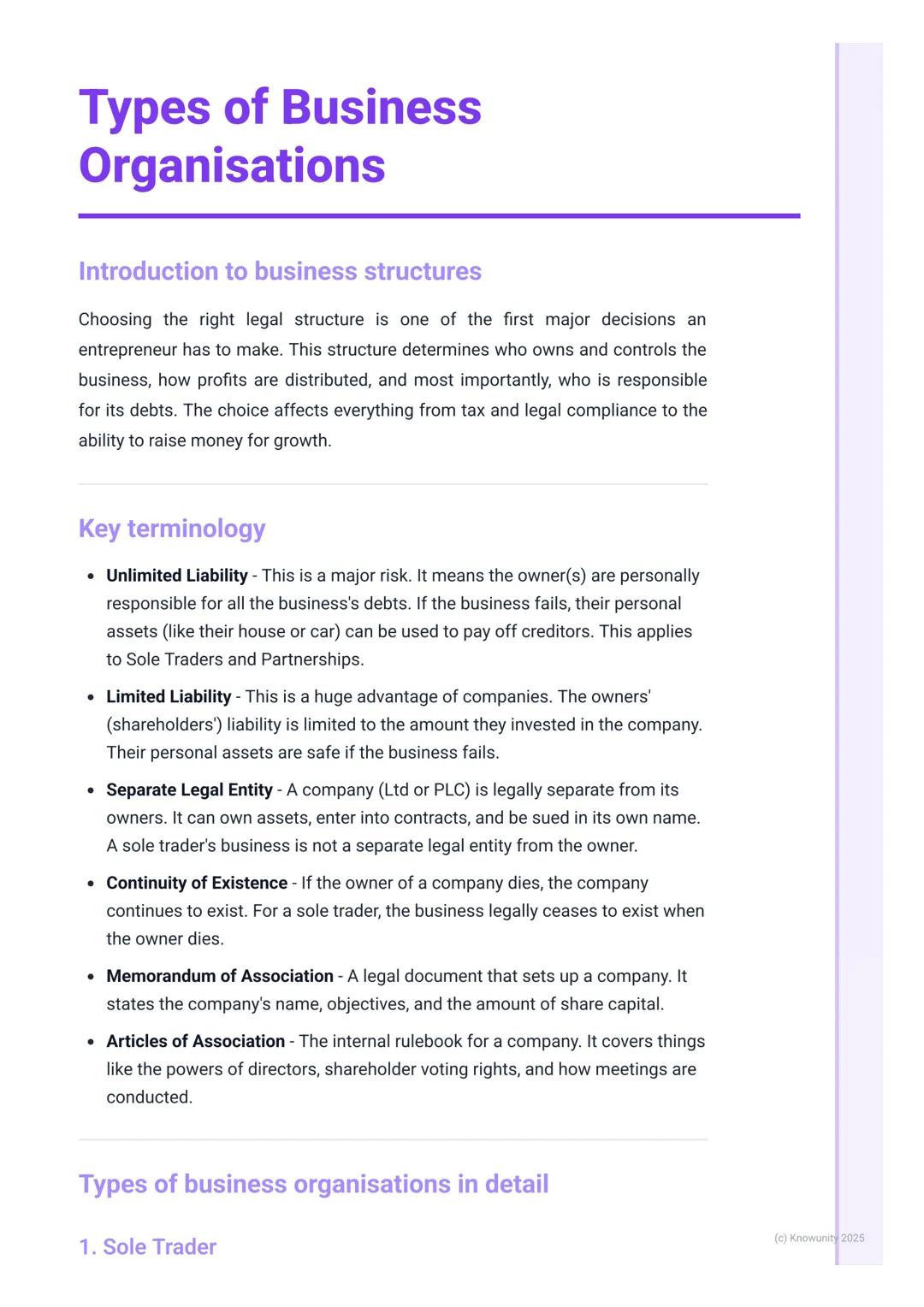
Business Structures and Key Terms
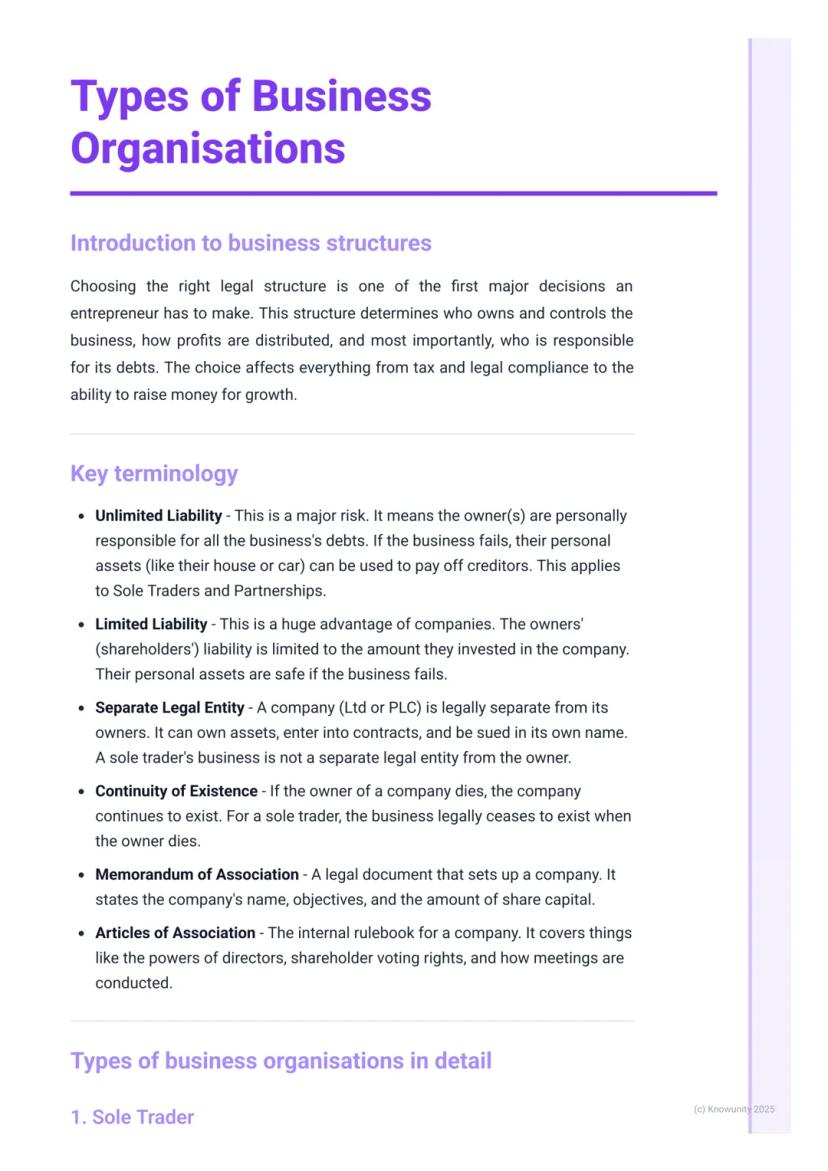
Understanding business structures starts with grasping a few crucial concepts that'll pop up in your exams constantly. The most important distinction you need to master is between unlimited and limited liability.
Unlimited liability means you're personally on the hook for all business debts - your house, car, and savings could be seized to pay creditors if the business fails. This applies to sole traders and partnerships, making them riskier options.
Limited liability is like a protective shield around your personal assets. If you own shares in a company, you can only lose what you invested - nothing more. Companies also enjoy separate legal entity status, meaning the business legally exists independently from its owners and can survive even if the owner dies.
Quick Tip: Remember that the Memorandum of Association sets up the company, whilst the Articles of Association act as its internal rulebook - think of them as the company's constitution.
2
of 8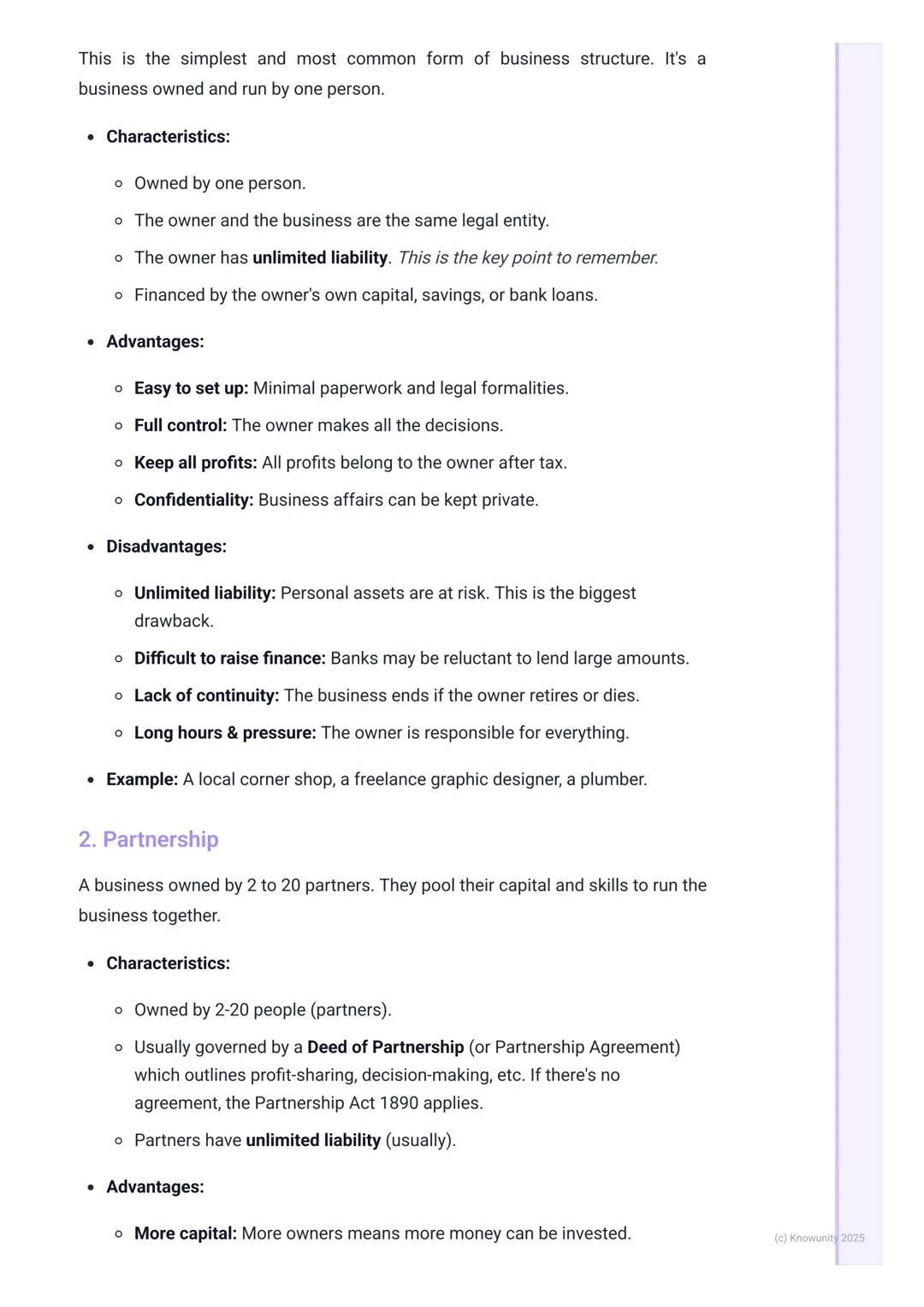
Sole Traders and Partnerships
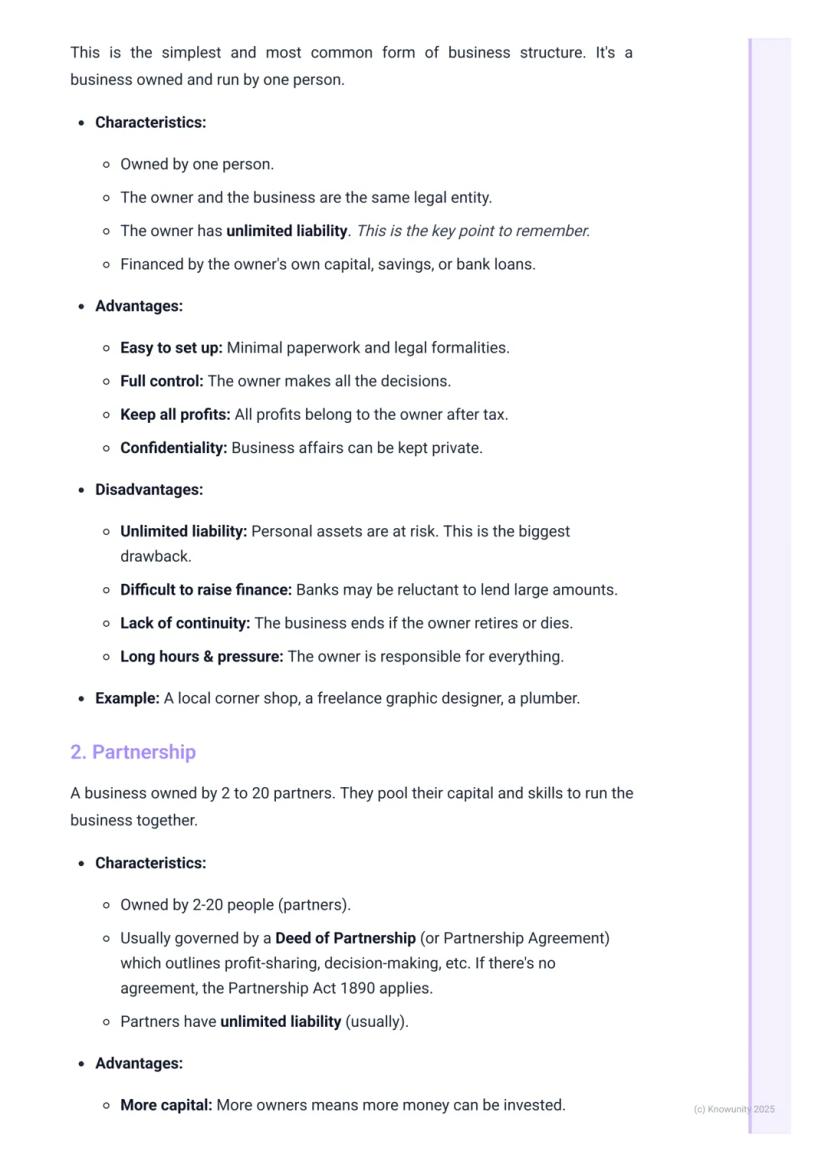
A sole trader is the simplest business structure - just you running the show. You'll find them everywhere, from your local corner shop to freelance graphic designers. The biggest advantage? You keep every penny of profit and make all decisions yourself.
However, unlimited liability makes this structure risky. If your business fails, creditors can come after your personal assets. Plus, raising finance is tough since banks are reluctant to lend large amounts to individual traders.
Partnerships involve 2-20 people pooling resources and skills. They're governed by a Deed of Partnership (or the Partnership Act 1890 if there's no agreement). Think of local solicitor firms or doctor surgeries - they need multiple experts working together.
The downside? All partners face unlimited liability, and you're responsible for debts created by other partners, even if you didn't agree to them. Decision-making also slows down when everyone needs to agree.
Remember: Both sole traders and partnerships lack continuity of existence - the business legally dies with the owner.
3
of 8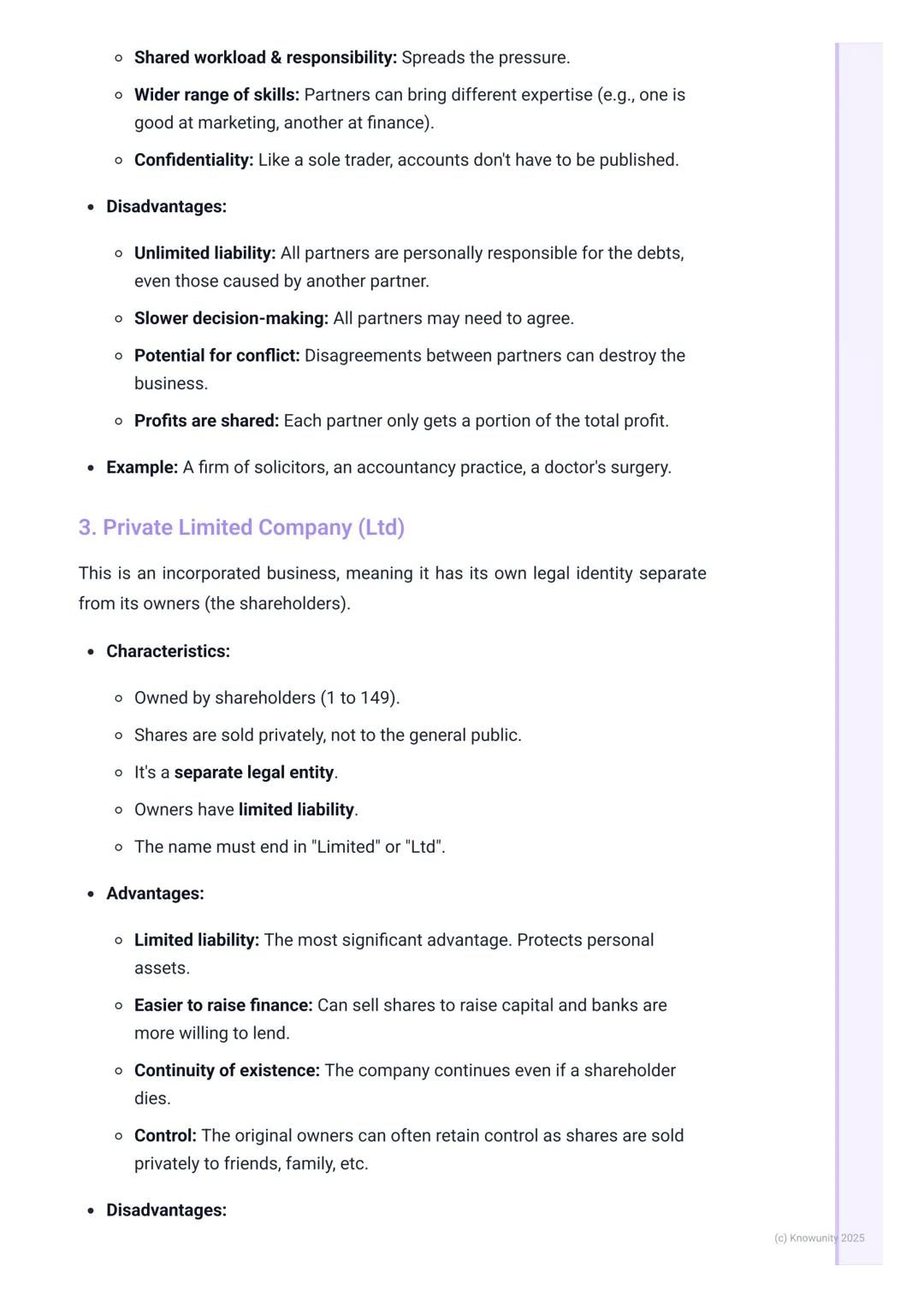
Private Limited Companies (Ltd)
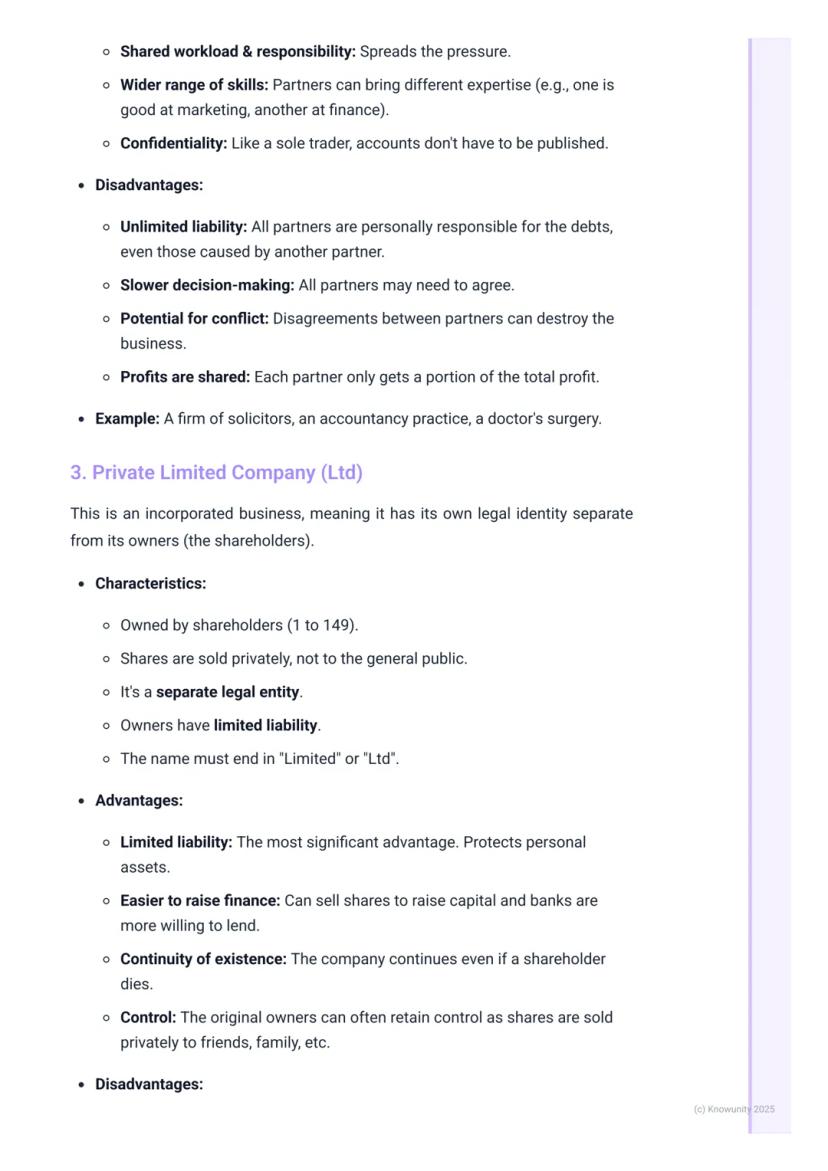
Private limited companies are where things get interesting for entrepreneurs who want protection without going fully public. These businesses are incorporated, meaning they exist as separate legal entities from their owners (shareholders).
The game-changer here is limited liability - your personal assets stay safe if the business fails. You can only lose what you invested in shares. This protection makes it much easier to raise finance, as banks trust companies more than individual traders.
Companies also enjoy continuity of existence - they keep running even if shareholders die. The original owners often retain control since shares are sold privately to friends and family, not random strangers.
The trade-offs include higher setup costs and complexity. You'll need to file Memorandum and Articles of Association with the Companies Registration Office (CRO), and your financial information becomes public record.
Real Example: Musgrave Group, which operates SuperValu and Centra, is Ireland's largest private limited company.
4
of 8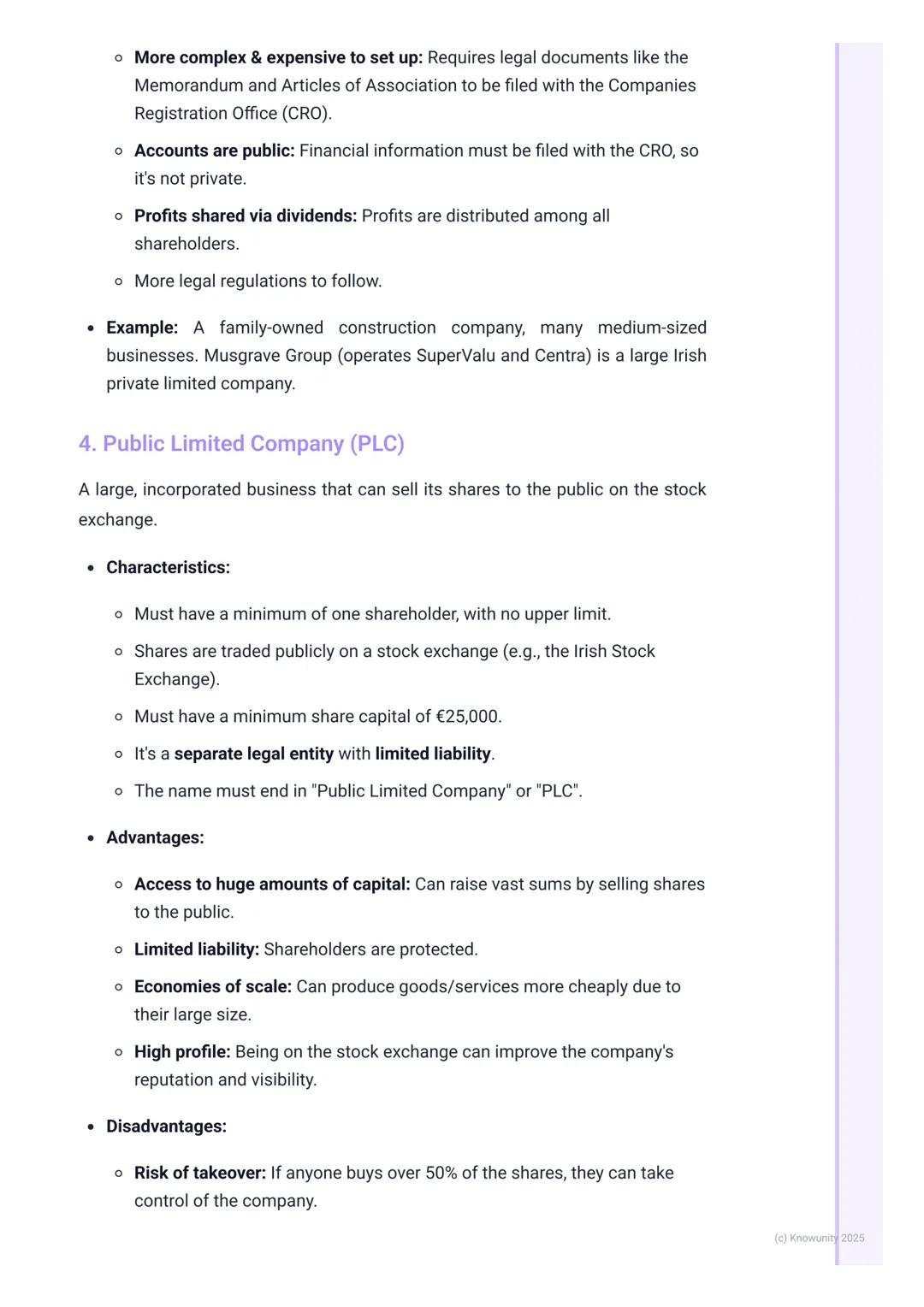
Public Limited Companies (PLC)
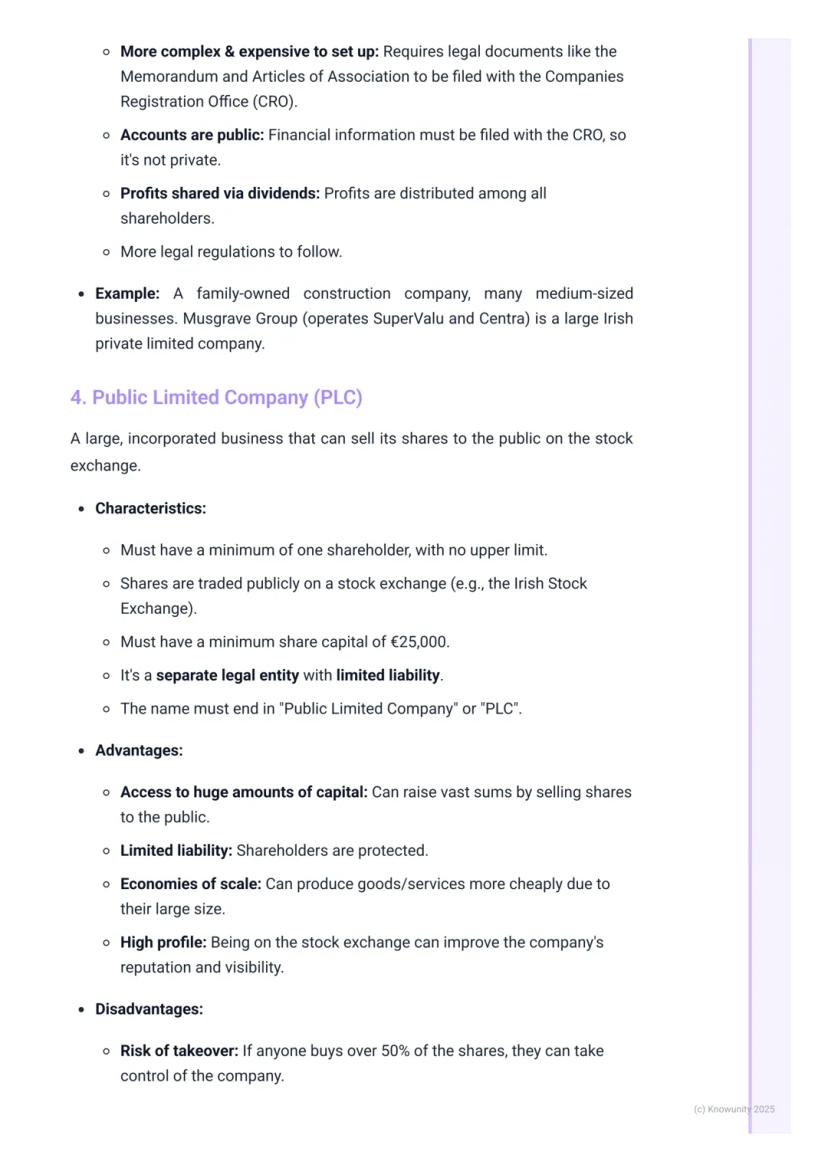
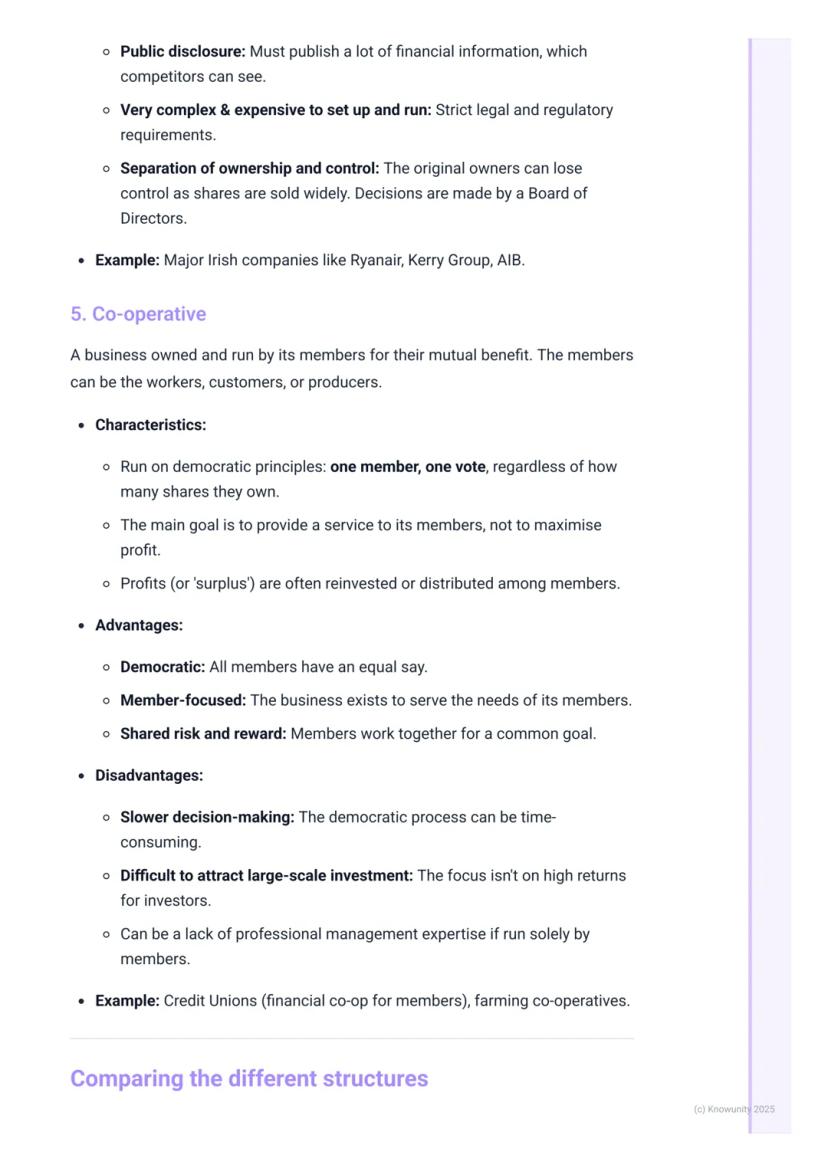
Public limited companies represent the big league - these are businesses that sell shares to the general public on stock exchanges. Think Ryanair, AIB, or Kerry Group trading on the Irish Stock Exchange.
PLCs can raise enormous amounts of capital by selling shares publicly, giving them access to funds that smaller businesses can only dream of. They must have minimum share capital of €25,000 and enjoy the same limited liability protection as private companies.
However, going public comes with serious drawbacks. Anyone who buys over 50% of shares can take control of your company - meaning founders risk losing their business to hostile takeovers. The regulatory requirements are also intense, with strict disclosure rules that let competitors see your financial performance.
The separation of ownership and control means original founders often lose day-to-day control to a Board of Directors chosen by shareholders.
Key Insight: PLCs trade the founder's control for massive growth potential - it's not a decision to take lightly.
5
of 8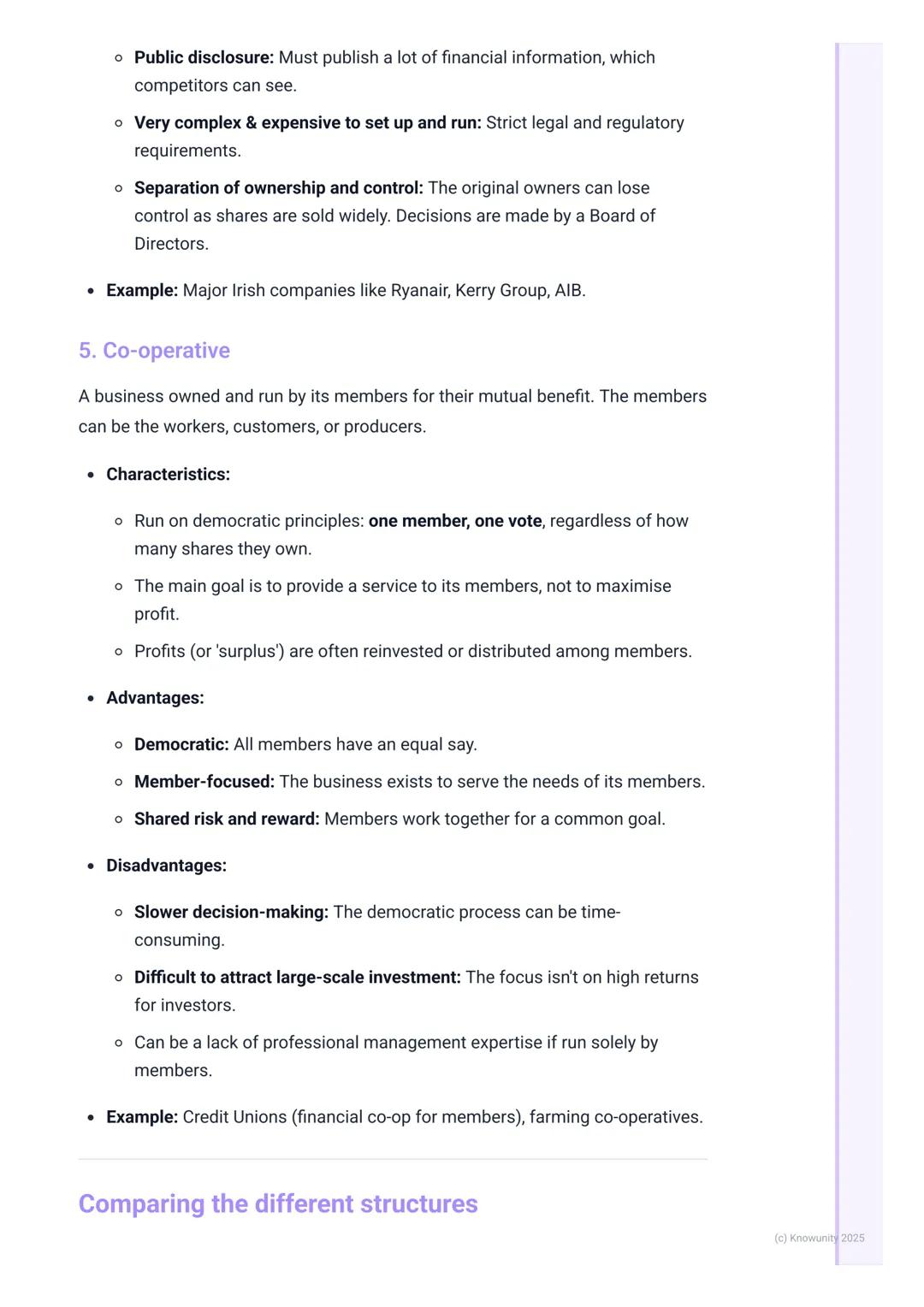
Co-operatives and Structure Comparison
Co-operatives operate on completely different principles - they're owned and run by members for mutual benefit, not profit maximisation. Your local Credit Union is probably the best example you'll encounter.
The defining feature is democratic control: one member, one vote, regardless of how many shares you own. This creates slower decision-making but ensures everyone has equal say in the business direction.
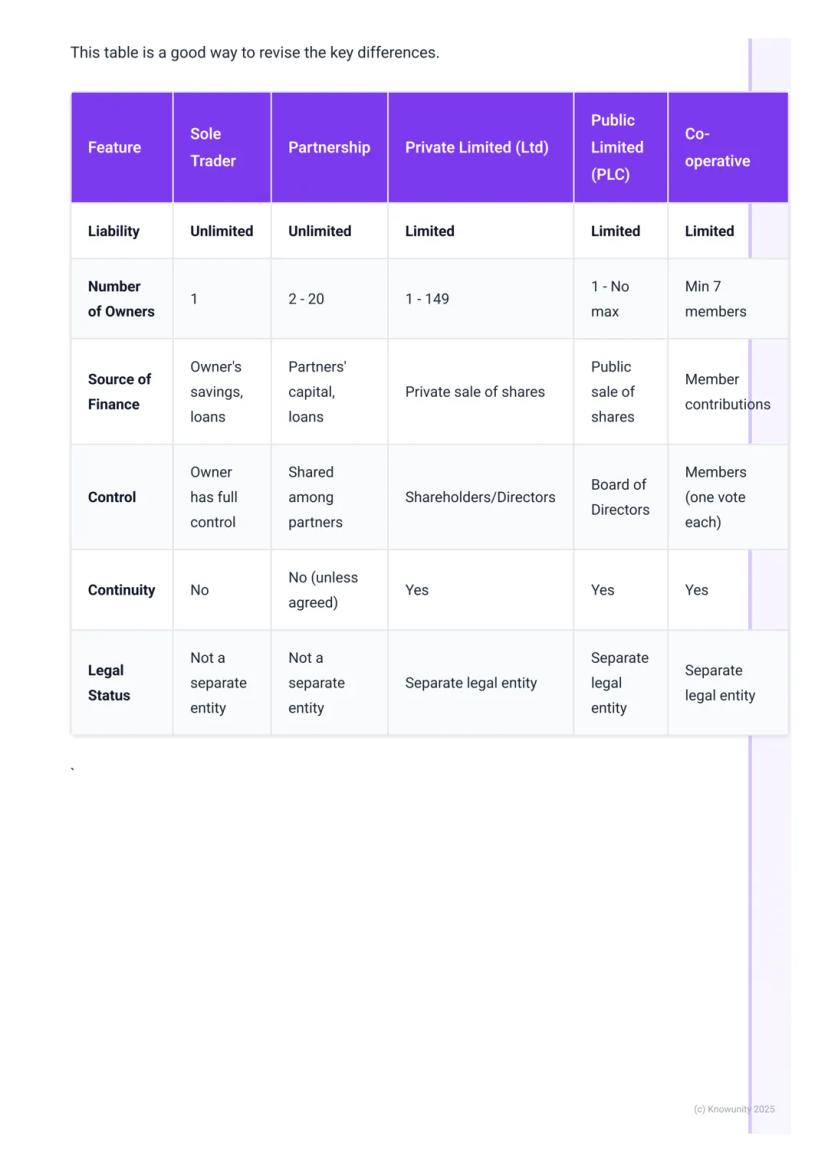
Here's how the main structures stack up on key features:
- Liability: Sole traders and partnerships face unlimited risk; companies and co-ops offer limited protection
- Ownership: From single owners to unlimited shareholders in PLCs
- Finance: Ranges from personal savings (sole traders) to public share sales (PLCs)
- Control: Decreases as you move from sole traders to PLCs, with co-ops being fully democratic
Exam Focus: Questions almost always centre on the unlimited vs limited liability distinction - master this concept and you're halfway there.
6
of 8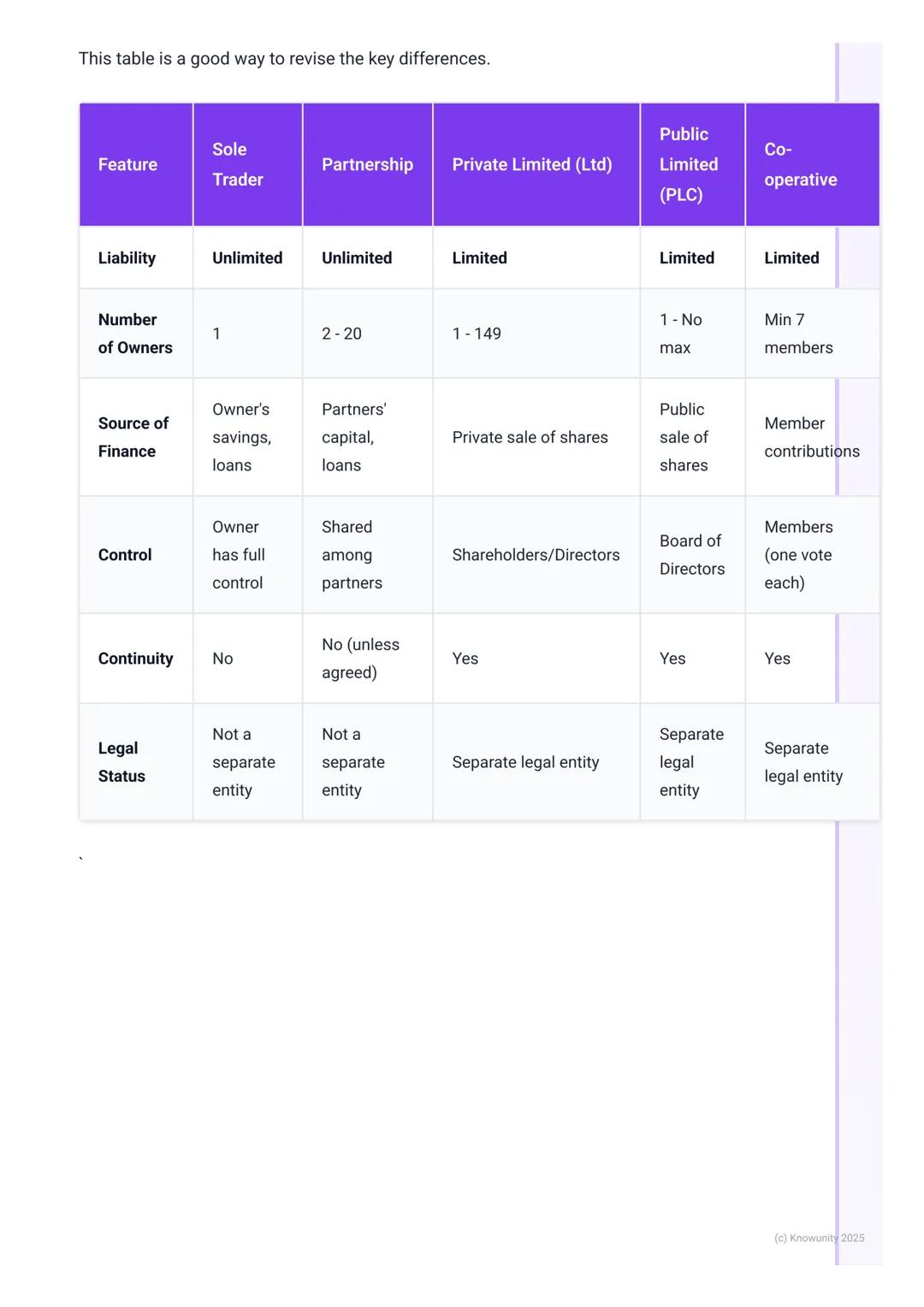
Quick Reference and Exam Tips
The liability concept is absolutely crucial for your exams - it's the single most important difference between business structures. When comparing Ltd vs PLC companies, focus on share sales (private vs public), minimum capital requirements (€25,000 for PLCs), and regulation levels.
Always give balanced answers in evaluation questions. For example: "Sole traders keep all profits, but unlimited liability puts personal assets at risk." This shows you understand both benefits and drawbacks.
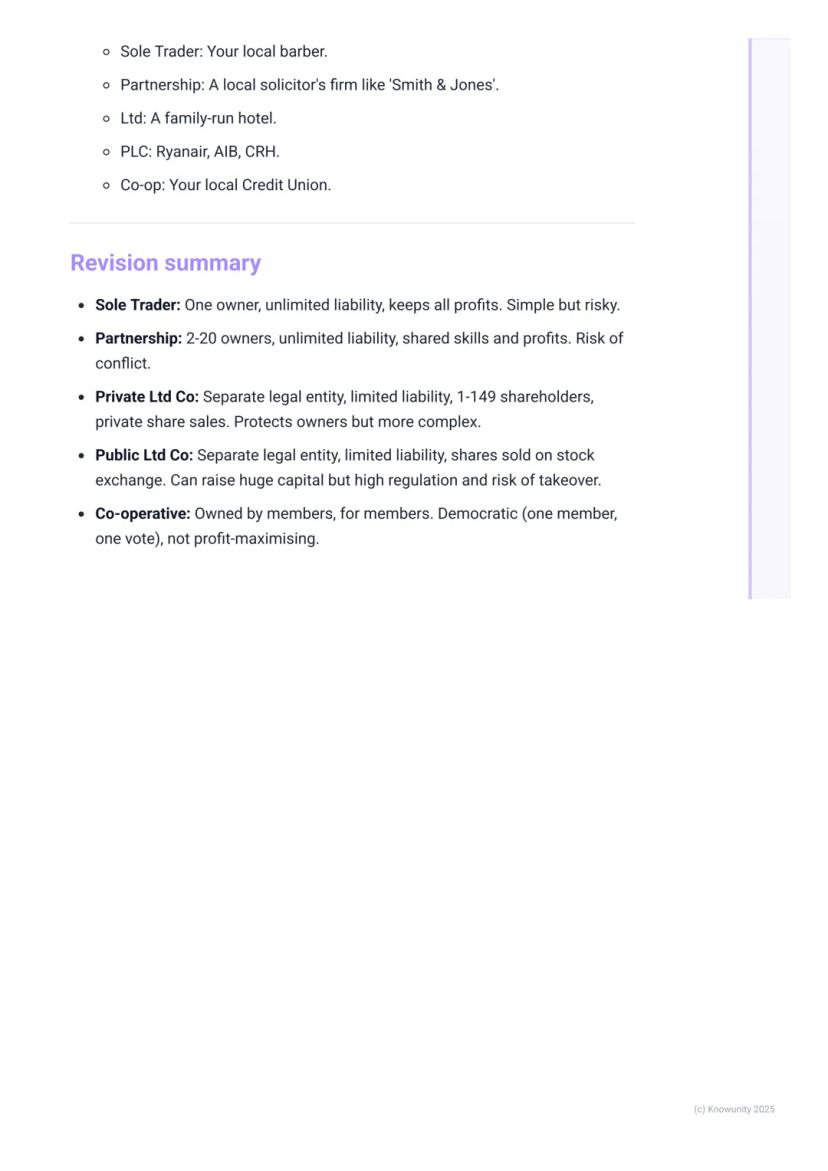
Use Irish examples to demonstrate local knowledge - your barber (sole trader), local solicitor firm (partnership), family hotel (Ltd), or Ryanair (PLC). These concrete examples make your answers more convincing.
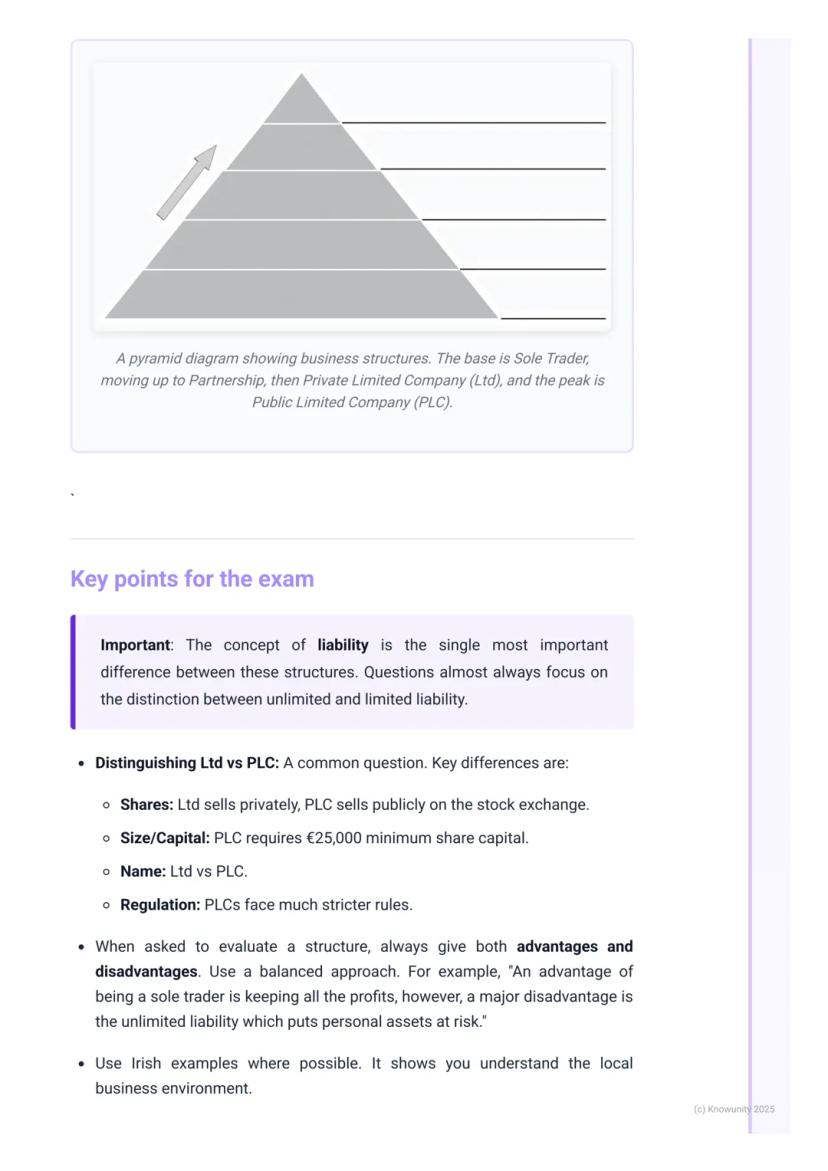
The progression from sole trader to PLC generally involves increasing complexity and capital access, but decreasing personal control. Co-operatives sit apart as member-focused rather than profit-focused entities.
Success Strategy: Practice identifying which structure suits different business scenarios - this is a common exam question format.
7
of 8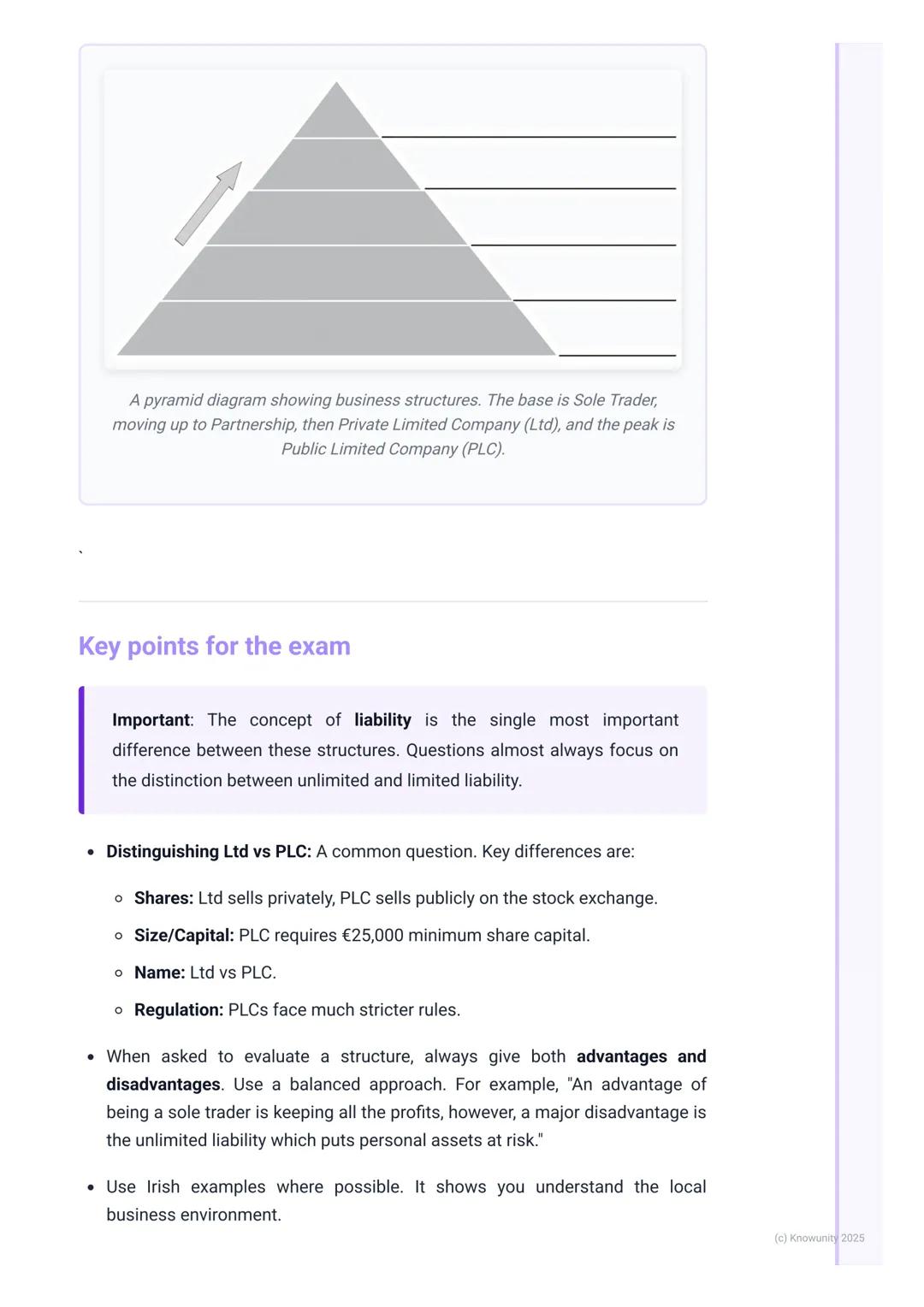
8
of 8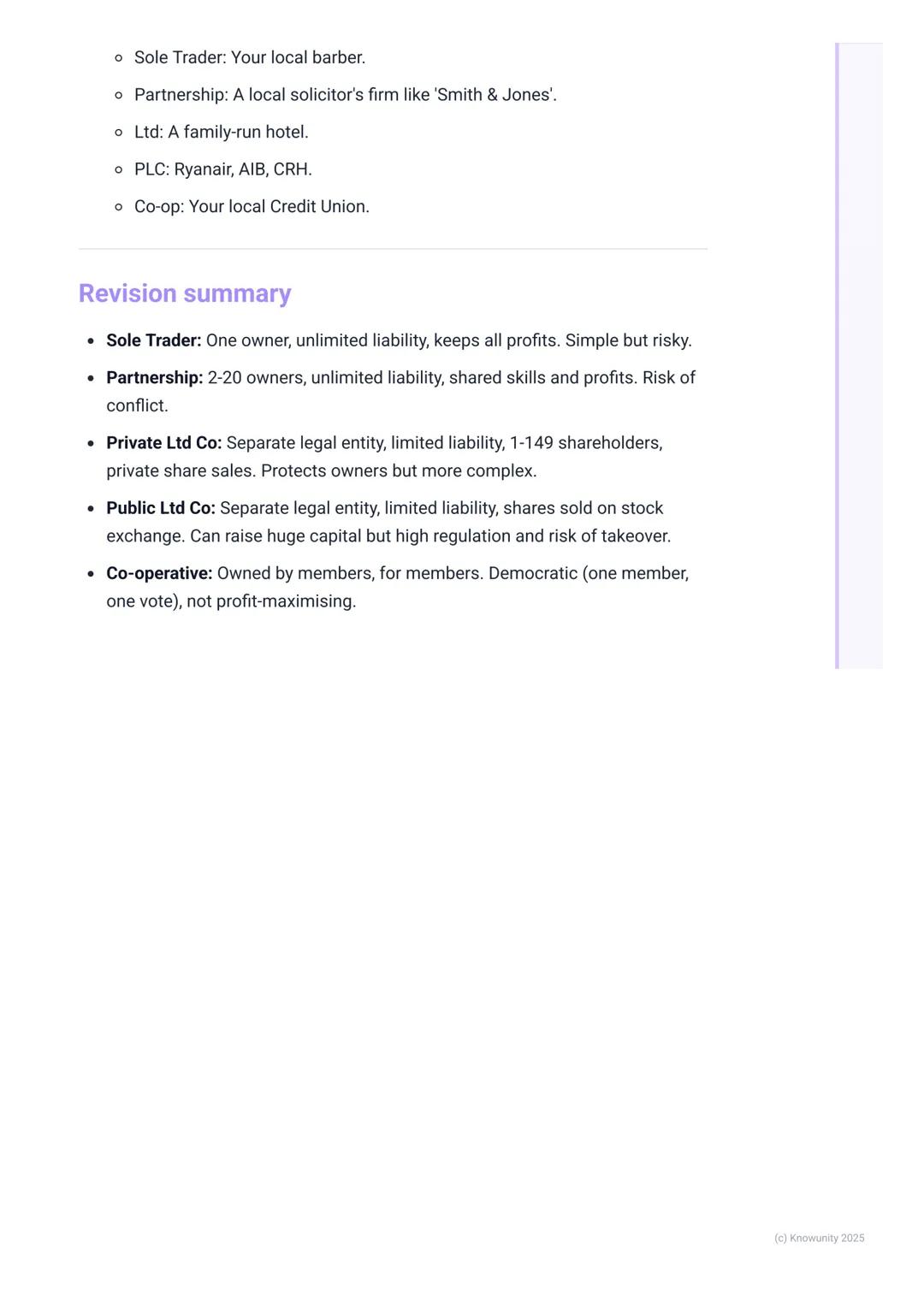
Myśleliśmy, że nigdy nie zapytasz...
Czym jest Towarzysz AI z Knowunity?
Nasz asystent AI jest specjalnie dostosowany do potrzeb uczniów. W oparciu o miliony treści, które mamy na platformie, możemy udzielać uczniom naprawdę znaczących i trafnych odpowiedzi. Ale nie chodzi tylko o odpowiedzi, towarzysz prowadzi również uczniów przez codzienne wyzwania związane z nauką, ze spersonalizowanymi planami nauki, quizami lub treściami na czacie i 100% personalizacją opartą na umiejętnościach i rozwoju uczniów.
Gdzie mogę pobrać aplikację Knowunity?
Aplikację możesz pobrać z Google Play i Apple Store.
Czy aplikacja Knowunity naprawdę jest darmowa?
Tak, masz całkowicie darmowy dostęp do wszystkich notatek w aplikacji, możesz w każdej chwili rozmawiać z Ekspertami lub ich obserwować. Możesz użyć punktów, aby odblokować pewne funkcje w aplikacji, które również możesz otrzymać za darmo. Dodatkowo oferujemy usługę Knowunity Premium, która pozwala na odblokowanie większej liczby funkcji.
Najpopularniejsze notatki z Business Studies
2Najpopularniejsze notatki
9Nie ma nic odpowiedniego? Sprawdź inne przedmioty.
Zobacz, co mówią o nas nasi użytkownicy. Pokochali nas — pokochasz też i Ty.
4.6/5App Store
4.7/5Google Play
Aplikacja jest bardzo prosta i dobrze przemyślana. Do tej pory znalazłem wszystko, czego szukałem i mogłem się wiele nauczyć z innych notatek! Na pewno wykorzystam aplikację do pomocy przy robieniu prac domowych! No i oczywiście bardzo pomaga też jako inspiracja do robienia swoich notatek.
Stefan Sużytkownik iOS
Ta aplikacja jest naprawdę świetna. Jest tak wiele notatek i pomocnych informacji [...]. Moim problematycznym przedmiotem jest język niemiecki, a w aplikacji jest w czym wybierać. Dzięki tej aplikacji poprawiłam swój niemiecki. Polecam ją każdemu.
Samantha Klichużytkownik Androida
Wow, jestem w szoku. Właśnie wypróbowałam aplikację, ponieważ widziałam ją kilka razy reklamowaną na TikToku jestem absolutnie w szoku. Ta aplikacja jest POMOCĄ, której potrzebujesz w szkole i przede wszystkim oferuje tak wiele rzeczy jak notatki czy streszczenia, które są BARDZO pomocne w moim przypadku.
Annaużytkownik iOS
Business Studies2 wyświetleń·Zaktualizowano May 27, 2026·8 stronyDifferent Types of Business Organizations
Ever wondered why some business owners lose their houses when their company fails whilst others walk away unscathed? The secret lies in choosing the right business structure. This decision affects everything from how much control you have to whether your...
1
of 8
Zarejestruj się, aby zobaczyć notatkę. To nic nie kosztuje!
- Dostęp do wszystkich materiałów
- Popraw swoje oceny
- Dołącz do milionów studentów
Business Structures and Key Terms
Understanding business structures starts with grasping a few crucial concepts that'll pop up in your exams constantly. The most important distinction you need to master is between unlimited and limited liability.
Unlimited liability means you're personally on the hook for all business debts - your house, car, and savings could be seized to pay creditors if the business fails. This applies to sole traders and partnerships, making them riskier options.
Limited liability is like a protective shield around your personal assets. If you own shares in a company, you can only lose what you invested - nothing more. Companies also enjoy separate legal entity status, meaning the business legally exists independently from its owners and can survive even if the owner dies.
Quick Tip: Remember that the Memorandum of Association sets up the company, whilst the Articles of Association act as its internal rulebook - think of them as the company's constitution.
2
of 8Zarejestruj się, aby zobaczyć notatkę. To nic nie kosztuje!
- Dostęp do wszystkich materiałów
- Popraw swoje oceny
- Dołącz do milionów studentów
Sole Traders and Partnerships
A sole trader is the simplest business structure - just you running the show. You'll find them everywhere, from your local corner shop to freelance graphic designers. The biggest advantage? You keep every penny of profit and make all decisions yourself.
However, unlimited liability makes this structure risky. If your business fails, creditors can come after your personal assets. Plus, raising finance is tough since banks are reluctant to lend large amounts to individual traders.
Partnerships involve 2-20 people pooling resources and skills. They're governed by a Deed of Partnership (or the Partnership Act 1890 if there's no agreement). Think of local solicitor firms or doctor surgeries - they need multiple experts working together.
The downside? All partners face unlimited liability, and you're responsible for debts created by other partners, even if you didn't agree to them. Decision-making also slows down when everyone needs to agree.
Remember: Both sole traders and partnerships lack continuity of existence - the business legally dies with the owner.
3
of 8Zarejestruj się, aby zobaczyć notatkę. To nic nie kosztuje!
- Dostęp do wszystkich materiałów
- Popraw swoje oceny
- Dołącz do milionów studentów
Private Limited Companies (Ltd)
Private limited companies are where things get interesting for entrepreneurs who want protection without going fully public. These businesses are incorporated, meaning they exist as separate legal entities from their owners (shareholders).
The game-changer here is limited liability - your personal assets stay safe if the business fails. You can only lose what you invested in shares. This protection makes it much easier to raise finance, as banks trust companies more than individual traders.
Companies also enjoy continuity of existence - they keep running even if shareholders die. The original owners often retain control since shares are sold privately to friends and family, not random strangers.
The trade-offs include higher setup costs and complexity. You'll need to file Memorandum and Articles of Association with the Companies Registration Office (CRO), and your financial information becomes public record.
Real Example: Musgrave Group, which operates SuperValu and Centra, is Ireland's largest private limited company.
4
of 8Zarejestruj się, aby zobaczyć notatkę. To nic nie kosztuje!
- Dostęp do wszystkich materiałów
- Popraw swoje oceny
- Dołącz do milionów studentów
Public Limited Companies (PLC)
Public limited companies represent the big league - these are businesses that sell shares to the general public on stock exchanges. Think Ryanair, AIB, or Kerry Group trading on the Irish Stock Exchange.
PLCs can raise enormous amounts of capital by selling shares publicly, giving them access to funds that smaller businesses can only dream of. They must have minimum share capital of €25,000 and enjoy the same limited liability protection as private companies.
However, going public comes with serious drawbacks. Anyone who buys over 50% of shares can take control of your company - meaning founders risk losing their business to hostile takeovers. The regulatory requirements are also intense, with strict disclosure rules that let competitors see your financial performance.
The separation of ownership and control means original founders often lose day-to-day control to a Board of Directors chosen by shareholders.
Key Insight: PLCs trade the founder's control for massive growth potential - it's not a decision to take lightly.
5
of 8Zarejestruj się, aby zobaczyć notatkę. To nic nie kosztuje!
- Dostęp do wszystkich materiałów
- Popraw swoje oceny
- Dołącz do milionów studentów
Co-operatives and Structure Comparison
Co-operatives operate on completely different principles - they're owned and run by members for mutual benefit, not profit maximisation. Your local Credit Union is probably the best example you'll encounter.
The defining feature is democratic control: one member, one vote, regardless of how many shares you own. This creates slower decision-making but ensures everyone has equal say in the business direction.
Here's how the main structures stack up on key features:
- Liability: Sole traders and partnerships face unlimited risk; companies and co-ops offer limited protection
- Ownership: From single owners to unlimited shareholders in PLCs
- Finance: Ranges from personal savings (sole traders) to public share sales (PLCs)
- Control: Decreases as you move from sole traders to PLCs, with co-ops being fully democratic
Exam Focus: Questions almost always centre on the unlimited vs limited liability distinction - master this concept and you're halfway there.
6
of 8Zarejestruj się, aby zobaczyć notatkę. To nic nie kosztuje!
- Dostęp do wszystkich materiałów
- Popraw swoje oceny
- Dołącz do milionów studentów
Quick Reference and Exam Tips
The liability concept is absolutely crucial for your exams - it's the single most important difference between business structures. When comparing Ltd vs PLC companies, focus on share sales (private vs public), minimum capital requirements (€25,000 for PLCs), and regulation levels.
Always give balanced answers in evaluation questions. For example: "Sole traders keep all profits, but unlimited liability puts personal assets at risk." This shows you understand both benefits and drawbacks.
Use Irish examples to demonstrate local knowledge - your barber (sole trader), local solicitor firm (partnership), family hotel (Ltd), or Ryanair (PLC). These concrete examples make your answers more convincing.
The progression from sole trader to PLC generally involves increasing complexity and capital access, but decreasing personal control. Co-operatives sit apart as member-focused rather than profit-focused entities.
Success Strategy: Practice identifying which structure suits different business scenarios - this is a common exam question format.
7
of 8Zarejestruj się, aby zobaczyć notatkę. To nic nie kosztuje!
- Dostęp do wszystkich materiałów
- Popraw swoje oceny
- Dołącz do milionów studentów
8
of 8Zarejestruj się, aby zobaczyć notatkę. To nic nie kosztuje!
- Dostęp do wszystkich materiałów
- Popraw swoje oceny
- Dołącz do milionów studentów
Myśleliśmy, że nigdy nie zapytasz...
Czym jest Towarzysz AI z Knowunity?
Nasz asystent AI jest specjalnie dostosowany do potrzeb uczniów. W oparciu o miliony treści, które mamy na platformie, możemy udzielać uczniom naprawdę znaczących i trafnych odpowiedzi. Ale nie chodzi tylko o odpowiedzi, towarzysz prowadzi również uczniów przez codzienne wyzwania związane z nauką, ze spersonalizowanymi planami nauki, quizami lub treściami na czacie i 100% personalizacją opartą na umiejętnościach i rozwoju uczniów.
Gdzie mogę pobrać aplikację Knowunity?
Aplikację możesz pobrać z Google Play i Apple Store.
Czy aplikacja Knowunity naprawdę jest darmowa?
Tak, masz całkowicie darmowy dostęp do wszystkich notatek w aplikacji, możesz w każdej chwili rozmawiać z Ekspertami lub ich obserwować. Możesz użyć punktów, aby odblokować pewne funkcje w aplikacji, które również możesz otrzymać za darmo. Dodatkowo oferujemy usługę Knowunity Premium, która pozwala na odblokowanie większej liczby funkcji.
Najpopularniejsze notatki z Business Studies
2Najpopularniejsze notatki
9Nie ma nic odpowiedniego? Sprawdź inne przedmioty.
Zobacz, co mówią o nas nasi użytkownicy. Pokochali nas — pokochasz też i Ty.
4.6/5App Store
4.7/5Google Play
Aplikacja jest bardzo prosta i dobrze przemyślana. Do tej pory znalazłem wszystko, czego szukałem i mogłem się wiele nauczyć z innych notatek! Na pewno wykorzystam aplikację do pomocy przy robieniu prac domowych! No i oczywiście bardzo pomaga też jako inspiracja do robienia swoich notatek.
Stefan Sużytkownik iOS
Ta aplikacja jest naprawdę świetna. Jest tak wiele notatek i pomocnych informacji [...]. Moim problematycznym przedmiotem jest język niemiecki, a w aplikacji jest w czym wybierać. Dzięki tej aplikacji poprawiłam swój niemiecki. Polecam ją każdemu.
Samantha Klichużytkownik Androida
Wow, jestem w szoku. Właśnie wypróbowałam aplikację, ponieważ widziałam ją kilka razy reklamowaną na TikToku jestem absolutnie w szoku. Ta aplikacja jest POMOCĄ, której potrzebujesz w szkole i przede wszystkim oferuje tak wiele rzeczy jak notatki czy streszczenia, które są BARDZO pomocne w moim przypadku.
Annaużytkownik iOS