
Ever wondered why your phone case is plastic but your...
 Engineering7 wyświetleń·Zaktualizowano Jun 13, 2026·7 strony
Types of Engineering Materials: Metals, Polymers, Ceramics, and Composites
1 / 7
1
of 7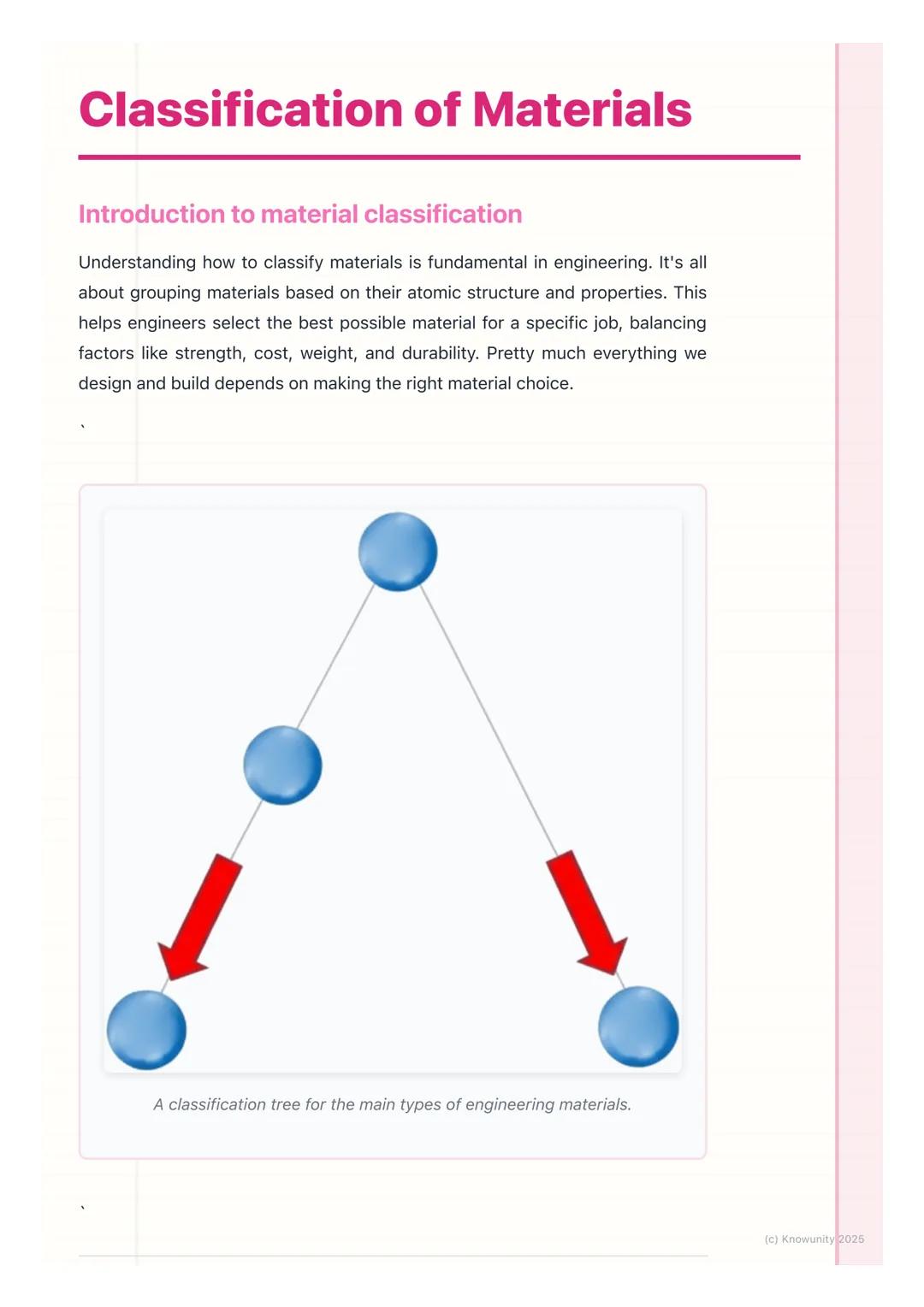
Classification of Materials
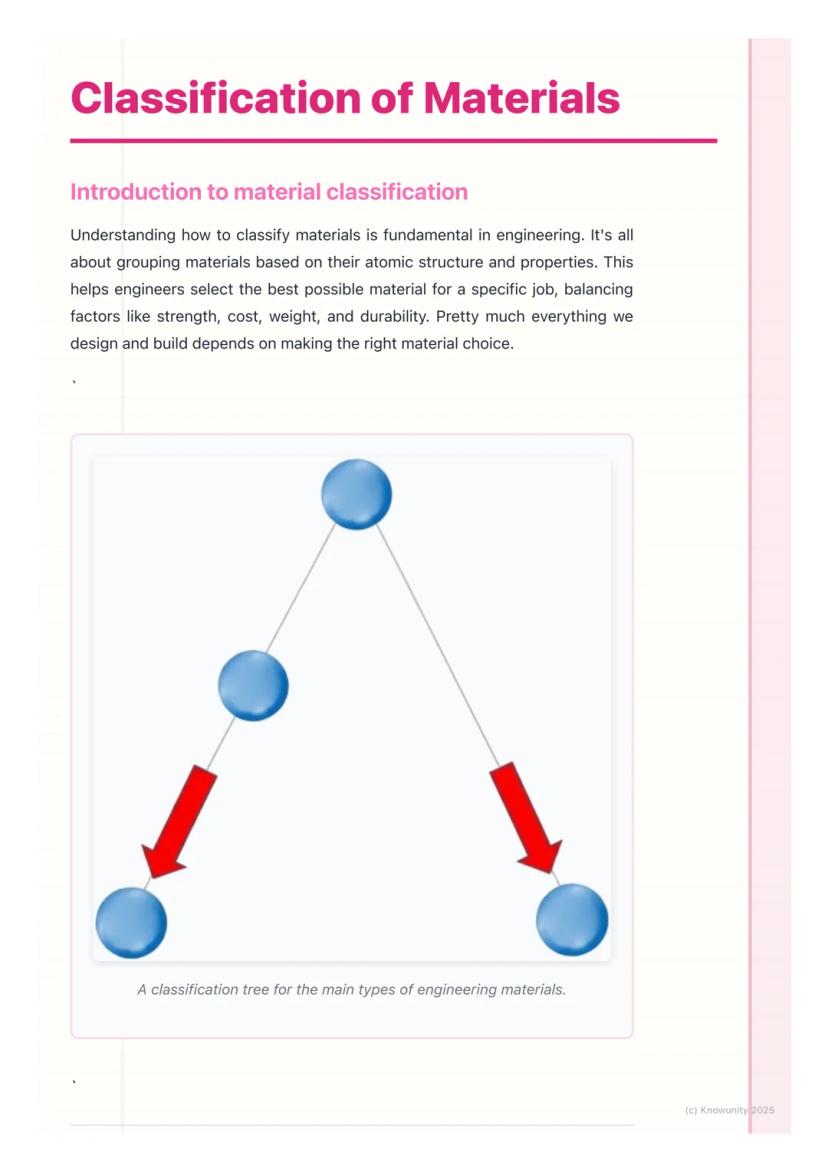
Understanding material classification starts with recognising that all engineering materials fall into four main families based on their atomic structure. This isn't just theory - it's the foundation that helps engineers make smart choices every day.
The four core material families are metals, polymers, ceramics, and composites. Each family has unique properties that make them perfect for different applications. Think of it like choosing the right tool for a job - you wouldn't use a hammer to cut wood!
Classification systems group materials by their atomic bonding and structure. This makes it easier to predict how they'll behave under stress, heat, or in different environments.
Quick Tip: Remember that material choice always comes down to matching properties with requirements - strength, cost, weight, and durability are the big four factors to consider.
2
of 7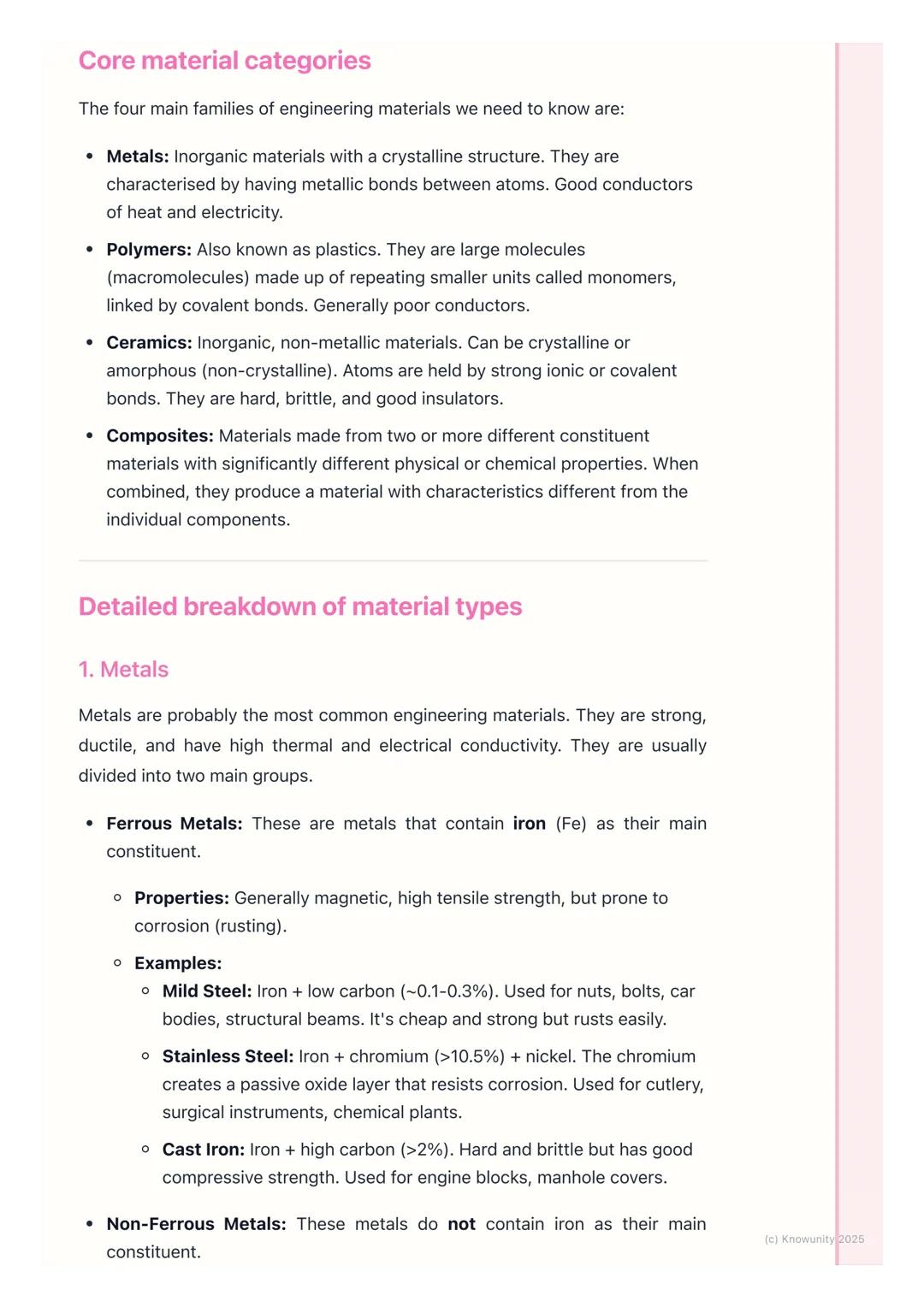
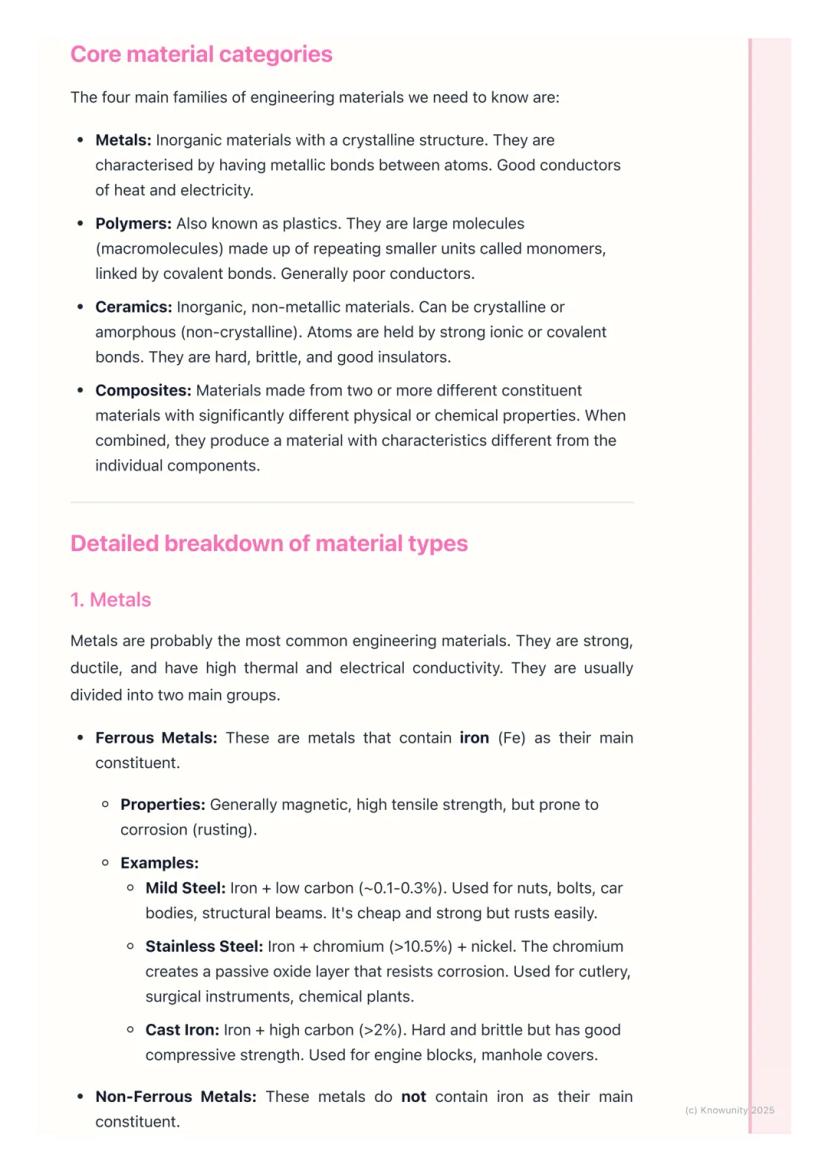
Core Material Categories
Metals are your go-to materials when you need strength and conductivity. They have metallic bonds between atoms, creating that characteristic ability to conduct heat and electricity. Most of the structural materials around you are metals.
Polymers (plastics) are large molecules made from repeating units called monomers. They're lightweight, corrosion-resistant, and brilliant insulators. The variety of plastics available today is incredible - from soft bin bags to tough car bumpers.
Ceramics are hard, brittle materials held together by strong ionic or covalent bonds. They're fantastic insulators and can handle extreme temperatures, but they'll crack rather than bend under stress.
Composites combine two or more different materials to create something better than either component alone. It's like making a super-material by mixing the best properties of different families together.
Key Insight: Each material family has trade-offs - metals are strong but heavy, polymers are light but weaker, ceramics are hard but brittle, and composites can be engineered for specific needs.
3
of 7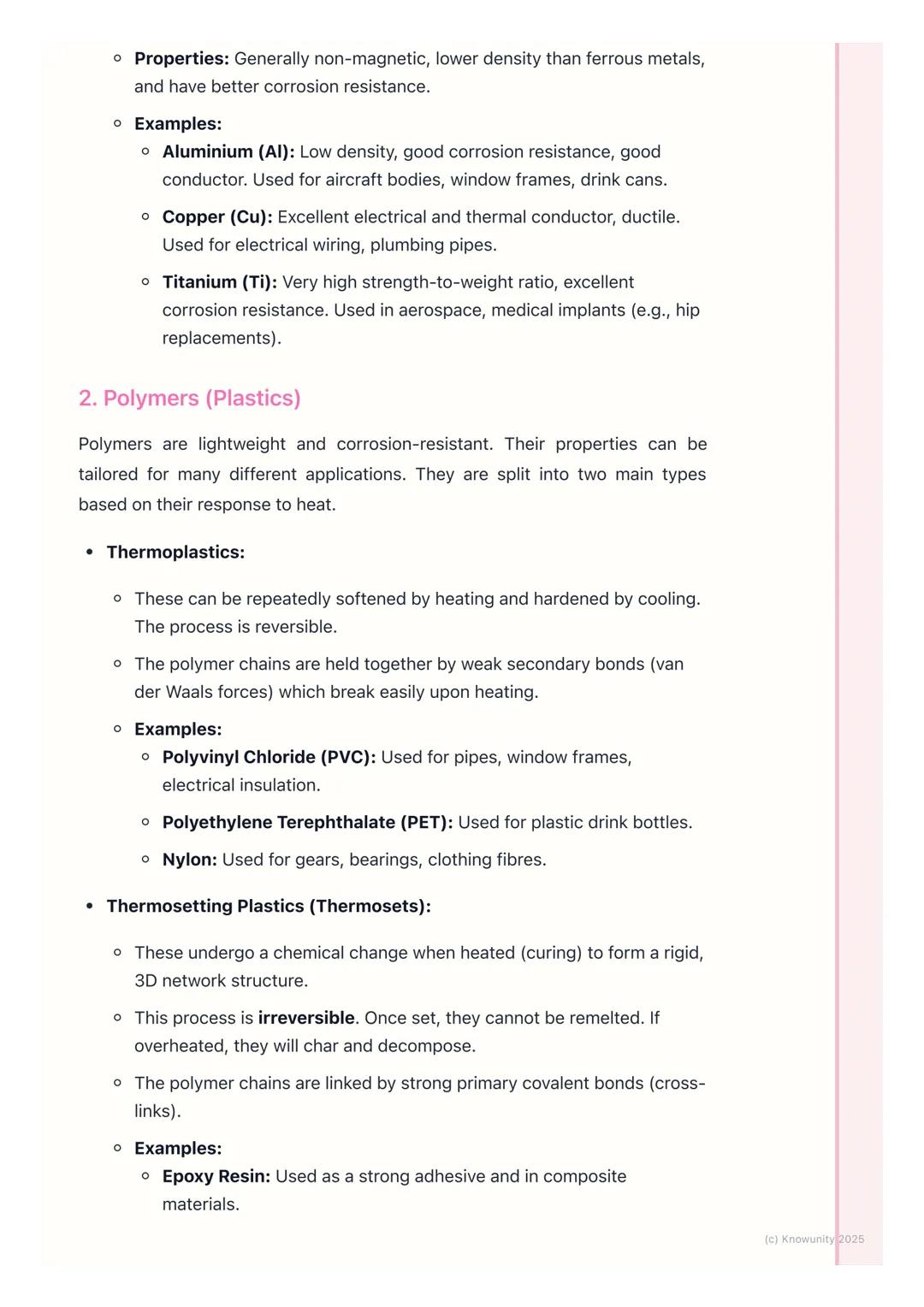
Metals: Ferrous and Non-Ferrous
Ferrous metals contain iron as their main ingredient, making them magnetic and generally strong. Mild steel is everywhere - car bodies, structural beams, nuts and bolts. It's cheap and strong but rusts easily unless protected.
Stainless steel adds chromium to create a protective oxide layer that resists corrosion. That's why your kitchen sink doesn't rust! Cast iron has high carbon content, making it hard but brittle - perfect for engine blocks where you need compression strength.
Non-ferrous metals don't contain iron, so they're not magnetic and often resist corrosion better. Aluminium is brilliant for aircraft because it's light yet strong. Copper dominates electrical wiring because it conducts electricity so well.
Titanium is the superstar of metals - incredibly strong for its weight and virtually corrosion-proof. It's expensive, but when you need the best (like in aircraft or medical implants), titanium delivers.
Memory Trick: Ferrous = iron = magnetic. If a magnet sticks to it, it's probably ferrous!
4
of 7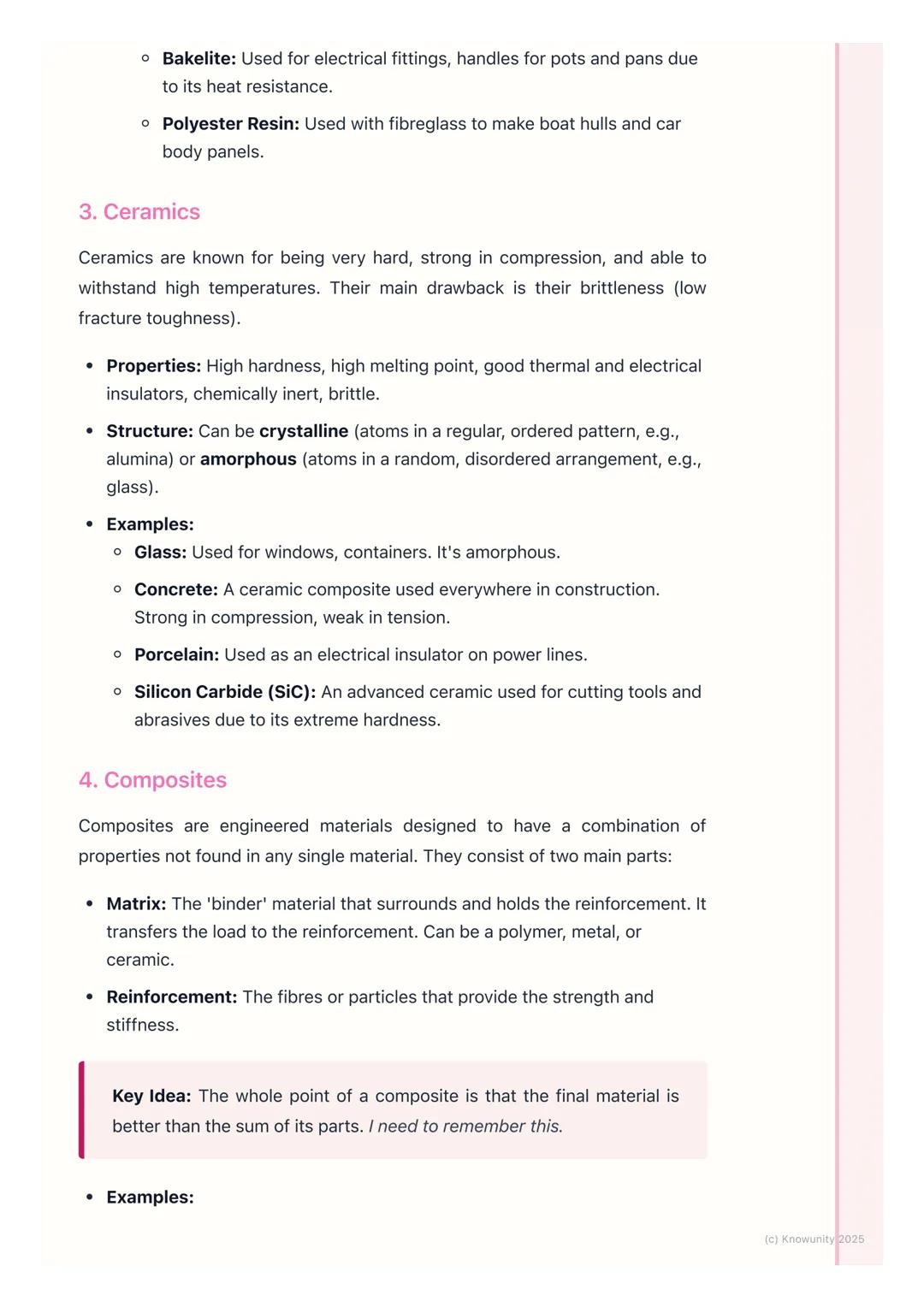
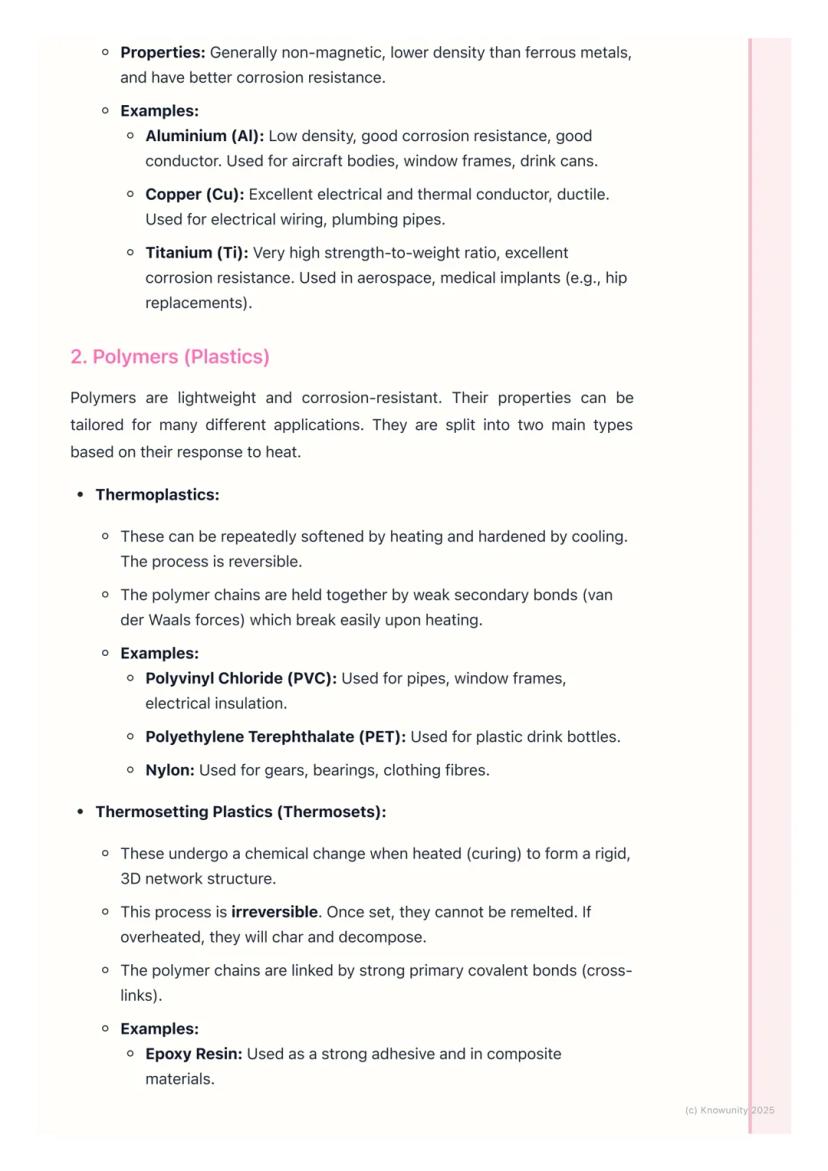
Polymers: Thermoplastics vs Thermosets
Thermoplastics can be melted and reshaped repeatedly - think of them as the recyclable plastics. Heat them up, they soften; cool them down, they harden. PVC pipes, PET drink bottles, and nylon gears all fall into this category.
The polymer chains in thermoplastics are held by weak forces that break easily when heated. This reversible process is why you can recycle these plastics into new products.
Thermosetting plastics undergo a permanent chemical change when heated - once they're set, that's it. Overheat them and they'll char and decompose rather than melt. Epoxy resin creates incredibly strong adhesives, while Bakelite handles heat brilliantly.
The difference comes down to bonding - thermosets form strong cross-links between polymer chains that can't be broken by reheating. This makes them perfect for applications requiring heat resistance.
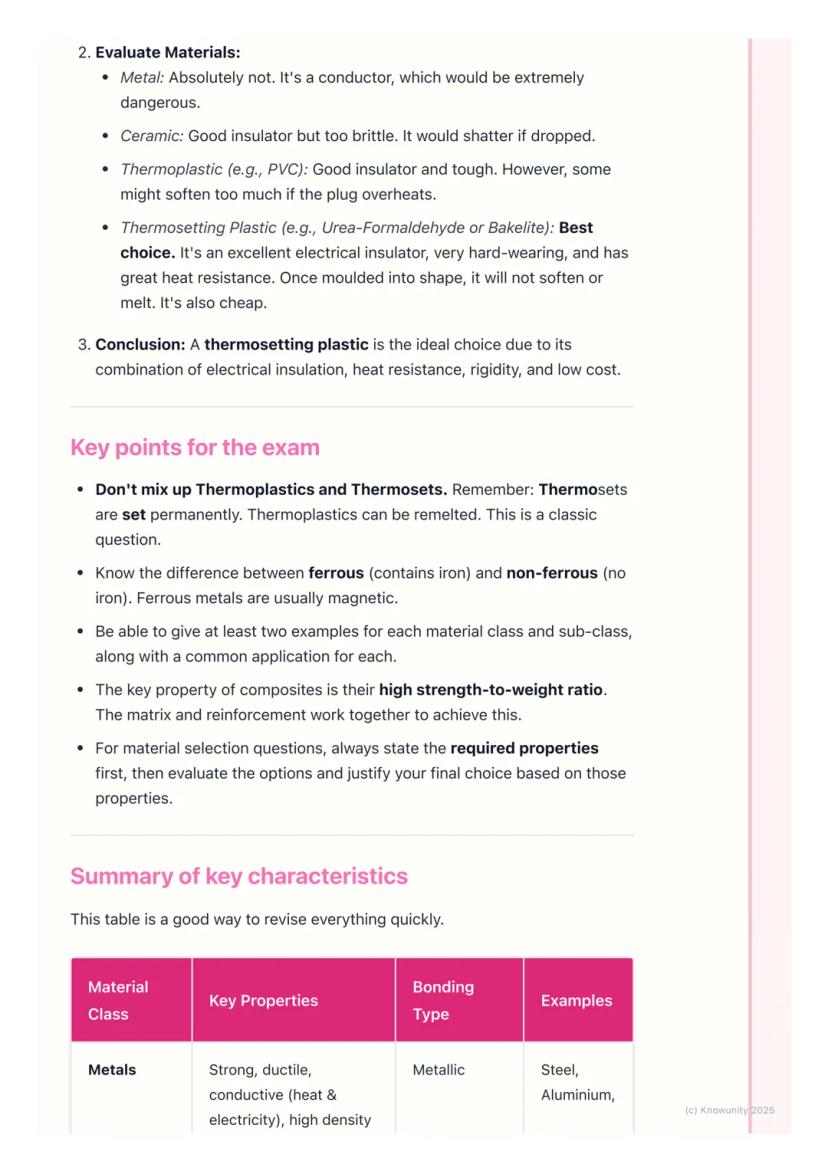
Exam Alert: This thermoplastic vs thermoset distinction is a classic exam question. Remember: thermoplastics melt repeatedly, thermosets set permanently.
5
of 7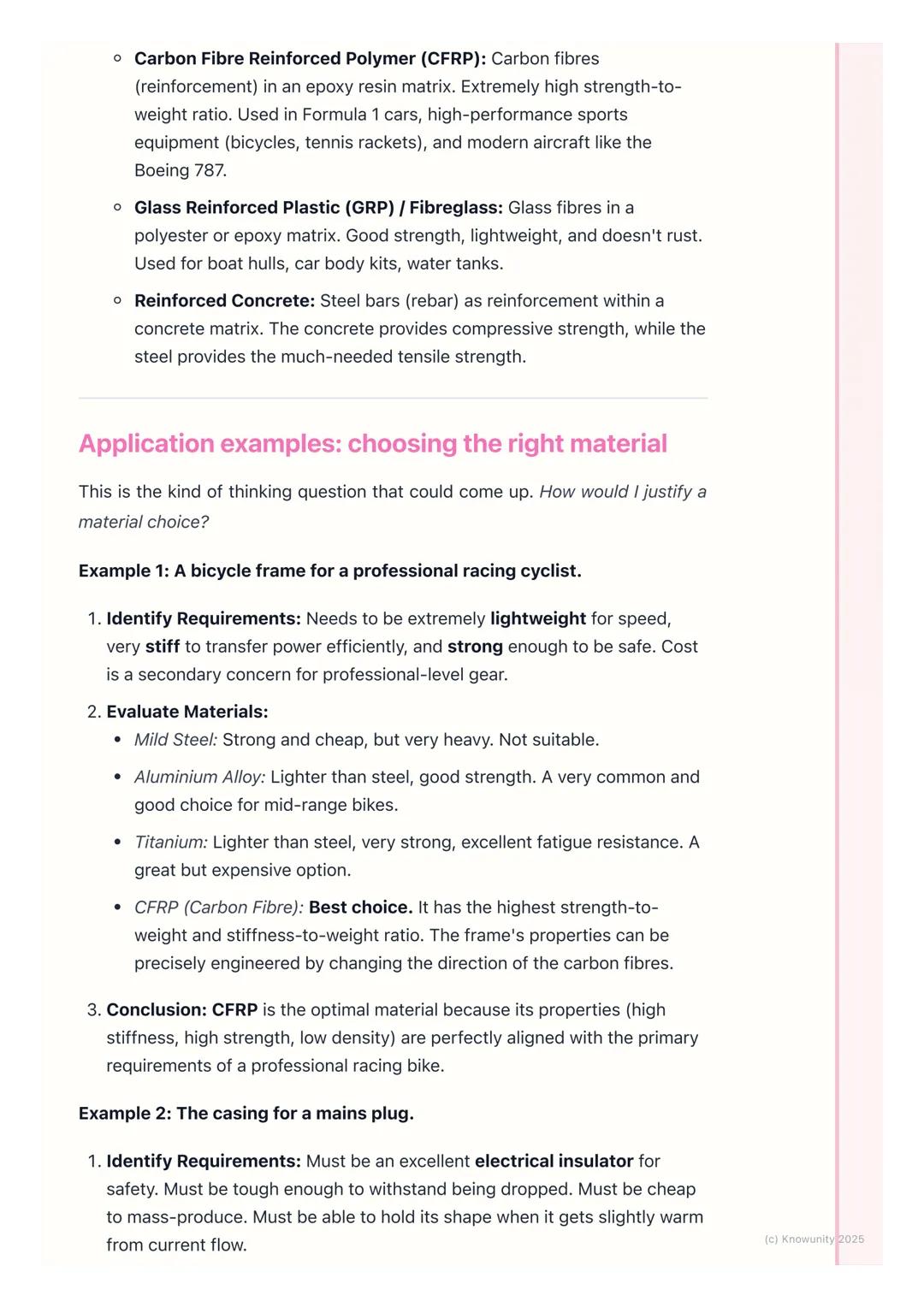
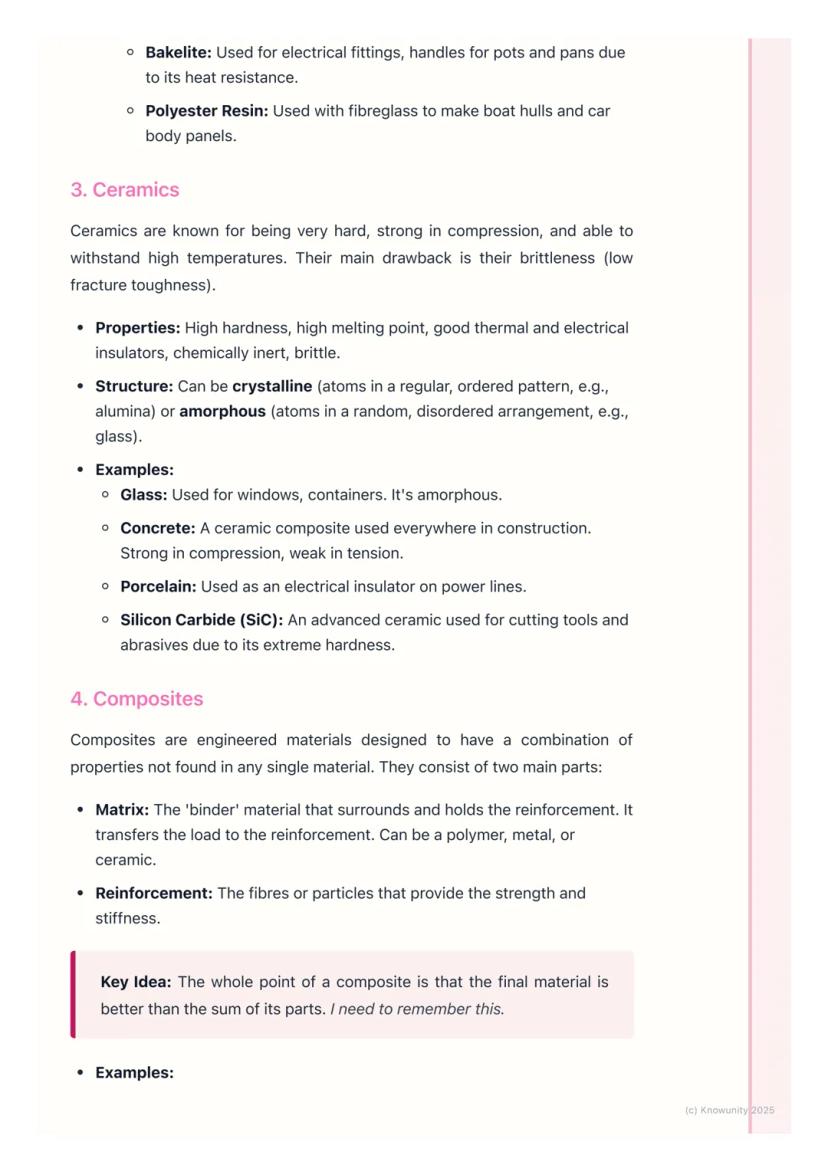
Ceramics and Composites
Ceramics are the tough guys of high-temperature applications. They're incredibly hard, excellent insulators, and chemically inert. Glass is an everyday ceramic that's actually amorphous (randomly arranged atoms), while concrete dominates construction as a ceramic composite.
Advanced ceramics like silicon carbide are used for cutting tools because of their extreme hardness. The main downside? They're brittle - ceramics crack rather than bend when overstressed.
Composites are engineered materials designed to be better than the sum of their parts. They have a matrix (the binder) and reinforcement (usually fibres) that work together. The matrix transfers loads to the stronger reinforcement.
Carbon fibre reinforced polymer (CFRP) dominates high-performance applications - Formula 1 cars, racing bikes, modern aircraft. Glass reinforced plastic (fibreglass) offers good strength at lower cost for boat hulls and car panels.
Design Principle: Composites let engineers put strength exactly where it's needed by controlling fibre direction and density.
6
of 7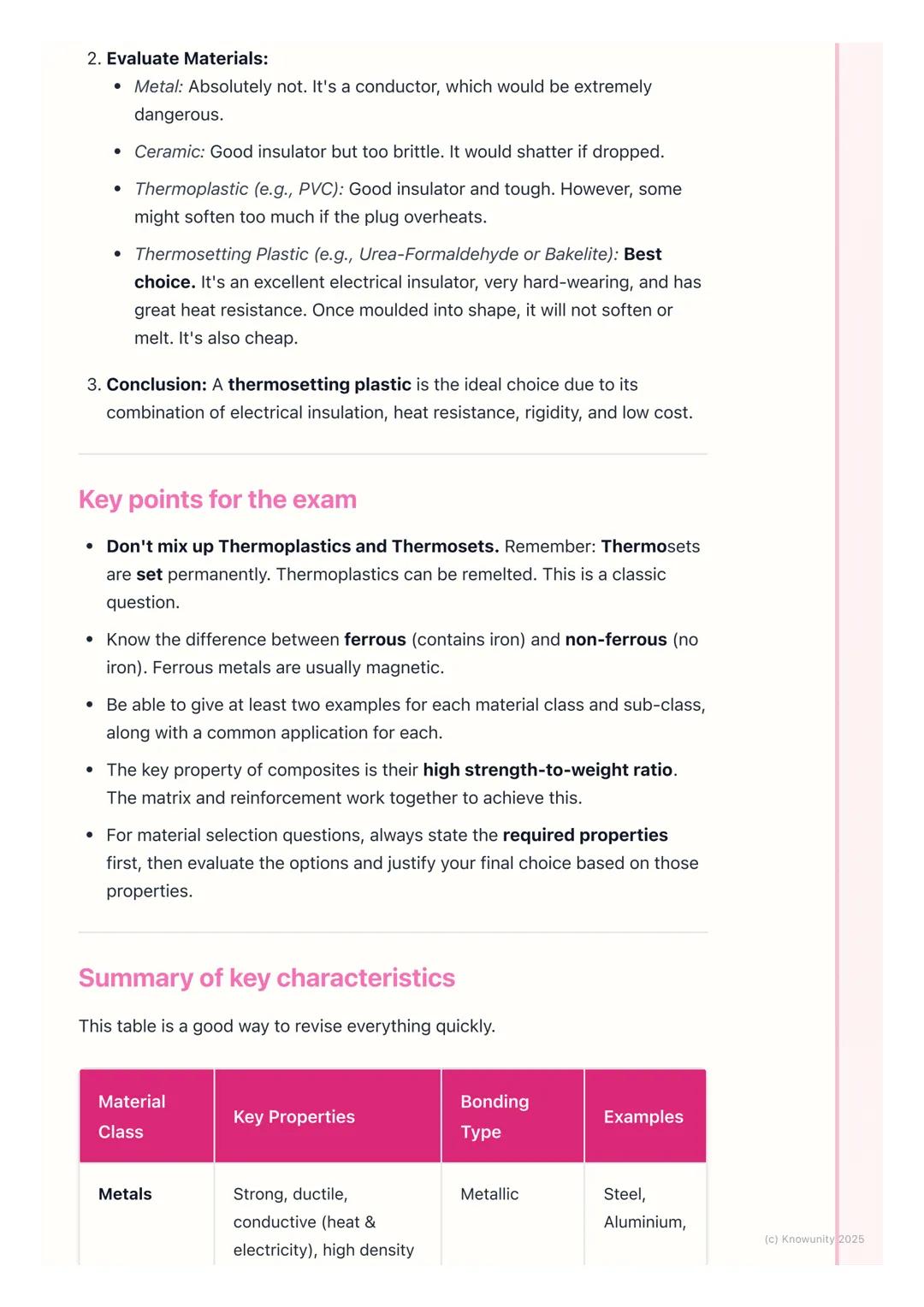
Material Selection in Practice
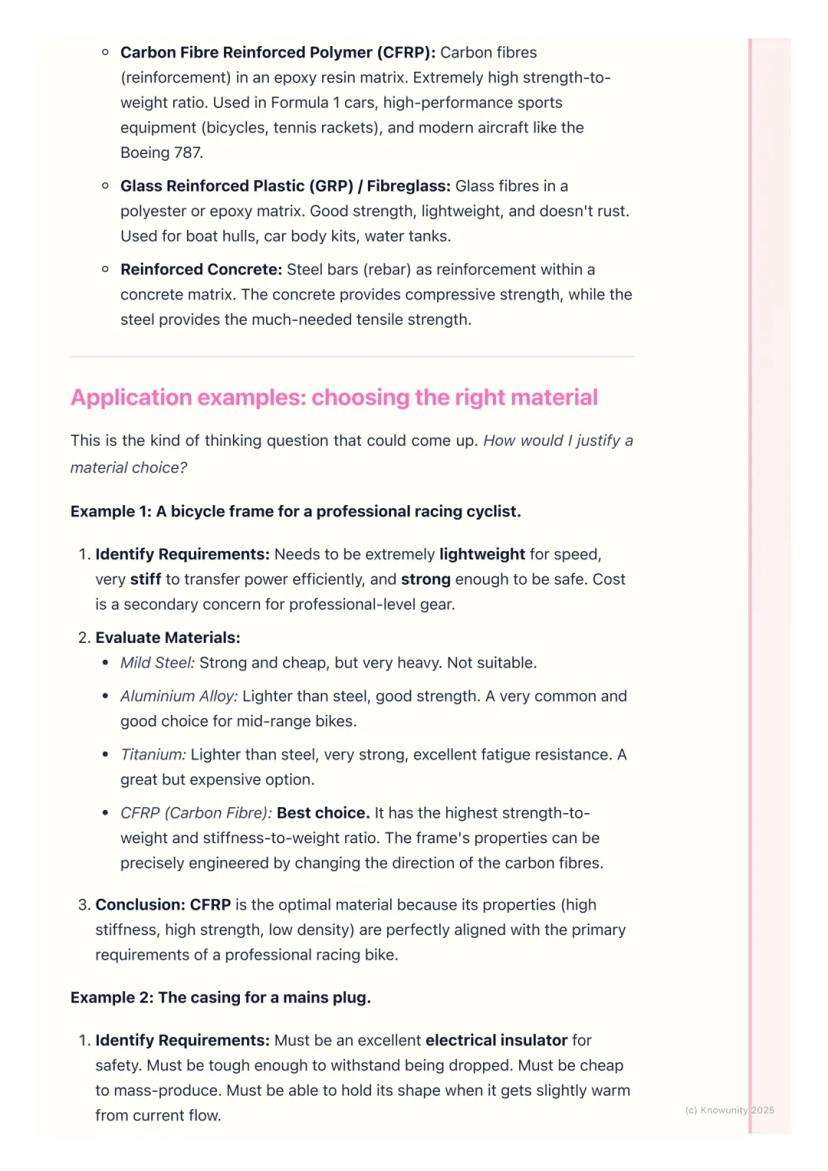
Choosing the right material means matching properties to requirements. For a professional racing bike, you need maximum stiffness and minimum weight. CFRP wins because its strength-to-weight ratio is unbeatable, and properties can be tailored by controlling fibre orientation.
For a mains plug casing, safety trumps everything else. It must be an electrical insulator, tough enough to survive being dropped, and heat-resistant. Thermosetting plastics like Bakelite are perfect - excellent insulators that won't soften if the plug overheats.
Material selection process always follows the same pattern: identify requirements, evaluate options against those requirements, then justify your choice. Cost, availability, and manufacturing methods also influence real-world decisions.
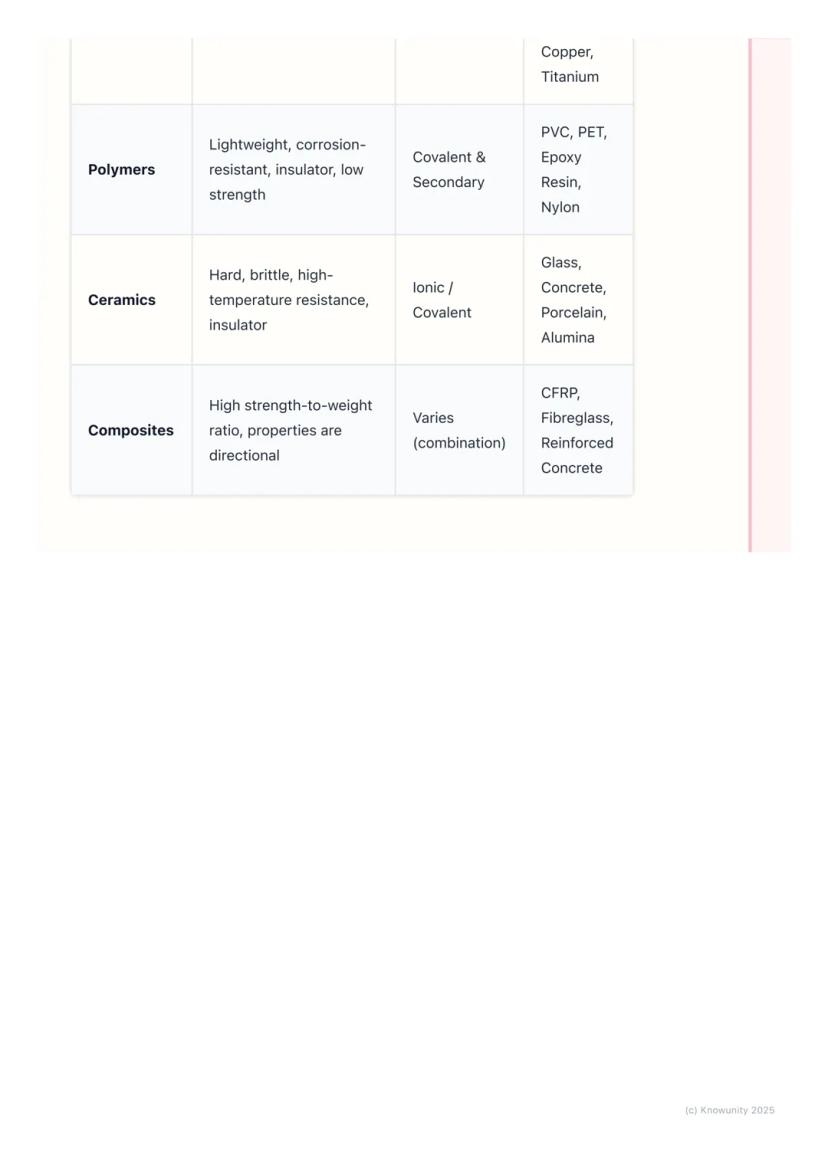
Don't forget the key characteristics - metals conduct and are ductile, polymers are lightweight insulators, ceramics are hard but brittle, and composites offer engineered properties. Each family has its sweet spot.
Success Strategy: For exam questions, always state the required properties first, then systematically evaluate each material option before making your justified recommendation.
7
of 7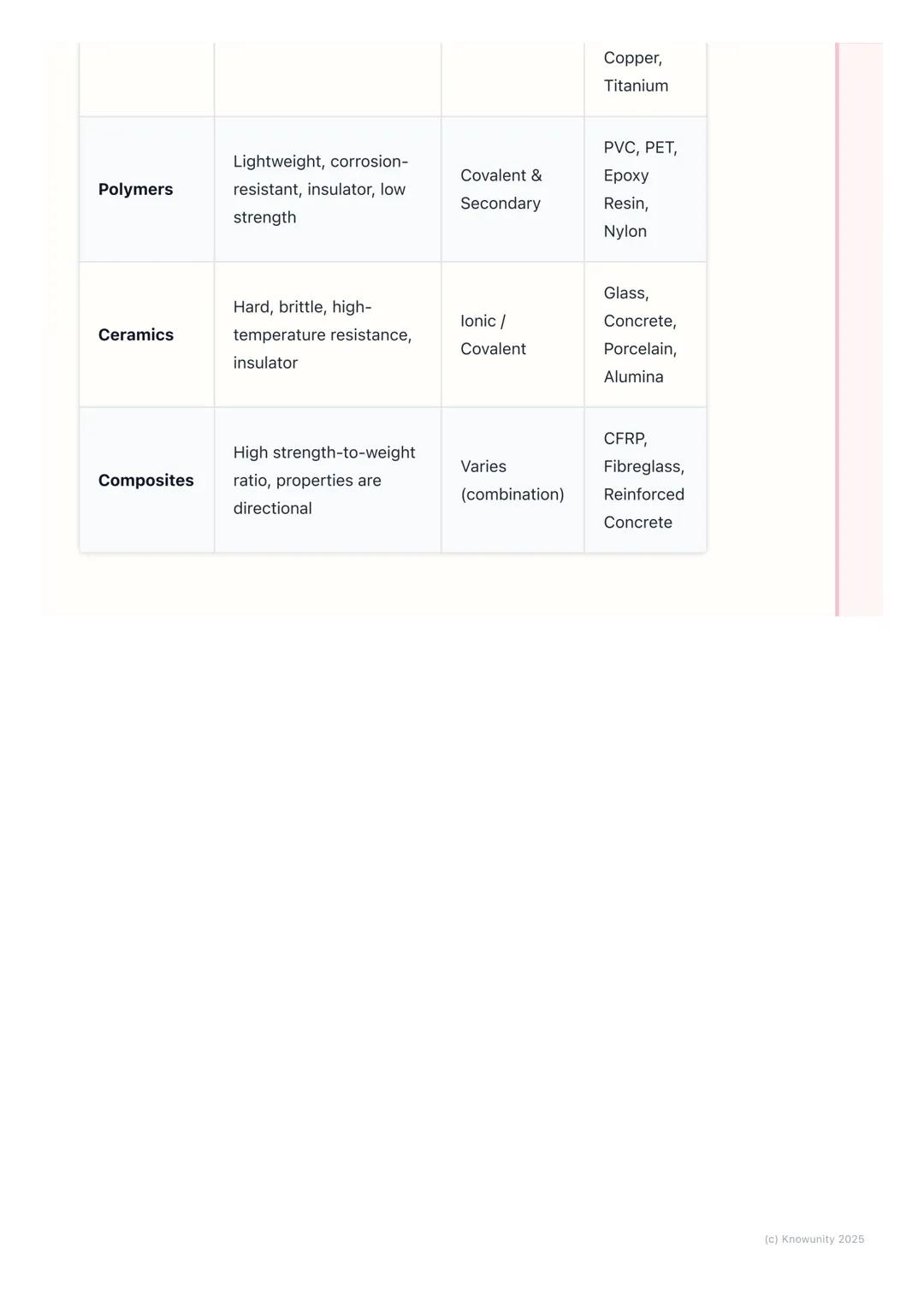
Myśleliśmy, że nigdy nie zapytasz...
Czym jest Towarzysz AI z Knowunity?
Nasz asystent AI jest specjalnie dostosowany do potrzeb uczniów. W oparciu o miliony treści, które mamy na platformie, możemy udzielać uczniom naprawdę znaczących i trafnych odpowiedzi. Ale nie chodzi tylko o odpowiedzi, towarzysz prowadzi również uczniów przez codzienne wyzwania związane z nauką, ze spersonalizowanymi planami nauki, quizami lub treściami na czacie i 100% personalizacją opartą na umiejętnościach i rozwoju uczniów.
Gdzie mogę pobrać aplikację Knowunity?
Aplikację możesz pobrać z Google Play i Apple Store.
Czy aplikacja Knowunity naprawdę jest darmowa?
Tak, masz całkowicie darmowy dostęp do wszystkich notatek w aplikacji, możesz w każdej chwili rozmawiać z Ekspertami lub ich obserwować. Możesz użyć punktów, aby odblokować pewne funkcje w aplikacji, które również możesz otrzymać za darmo. Dodatkowo oferujemy usługę Knowunity Premium, która pozwala na odblokowanie większej liczby funkcji.
Najpopularniejsze notatki z Engineering
1Najpopularniejsze notatki
9 Irish
IrishIrish oral questions and answers
Questions and answers for the leaving cert oral
5th Year4264
 English
Key Quotes : Sive
Key Quotes and explanations: Sive
6th Year2842
IrishIrish oral questions
Outline of oral questions
5th Year2055
IrishIníon- le hÁine Durkin
Aine Durkin’s poem, Iníon: Themes & summary
5th Year850
IrishIrish poetry 2027
Iníon + Dínit an Bhróin
5th Year1133
IrishLC HL notes- Iníon (poem)
Includes poem in English and Irish, theme, key words & phrases
5th Year2284
EnglishCultural Context : Shawshank Redemption : Sive : Small Things Like These
Comparative Study : Cultural Context : Shawshank Redemption, Sive and Small Things Like These
6th Year1430
IrishMo Ghrá-sa (Idir Lúibíní)
Notes on mo ghrá-sa
5th Year380
IrishAn Gaeilge Aiste
Irish Language essay
6th Year1320
Nie ma nic odpowiedniego? Sprawdź inne przedmioty.
Zobacz, co mówią o nas nasi użytkownicy. Pokochali nas — pokochasz też i Ty.
4.6/5App Store
4.7/5Google Play
Aplikacja jest bardzo prosta i dobrze przemyślana. Do tej pory znalazłem wszystko, czego szukałem i mogłem się wiele nauczyć z innych notatek! Na pewno wykorzystam aplikację do pomocy przy robieniu prac domowych! No i oczywiście bardzo pomaga też jako inspiracja do robienia swoich notatek.
Stefan Sużytkownik iOS
Ta aplikacja jest naprawdę świetna. Jest tak wiele notatek i pomocnych informacji [...]. Moim problematycznym przedmiotem jest język niemiecki, a w aplikacji jest w czym wybierać. Dzięki tej aplikacji poprawiłam swój niemiecki. Polecam ją każdemu.
Samantha Klichużytkownik Androida
Wow, jestem w szoku. Właśnie wypróbowałam aplikację, ponieważ widziałam ją kilka razy reklamowaną na TikToku jestem absolutnie w szoku. Ta aplikacja jest POMOCĄ, której potrzebujesz w szkole i przede wszystkim oferuje tak wiele rzeczy jak notatki czy streszczenia, które są BARDZO pomocne w moim przypadku.
Annaużytkownik iOS
Engineering7 wyświetleń·Zaktualizowano Jun 13, 2026·7 stronyTypes of Engineering Materials: Metals, Polymers, Ceramics, and Composites
Ever wondered why your phone case is plastic but your bike frame might be carbon fibre? Material classification is all about understanding the four main families of engineering materials and choosing the right one for each job. This knowledge is...
1
of 7
Zarejestruj się, aby zobaczyć notatkę. To nic nie kosztuje!
- Dostęp do wszystkich materiałów
- Popraw swoje oceny
- Dołącz do milionów studentów
Classification of Materials
Understanding material classification starts with recognising that all engineering materials fall into four main families based on their atomic structure. This isn't just theory - it's the foundation that helps engineers make smart choices every day.
The four core material families are metals, polymers, ceramics, and composites. Each family has unique properties that make them perfect for different applications. Think of it like choosing the right tool for a job - you wouldn't use a hammer to cut wood!
Classification systems group materials by their atomic bonding and structure. This makes it easier to predict how they'll behave under stress, heat, or in different environments.
Quick Tip: Remember that material choice always comes down to matching properties with requirements - strength, cost, weight, and durability are the big four factors to consider.
2
of 7Zarejestruj się, aby zobaczyć notatkę. To nic nie kosztuje!
- Dostęp do wszystkich materiałów
- Popraw swoje oceny
- Dołącz do milionów studentów
Core Material Categories
Metals are your go-to materials when you need strength and conductivity. They have metallic bonds between atoms, creating that characteristic ability to conduct heat and electricity. Most of the structural materials around you are metals.
Polymers (plastics) are large molecules made from repeating units called monomers. They're lightweight, corrosion-resistant, and brilliant insulators. The variety of plastics available today is incredible - from soft bin bags to tough car bumpers.
Ceramics are hard, brittle materials held together by strong ionic or covalent bonds. They're fantastic insulators and can handle extreme temperatures, but they'll crack rather than bend under stress.
Composites combine two or more different materials to create something better than either component alone. It's like making a super-material by mixing the best properties of different families together.
Key Insight: Each material family has trade-offs - metals are strong but heavy, polymers are light but weaker, ceramics are hard but brittle, and composites can be engineered for specific needs.
3
of 7Zarejestruj się, aby zobaczyć notatkę. To nic nie kosztuje!
- Dostęp do wszystkich materiałów
- Popraw swoje oceny
- Dołącz do milionów studentów
Metals: Ferrous and Non-Ferrous
Ferrous metals contain iron as their main ingredient, making them magnetic and generally strong. Mild steel is everywhere - car bodies, structural beams, nuts and bolts. It's cheap and strong but rusts easily unless protected.
Stainless steel adds chromium to create a protective oxide layer that resists corrosion. That's why your kitchen sink doesn't rust! Cast iron has high carbon content, making it hard but brittle - perfect for engine blocks where you need compression strength.
Non-ferrous metals don't contain iron, so they're not magnetic and often resist corrosion better. Aluminium is brilliant for aircraft because it's light yet strong. Copper dominates electrical wiring because it conducts electricity so well.
Titanium is the superstar of metals - incredibly strong for its weight and virtually corrosion-proof. It's expensive, but when you need the best (like in aircraft or medical implants), titanium delivers.
Memory Trick: Ferrous = iron = magnetic. If a magnet sticks to it, it's probably ferrous!
4
of 7Zarejestruj się, aby zobaczyć notatkę. To nic nie kosztuje!
- Dostęp do wszystkich materiałów
- Popraw swoje oceny
- Dołącz do milionów studentów
Polymers: Thermoplastics vs Thermosets
Thermoplastics can be melted and reshaped repeatedly - think of them as the recyclable plastics. Heat them up, they soften; cool them down, they harden. PVC pipes, PET drink bottles, and nylon gears all fall into this category.
The polymer chains in thermoplastics are held by weak forces that break easily when heated. This reversible process is why you can recycle these plastics into new products.
Thermosetting plastics undergo a permanent chemical change when heated - once they're set, that's it. Overheat them and they'll char and decompose rather than melt. Epoxy resin creates incredibly strong adhesives, while Bakelite handles heat brilliantly.
The difference comes down to bonding - thermosets form strong cross-links between polymer chains that can't be broken by reheating. This makes them perfect for applications requiring heat resistance.
Exam Alert: This thermoplastic vs thermoset distinction is a classic exam question. Remember: thermoplastics melt repeatedly, thermosets set permanently.
5
of 7Zarejestruj się, aby zobaczyć notatkę. To nic nie kosztuje!
- Dostęp do wszystkich materiałów
- Popraw swoje oceny
- Dołącz do milionów studentów
Ceramics and Composites
Ceramics are the tough guys of high-temperature applications. They're incredibly hard, excellent insulators, and chemically inert. Glass is an everyday ceramic that's actually amorphous (randomly arranged atoms), while concrete dominates construction as a ceramic composite.
Advanced ceramics like silicon carbide are used for cutting tools because of their extreme hardness. The main downside? They're brittle - ceramics crack rather than bend when overstressed.
Composites are engineered materials designed to be better than the sum of their parts. They have a matrix (the binder) and reinforcement (usually fibres) that work together. The matrix transfers loads to the stronger reinforcement.
Carbon fibre reinforced polymer (CFRP) dominates high-performance applications - Formula 1 cars, racing bikes, modern aircraft. Glass reinforced plastic (fibreglass) offers good strength at lower cost for boat hulls and car panels.
Design Principle: Composites let engineers put strength exactly where it's needed by controlling fibre direction and density.
6
of 7Zarejestruj się, aby zobaczyć notatkę. To nic nie kosztuje!
- Dostęp do wszystkich materiałów
- Popraw swoje oceny
- Dołącz do milionów studentów
Material Selection in Practice
Choosing the right material means matching properties to requirements. For a professional racing bike, you need maximum stiffness and minimum weight. CFRP wins because its strength-to-weight ratio is unbeatable, and properties can be tailored by controlling fibre orientation.
For a mains plug casing, safety trumps everything else. It must be an electrical insulator, tough enough to survive being dropped, and heat-resistant. Thermosetting plastics like Bakelite are perfect - excellent insulators that won't soften if the plug overheats.
Material selection process always follows the same pattern: identify requirements, evaluate options against those requirements, then justify your choice. Cost, availability, and manufacturing methods also influence real-world decisions.
Don't forget the key characteristics - metals conduct and are ductile, polymers are lightweight insulators, ceramics are hard but brittle, and composites offer engineered properties. Each family has its sweet spot.
Success Strategy: For exam questions, always state the required properties first, then systematically evaluate each material option before making your justified recommendation.
7
of 7Zarejestruj się, aby zobaczyć notatkę. To nic nie kosztuje!
- Dostęp do wszystkich materiałów
- Popraw swoje oceny
- Dołącz do milionów studentów
Myśleliśmy, że nigdy nie zapytasz...
Czym jest Towarzysz AI z Knowunity?
Nasz asystent AI jest specjalnie dostosowany do potrzeb uczniów. W oparciu o miliony treści, które mamy na platformie, możemy udzielać uczniom naprawdę znaczących i trafnych odpowiedzi. Ale nie chodzi tylko o odpowiedzi, towarzysz prowadzi również uczniów przez codzienne wyzwania związane z nauką, ze spersonalizowanymi planami nauki, quizami lub treściami na czacie i 100% personalizacją opartą na umiejętnościach i rozwoju uczniów.
Gdzie mogę pobrać aplikację Knowunity?
Aplikację możesz pobrać z Google Play i Apple Store.
Czy aplikacja Knowunity naprawdę jest darmowa?
Tak, masz całkowicie darmowy dostęp do wszystkich notatek w aplikacji, możesz w każdej chwili rozmawiać z Ekspertami lub ich obserwować. Możesz użyć punktów, aby odblokować pewne funkcje w aplikacji, które również możesz otrzymać za darmo. Dodatkowo oferujemy usługę Knowunity Premium, która pozwala na odblokowanie większej liczby funkcji.
Najpopularniejsze notatki z Engineering
1Najpopularniejsze notatki
9IrishIrish oral questions and answers
Questions and answers for the leaving cert oral
5th Year4264
EnglishKey Quotes : Sive
Key Quotes and explanations: Sive
6th Year2842
IrishIrish oral questions
Outline of oral questions
5th Year2055
IrishIníon- le hÁine Durkin
Aine Durkin’s poem, Iníon: Themes & summary
5th Year850
IrishIrish poetry 2027
Iníon + Dínit an Bhróin
5th Year1133
IrishLC HL notes- Iníon (poem)
Includes poem in English and Irish, theme, key words & phrases
5th Year2284
EnglishCultural Context : Shawshank Redemption : Sive : Small Things Like These
Comparative Study : Cultural Context : Shawshank Redemption, Sive and Small Things Like These
6th Year1430
IrishMo Ghrá-sa (Idir Lúibíní)
Notes on mo ghrá-sa
5th Year380
IrishAn Gaeilge Aiste
Irish Language essay
6th Year1320
Nie ma nic odpowiedniego? Sprawdź inne przedmioty.
Zobacz, co mówią o nas nasi użytkownicy. Pokochali nas — pokochasz też i Ty.
4.6/5App Store
4.7/5Google Play
Aplikacja jest bardzo prosta i dobrze przemyślana. Do tej pory znalazłem wszystko, czego szukałem i mogłem się wiele nauczyć z innych notatek! Na pewno wykorzystam aplikację do pomocy przy robieniu prac domowych! No i oczywiście bardzo pomaga też jako inspiracja do robienia swoich notatek.
Stefan Sużytkownik iOS
Ta aplikacja jest naprawdę świetna. Jest tak wiele notatek i pomocnych informacji [...]. Moim problematycznym przedmiotem jest język niemiecki, a w aplikacji jest w czym wybierać. Dzięki tej aplikacji poprawiłam swój niemiecki. Polecam ją każdemu.
Samantha Klichużytkownik Androida
Wow, jestem w szoku. Właśnie wypróbowałam aplikację, ponieważ widziałam ją kilka razy reklamowaną na TikToku jestem absolutnie w szoku. Ta aplikacja jest POMOCĄ, której potrzebujesz w szkole i przede wszystkim oferuje tak wiele rzeczy jak notatki czy streszczenia, które są BARDZO pomocne w moim przypadku.
Annaużytkownik iOS