
Ever wondered how massive mountain ranges like the Himalayas or... Pokaż więcej
 Geography8 wyświetleń·Zaktualizowano May 26, 2026·5 strony
Formation of Fold Mountains: Tectonic Plate Collisions
1 / 5
1
of 5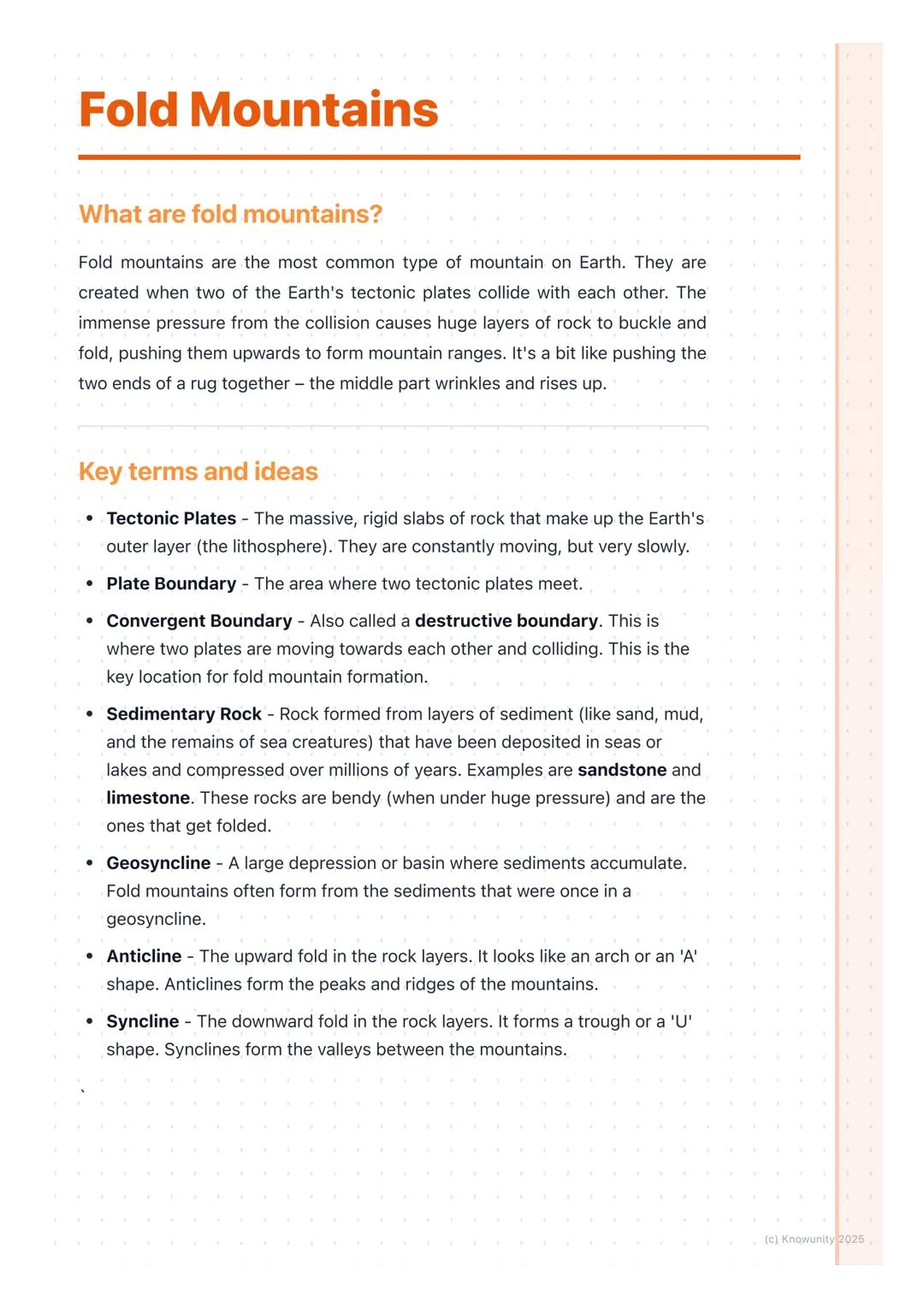
What Are Fold Mountains?
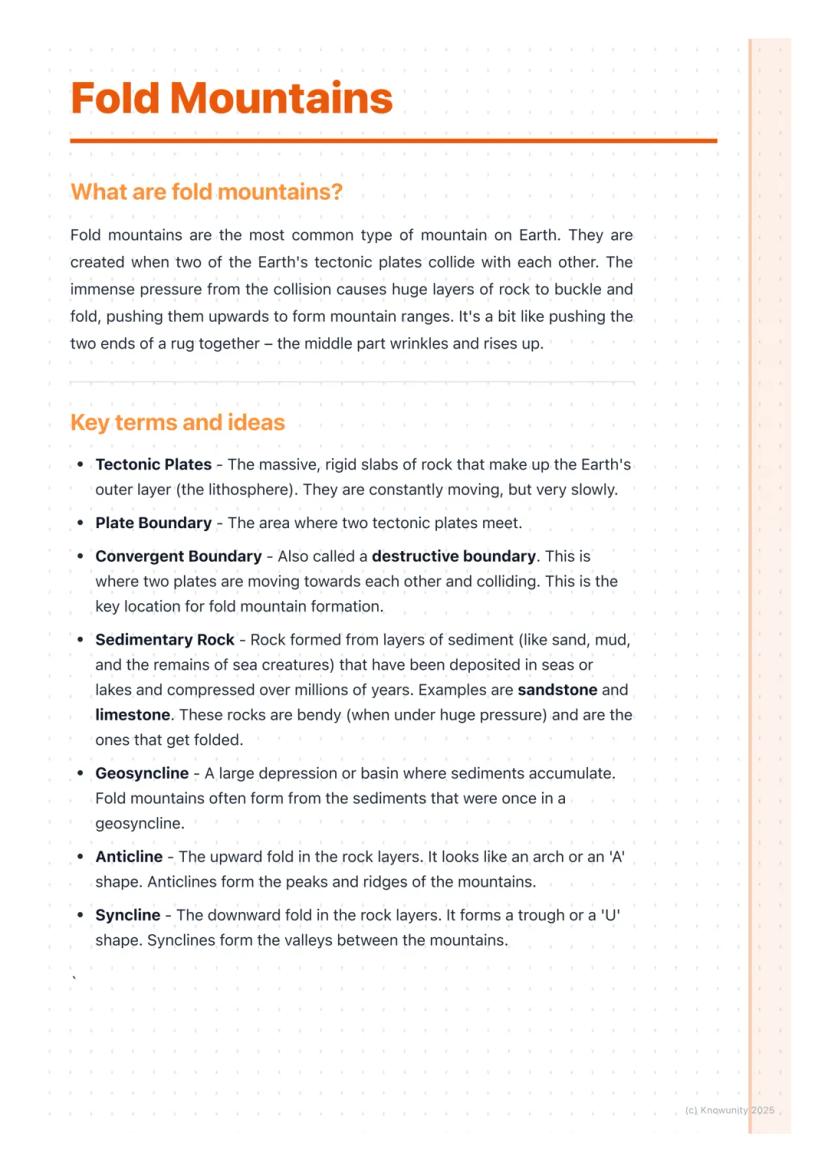
Think of fold mountains as Earth's most dramatic collision results. When tectonic plates - those massive slabs of rock that make up Earth's outer shell - smash into each other, the pressure is so intense that rock layers don't just break, they actually bend and fold upwards.
This process happens at convergent boundaries (also called destructive boundaries), where plates move towards each other. The key ingredient here is sedimentary rock - stuff like sandstone and limestone that formed from ancient sea deposits. These rocks are surprisingly bendy under extreme pressure!
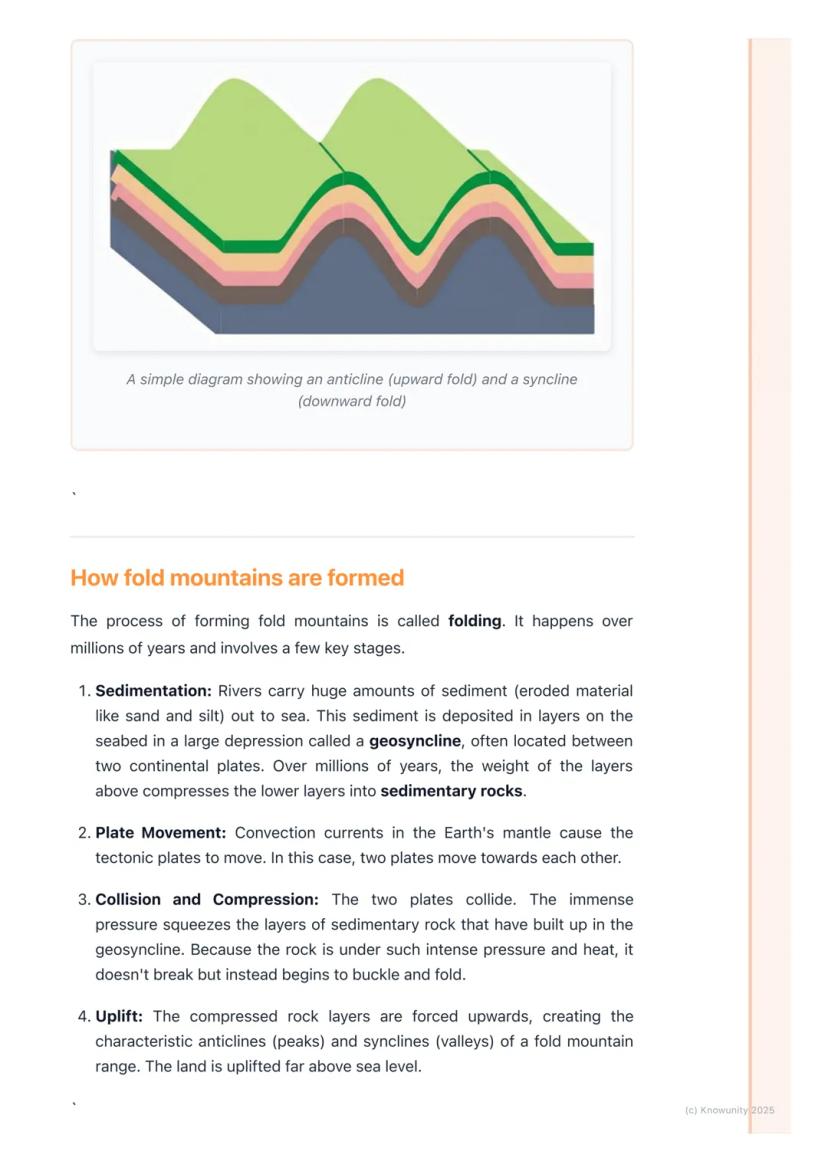
Understanding the basic structure is crucial for your exams. Anticlines are the upward folds that create mountain peaks (think of an 'A' shape), while synclines are the downward folds forming valleys between peaks (like a 'U' shape).
Quick Tip: Remember that fold mountains need sedimentary rock to work - it's flexible enough to fold rather than just snap under pressure!
2
of 5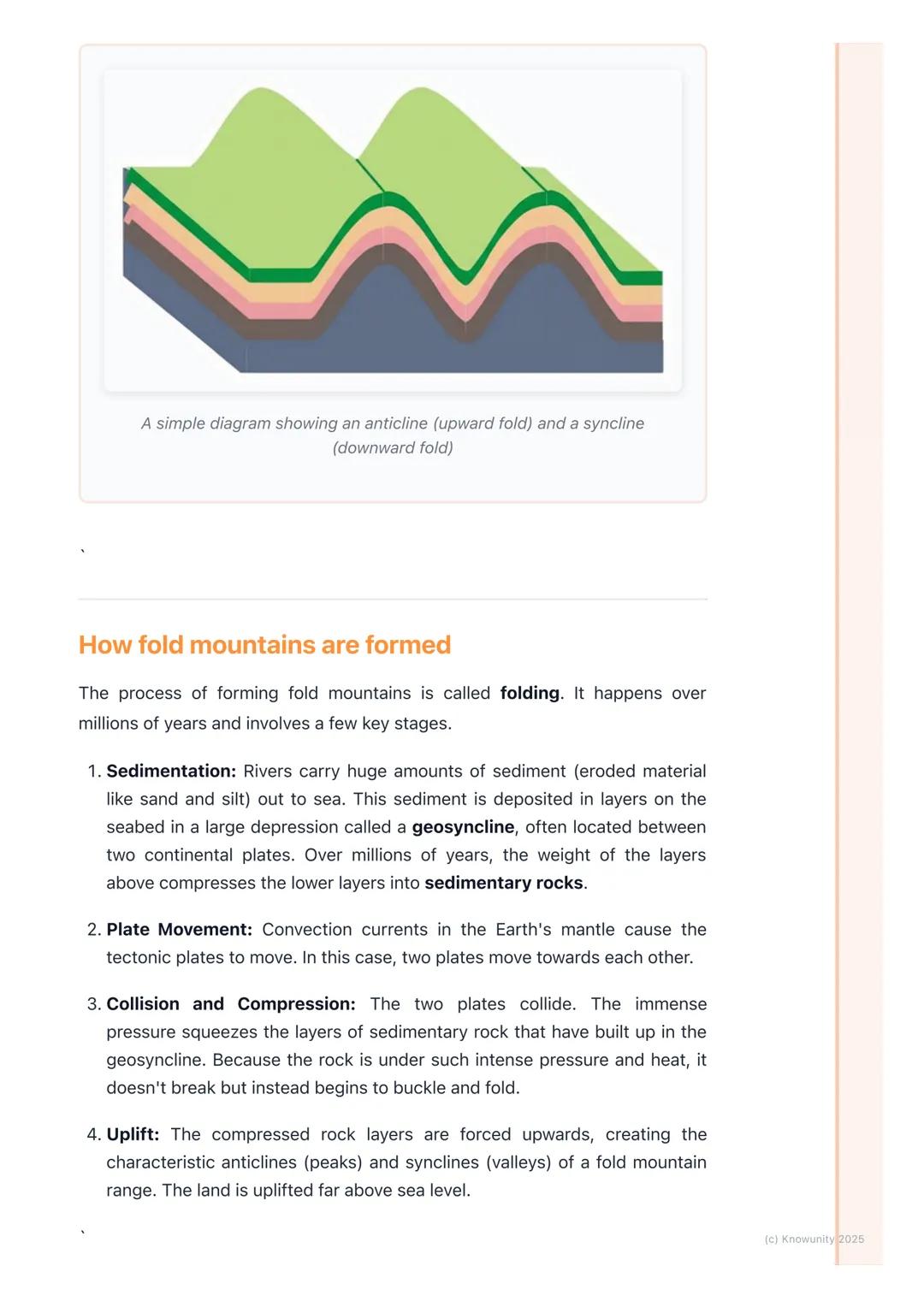
How Fold Mountains Form
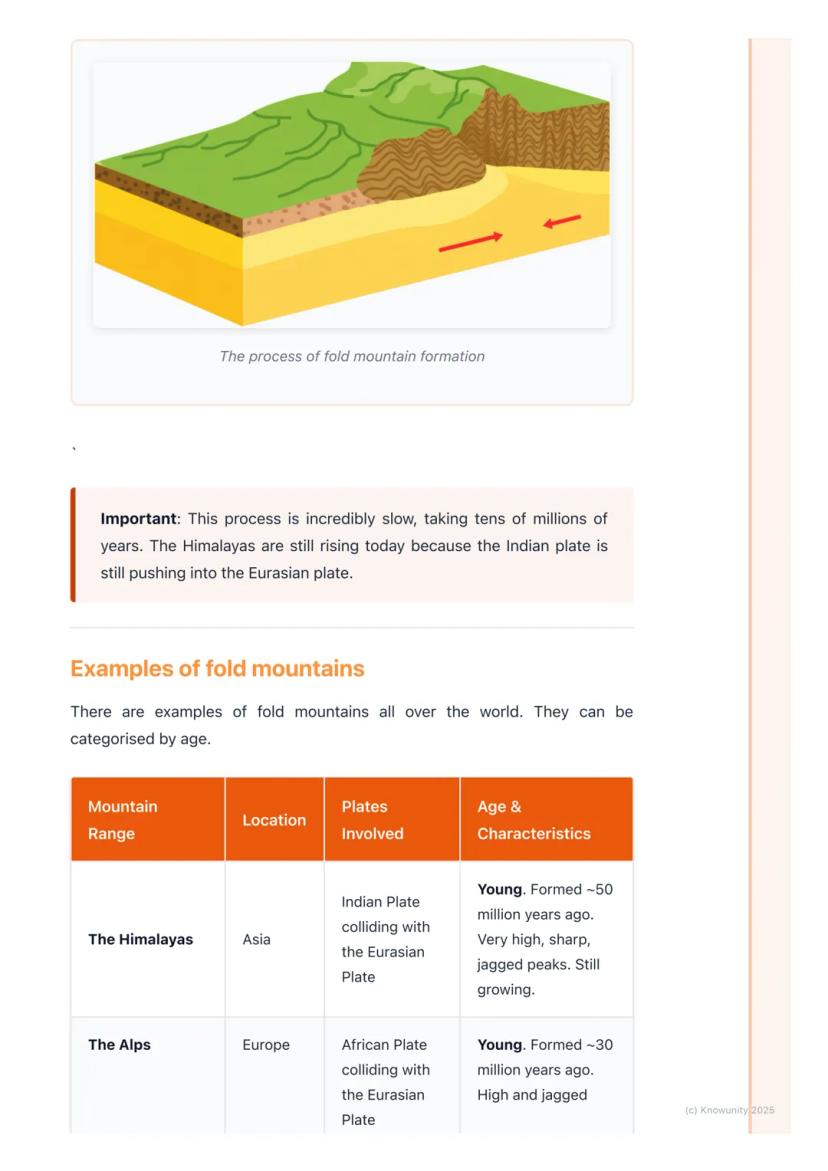
The formation process, called folding, happens in four main stages over millions of years. First, rivers dump loads of sediment into the sea, where it builds up in layers within a large depression called a geosyncline. These layers gradually compress into sedimentary rock under their own weight.
Next, convection currents in Earth's mantle start moving the tectonic plates towards each other. When they finally collide, the massive pressure squeezes all those sedimentary rock layers that have been sitting in the geosyncline.
Here's the magic bit - instead of breaking, the intense pressure and heat cause the rock layers to buckle and fold. Finally, this compressed rock gets forced upwards, creating the characteristic peaks and valleys we see in fold mountain ranges.
Mind-Blowing Fact: The Himalayas are still growing today because the Indian plate keeps pushing into the Eurasian plate - they rise about 5mm per year!
3
of 5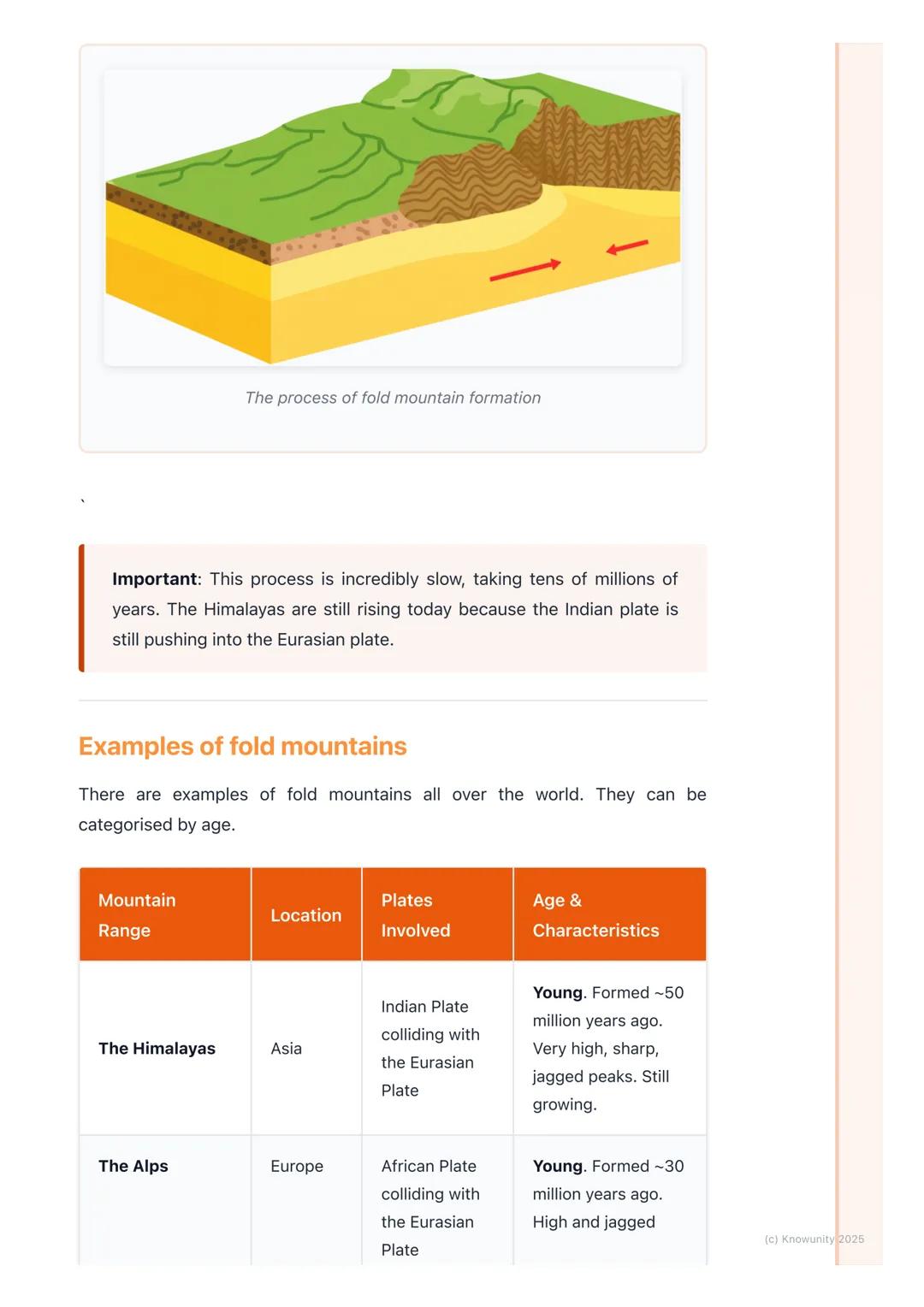
Global Examples You Need to Know
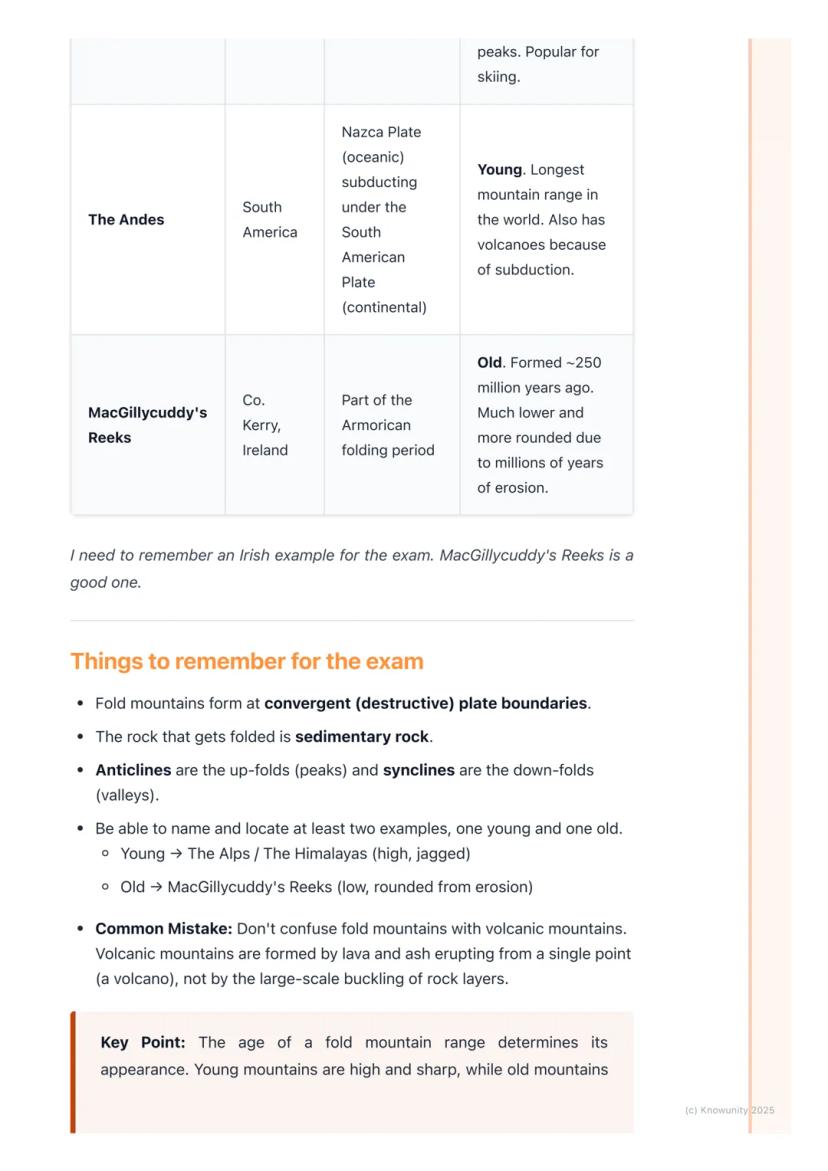
For your exams, you'll need to know both young and old fold mountain ranges. The Himalayas in Asia formed about 50 million years ago when the Indian Plate crashed into the Eurasian Plate - they're still the world's highest mountains with sharp, jagged peaks.
The Alps in Europe tell a similar story, created 30 million years ago as the African Plate collided with the Eurasian Plate. These young mountains are also high and jagged, making them perfect for skiing.
On the other end of the spectrum, MacGillycuddy's Reeks in Kerry represents Ireland's ancient fold mountains. Formed around 250 million years ago during the Armorican folding period, they're much lower and more rounded because erosion has been wearing them down for ages.
Exam Smart: Always include MacGillycuddy's Reeks as your Irish example - it's exactly what examiners want to see!
4
of 5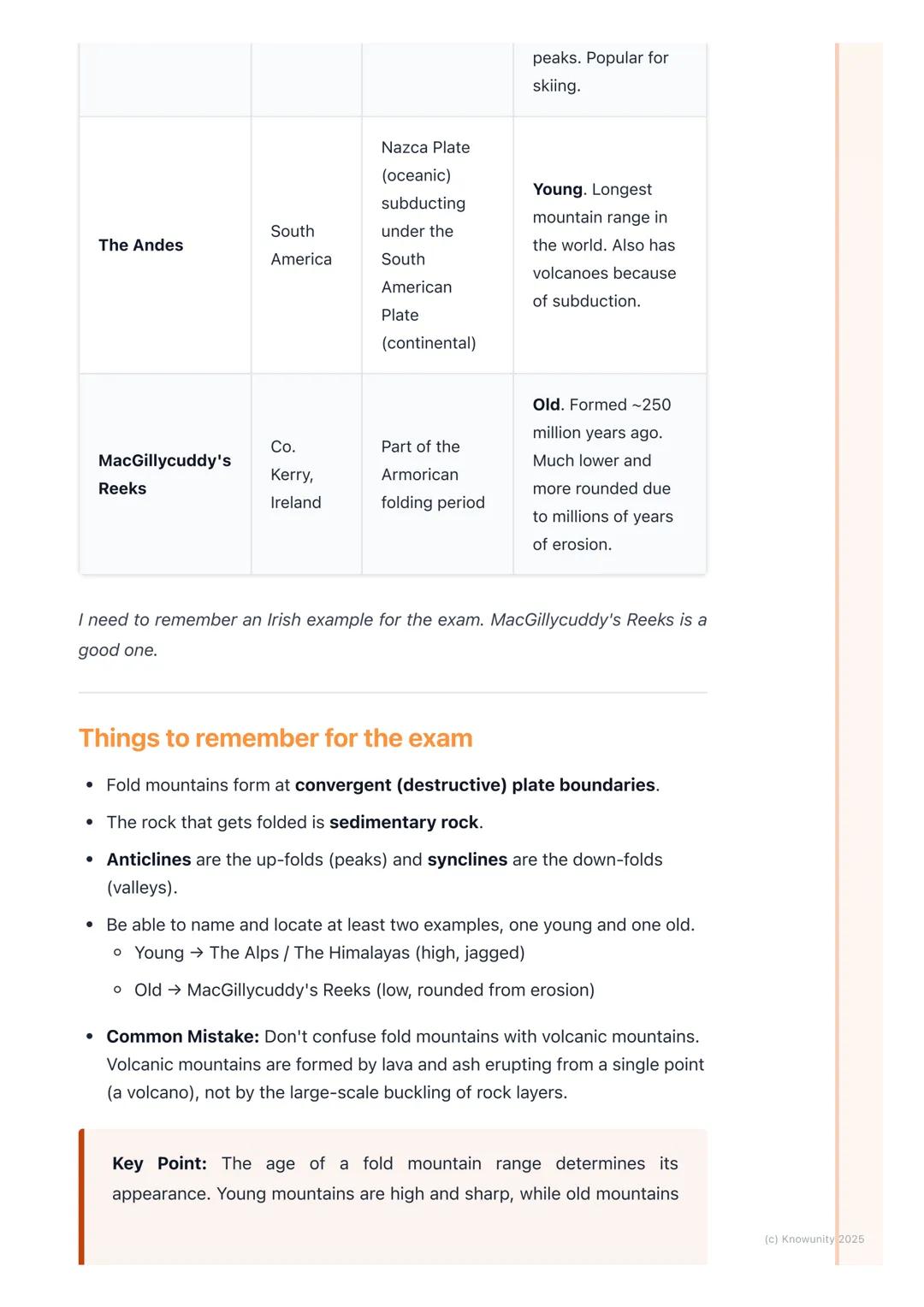
Age Matters: Young vs Old Mountains
The age of fold mountains completely changes their appearance, and this is a key concept for understanding mountain landscapes. Young fold mountains like the Himalayas and Alps are incredibly high with sharp, jagged peaks because they haven't had time for erosion to wear them down.
Old fold mountains like MacGillycuddy's Reeks look completely different - they're much lower and have rounded, gentle slopes. After millions of years of weathering and erosion, they've lost their dramatic height and sharp edges.
Don't get caught out by a common exam mistake! Fold mountains are completely different from volcanic mountains. Volcanic mountains form from lava and ash erupting from a single point, whilst fold mountains result from the large-scale buckling of entire rock layers across huge areas.
Key Insight: If you see high, sharp peaks, think young fold mountains. If you see low, rounded hills, think old fold mountains that have been eroded over time.
5
of 5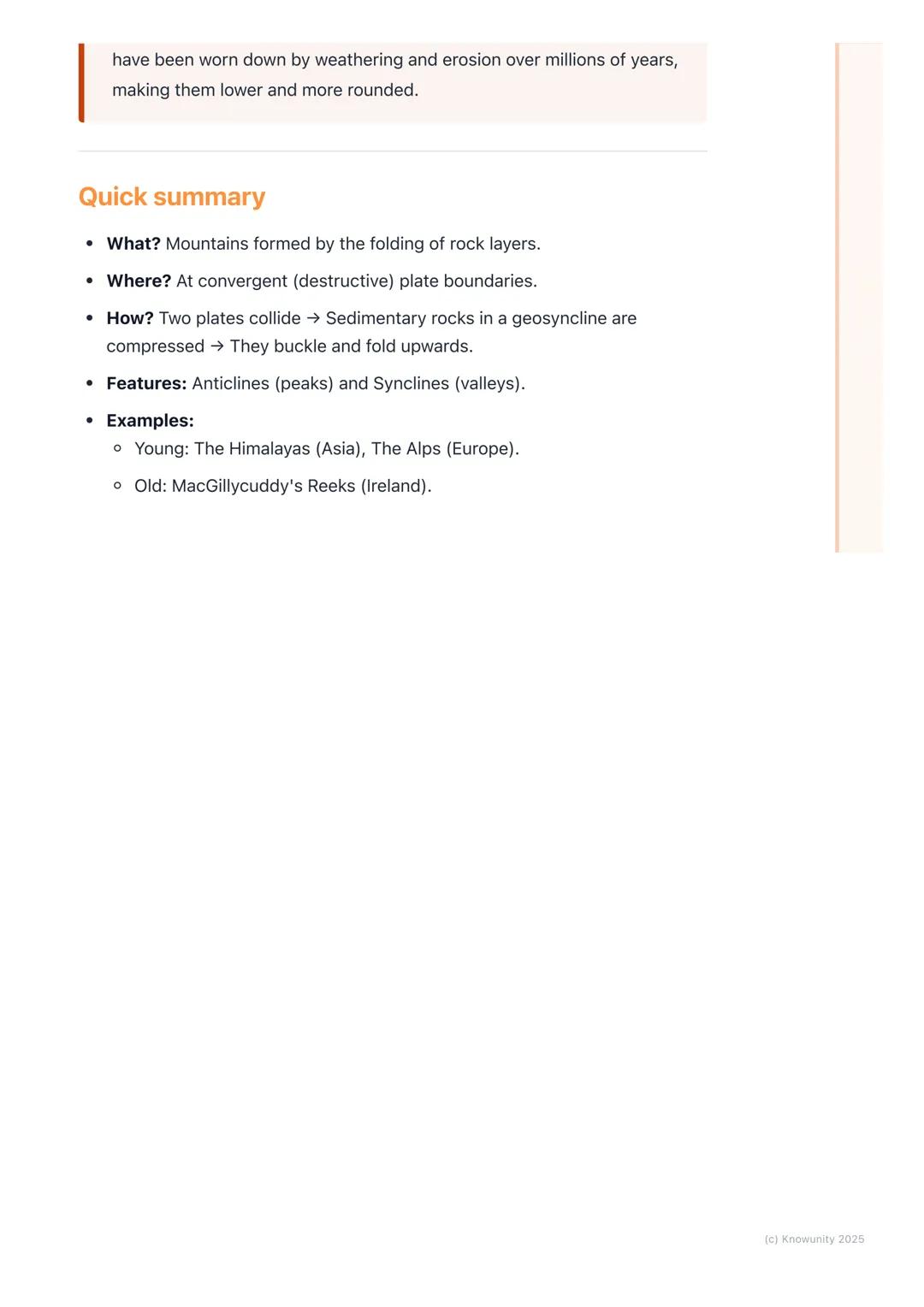
Quick Revision Summary
Here's everything you need to remember for your exams in a nutshell. Fold mountains form when sedimentary rocks get compressed and buckled upwards at convergent plate boundaries. The process creates anticlines (peaks) and synclines (valleys) over millions of years.
Your go-to examples should include young mountains like the Himalayas (Indian vs Eurasian plates) and the Alps (African vs Eurasian plates) - both high and jagged. For older examples, MacGillycuddy's Reeks in Ireland shows how erosion rounds off ancient fold mountains.
Remember the formation sequence: sedimentation in a geosyncline → plate movement → collision and compression → uplift into fold mountains. This process is still happening today in places like the Himalayas, proving that Earth's surface is constantly changing.
Exam Success: Focus on the plate boundary type (convergent), rock type (sedimentary), and be able to explain why young mountains look different from old ones!
Myśleliśmy, że nigdy nie zapytasz...
Czym jest Towarzysz AI z Knowunity?
Nasz asystent AI jest specjalnie dostosowany do potrzeb uczniów. W oparciu o miliony treści, które mamy na platformie, możemy udzielać uczniom naprawdę znaczących i trafnych odpowiedzi. Ale nie chodzi tylko o odpowiedzi, towarzysz prowadzi również uczniów przez codzienne wyzwania związane z nauką, ze spersonalizowanymi planami nauki, quizami lub treściami na czacie i 100% personalizacją opartą na umiejętnościach i rozwoju uczniów.
Gdzie mogę pobrać aplikację Knowunity?
Aplikację możesz pobrać z Google Play i Apple Store.
Czy aplikacja Knowunity naprawdę jest darmowa?
Tak, masz całkowicie darmowy dostęp do wszystkich notatek w aplikacji, możesz w każdej chwili rozmawiać z Ekspertami lub ich obserwować. Możesz użyć punktów, aby odblokować pewne funkcje w aplikacji, które również możesz otrzymać za darmo. Dodatkowo oferujemy usługę Knowunity Premium, która pozwala na odblokowanie większej liczby funkcji.
Najpopularniejsze notatki z Geography
9Najpopularniejsze notatki
9Nie ma nic odpowiedniego? Sprawdź inne przedmioty.
Zobacz, co mówią o nas nasi użytkownicy. Pokochali nas — pokochasz też i Ty.
4.6/5App Store
4.7/5Google Play
Aplikacja jest bardzo prosta i dobrze przemyślana. Do tej pory znalazłem wszystko, czego szukałem i mogłem się wiele nauczyć z innych notatek! Na pewno wykorzystam aplikację do pomocy przy robieniu prac domowych! No i oczywiście bardzo pomaga też jako inspiracja do robienia swoich notatek.
Stefan Sużytkownik iOS
Ta aplikacja jest naprawdę świetna. Jest tak wiele notatek i pomocnych informacji [...]. Moim problematycznym przedmiotem jest język niemiecki, a w aplikacji jest w czym wybierać. Dzięki tej aplikacji poprawiłam swój niemiecki. Polecam ją każdemu.
Samantha Klichużytkownik Androida
Wow, jestem w szoku. Właśnie wypróbowałam aplikację, ponieważ widziałam ją kilka razy reklamowaną na TikToku jestem absolutnie w szoku. Ta aplikacja jest POMOCĄ, której potrzebujesz w szkole i przede wszystkim oferuje tak wiele rzeczy jak notatki czy streszczenia, które są BARDZO pomocne w moim przypadku.
Annaużytkownik iOS
Geography8 wyświetleń·Zaktualizowano May 26, 2026·5 stronyFormation of Fold Mountains: Tectonic Plate Collisions
Ever wondered how massive mountain ranges like the Himalayas or the Alps actually formed? Fold mountainsare created when Earth's tectonic plates crash into each other with such force that entire layers of rock buckle and fold upwards - imagine... Pokaż więcej
1
of 5Zarejestruj się, aby zobaczyć notatkę. To nic nie kosztuje!
- Dostęp do wszystkich materiałów
- Popraw swoje oceny
- Dołącz do milionów studentów
What Are Fold Mountains?
Think of fold mountains as Earth's most dramatic collision results. When tectonic plates - those massive slabs of rock that make up Earth's outer shell - smash into each other, the pressure is so intense that rock layers don't just break, they actually bend and fold upwards.
This process happens at convergent boundaries (also called destructive boundaries), where plates move towards each other. The key ingredient here is sedimentary rock - stuff like sandstone and limestone that formed from ancient sea deposits. These rocks are surprisingly bendy under extreme pressure!
Understanding the basic structure is crucial for your exams. Anticlines are the upward folds that create mountain peaks (think of an 'A' shape), while synclines are the downward folds forming valleys between peaks (like a 'U' shape).
Quick Tip: Remember that fold mountains need sedimentary rock to work - it's flexible enough to fold rather than just snap under pressure!
2
of 5Zarejestruj się, aby zobaczyć notatkę. To nic nie kosztuje!
- Dostęp do wszystkich materiałów
- Popraw swoje oceny
- Dołącz do milionów studentów
How Fold Mountains Form
The formation process, called folding, happens in four main stages over millions of years. First, rivers dump loads of sediment into the sea, where it builds up in layers within a large depression called a geosyncline. These layers gradually compress into sedimentary rock under their own weight.
Next, convection currents in Earth's mantle start moving the tectonic plates towards each other. When they finally collide, the massive pressure squeezes all those sedimentary rock layers that have been sitting in the geosyncline.
Here's the magic bit - instead of breaking, the intense pressure and heat cause the rock layers to buckle and fold. Finally, this compressed rock gets forced upwards, creating the characteristic peaks and valleys we see in fold mountain ranges.
Mind-Blowing Fact: The Himalayas are still growing today because the Indian plate keeps pushing into the Eurasian plate - they rise about 5mm per year!
3
of 5Zarejestruj się, aby zobaczyć notatkę. To nic nie kosztuje!
- Dostęp do wszystkich materiałów
- Popraw swoje oceny
- Dołącz do milionów studentów
Global Examples You Need to Know
For your exams, you'll need to know both young and old fold mountain ranges. The Himalayas in Asia formed about 50 million years ago when the Indian Plate crashed into the Eurasian Plate - they're still the world's highest mountains with sharp, jagged peaks.
The Alps in Europe tell a similar story, created 30 million years ago as the African Plate collided with the Eurasian Plate. These young mountains are also high and jagged, making them perfect for skiing.
On the other end of the spectrum, MacGillycuddy's Reeks in Kerry represents Ireland's ancient fold mountains. Formed around 250 million years ago during the Armorican folding period, they're much lower and more rounded because erosion has been wearing them down for ages.
Exam Smart: Always include MacGillycuddy's Reeks as your Irish example - it's exactly what examiners want to see!
4
of 5Zarejestruj się, aby zobaczyć notatkę. To nic nie kosztuje!
- Dostęp do wszystkich materiałów
- Popraw swoje oceny
- Dołącz do milionów studentów
Age Matters: Young vs Old Mountains
The age of fold mountains completely changes their appearance, and this is a key concept for understanding mountain landscapes. Young fold mountains like the Himalayas and Alps are incredibly high with sharp, jagged peaks because they haven't had time for erosion to wear them down.
Old fold mountains like MacGillycuddy's Reeks look completely different - they're much lower and have rounded, gentle slopes. After millions of years of weathering and erosion, they've lost their dramatic height and sharp edges.
Don't get caught out by a common exam mistake! Fold mountains are completely different from volcanic mountains. Volcanic mountains form from lava and ash erupting from a single point, whilst fold mountains result from the large-scale buckling of entire rock layers across huge areas.
Key Insight: If you see high, sharp peaks, think young fold mountains. If you see low, rounded hills, think old fold mountains that have been eroded over time.
5
of 5Zarejestruj się, aby zobaczyć notatkę. To nic nie kosztuje!
- Dostęp do wszystkich materiałów
- Popraw swoje oceny
- Dołącz do milionów studentów
Quick Revision Summary
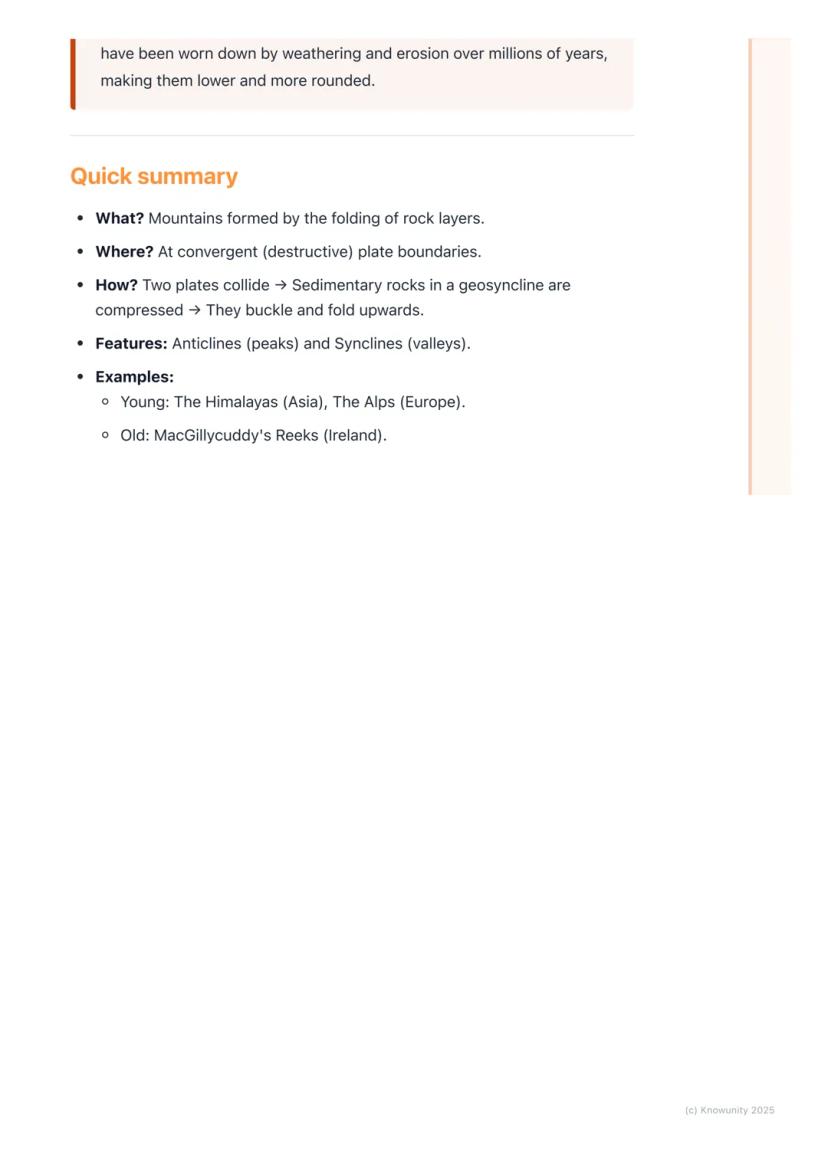
Here's everything you need to remember for your exams in a nutshell. Fold mountains form when sedimentary rocks get compressed and buckled upwards at convergent plate boundaries. The process creates anticlines (peaks) and synclines (valleys) over millions of years.
Your go-to examples should include young mountains like the Himalayas (Indian vs Eurasian plates) and the Alps (African vs Eurasian plates) - both high and jagged. For older examples, MacGillycuddy's Reeks in Ireland shows how erosion rounds off ancient fold mountains.
Remember the formation sequence: sedimentation in a geosyncline → plate movement → collision and compression → uplift into fold mountains. This process is still happening today in places like the Himalayas, proving that Earth's surface is constantly changing.
Exam Success: Focus on the plate boundary type (convergent), rock type (sedimentary), and be able to explain why young mountains look different from old ones!
Myśleliśmy, że nigdy nie zapytasz...
Czym jest Towarzysz AI z Knowunity?
Nasz asystent AI jest specjalnie dostosowany do potrzeb uczniów. W oparciu o miliony treści, które mamy na platformie, możemy udzielać uczniom naprawdę znaczących i trafnych odpowiedzi. Ale nie chodzi tylko o odpowiedzi, towarzysz prowadzi również uczniów przez codzienne wyzwania związane z nauką, ze spersonalizowanymi planami nauki, quizami lub treściami na czacie i 100% personalizacją opartą na umiejętnościach i rozwoju uczniów.
Gdzie mogę pobrać aplikację Knowunity?
Aplikację możesz pobrać z Google Play i Apple Store.
Czy aplikacja Knowunity naprawdę jest darmowa?
Tak, masz całkowicie darmowy dostęp do wszystkich notatek w aplikacji, możesz w każdej chwili rozmawiać z Ekspertami lub ich obserwować. Możesz użyć punktów, aby odblokować pewne funkcje w aplikacji, które również możesz otrzymać za darmo. Dodatkowo oferujemy usługę Knowunity Premium, która pozwala na odblokowanie większej liczby funkcji.
Najpopularniejsze notatki z Geography
9Najpopularniejsze notatki
9Nie ma nic odpowiedniego? Sprawdź inne przedmioty.
Zobacz, co mówią o nas nasi użytkownicy. Pokochali nas — pokochasz też i Ty.
4.6/5App Store
4.7/5Google Play
Aplikacja jest bardzo prosta i dobrze przemyślana. Do tej pory znalazłem wszystko, czego szukałem i mogłem się wiele nauczyć z innych notatek! Na pewno wykorzystam aplikację do pomocy przy robieniu prac domowych! No i oczywiście bardzo pomaga też jako inspiracja do robienia swoich notatek.
Stefan Sużytkownik iOS
Ta aplikacja jest naprawdę świetna. Jest tak wiele notatek i pomocnych informacji [...]. Moim problematycznym przedmiotem jest język niemiecki, a w aplikacji jest w czym wybierać. Dzięki tej aplikacji poprawiłam swój niemiecki. Polecam ją każdemu.
Samantha Klichużytkownik Androida
Wow, jestem w szoku. Właśnie wypróbowałam aplikację, ponieważ widziałam ją kilka razy reklamowaną na TikToku jestem absolutnie w szoku. Ta aplikacja jest POMOCĄ, której potrzebujesz w szkole i przede wszystkim oferuje tak wiele rzeczy jak notatki czy streszczenia, które są BARDZO pomocne w moim przypadku.
Annaużytkownik iOS