
Ever wonder why you can sprint for only a few... Pokaż więcej
 LCPE6 wyświetleń·Zaktualizowano Jun 8, 2026·5 strony
Introduction to the Body's Energy Systems
1 / 5
1
of 5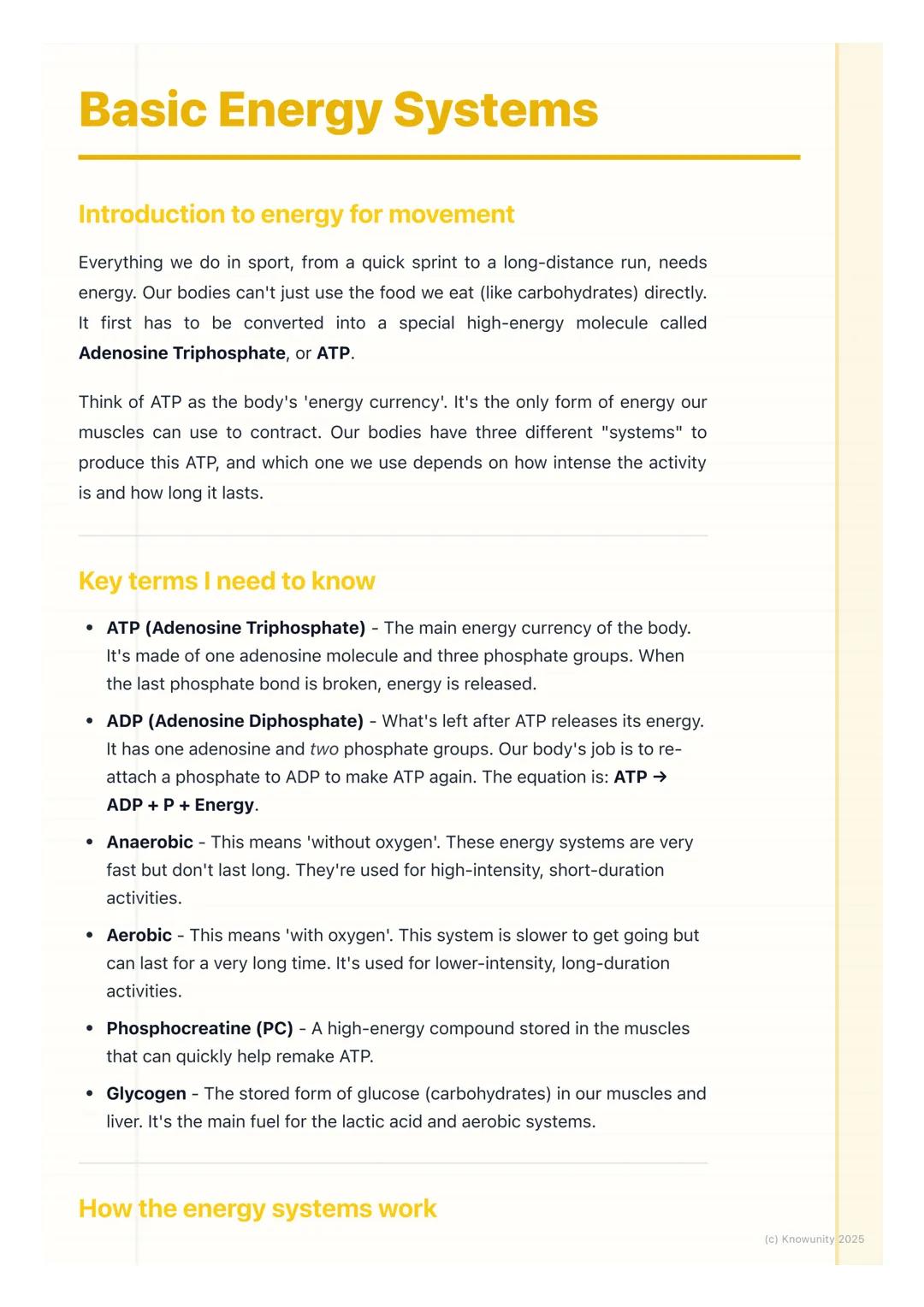
Basic Energy Systems
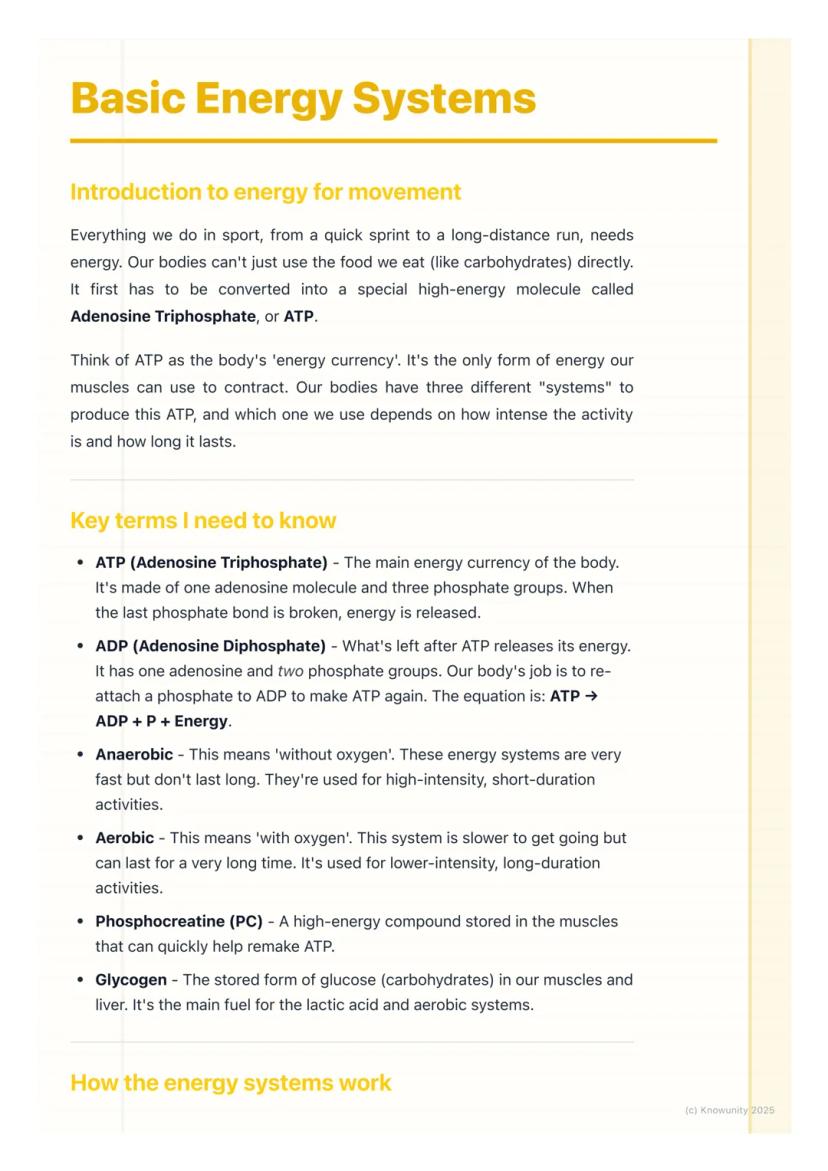
Your muscles are basically really picky eaters - they can only use one type of fuel called ATP (Adenosine Triphosphate). Think of ATP as your body's energy currency, like coins in an arcade machine.
Here's the thing though: your body only stores enough ATP for about 2-3 seconds of movement. After that, it needs to quickly make more using three different systems. The cool part is that these systems work together on what's called the energy continuum - it's not like flicking a switch, but more like a sliding scale where one system takes the lead.
The key difference between these systems is whether they need oxygen (aerobic) or can work without oxygen (anaerobic). Anaerobic systems are lightning fast but burn out quickly, whilst aerobic systems are like marathon runners - slower to start but can keep going for hours.
Quick Tip: Remember the equation ATP → ADP + P + Energy. Your body's job is constantly sticking that phosphate back on to remake ATP!
2
of 5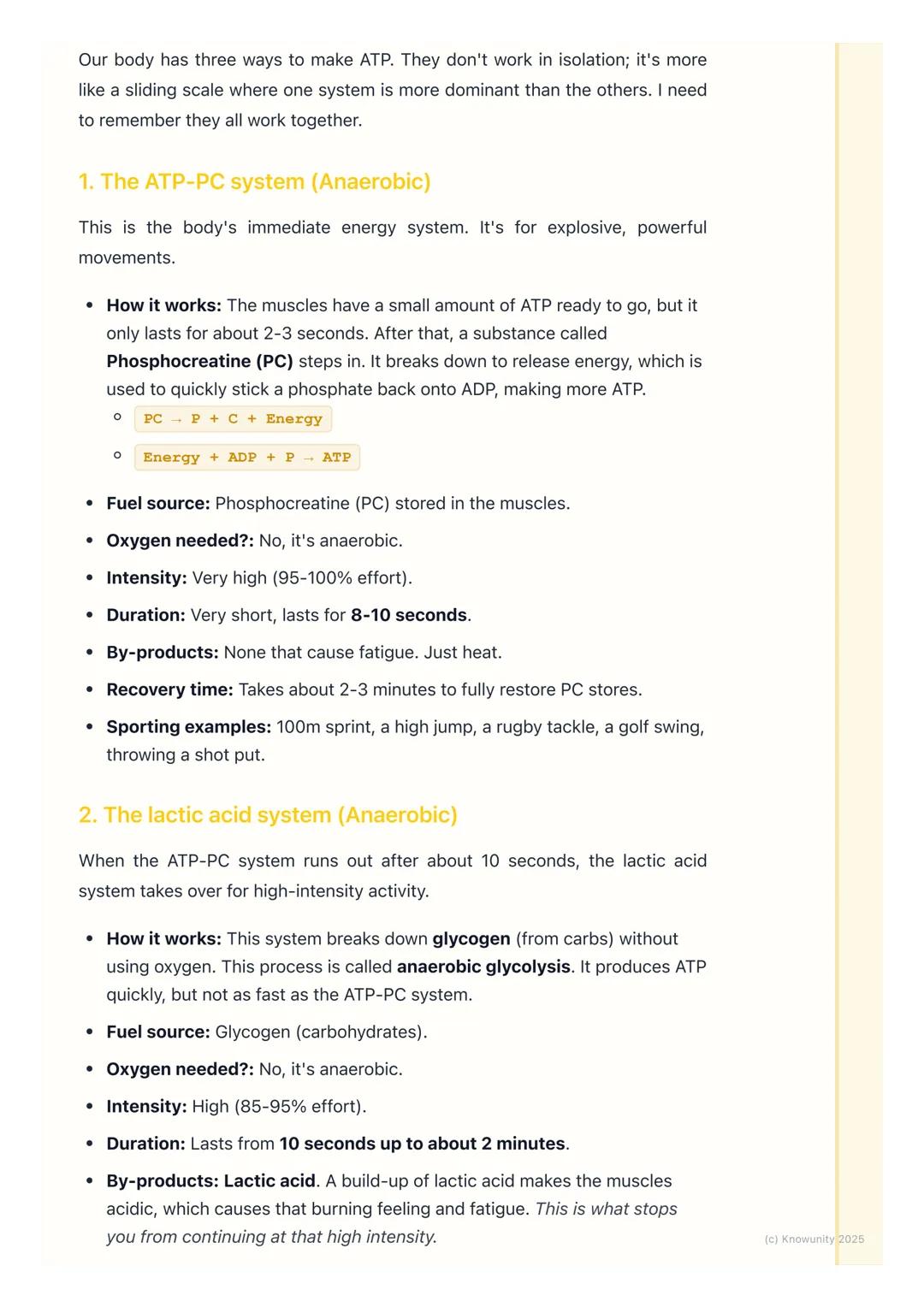
The Three Energy Systems
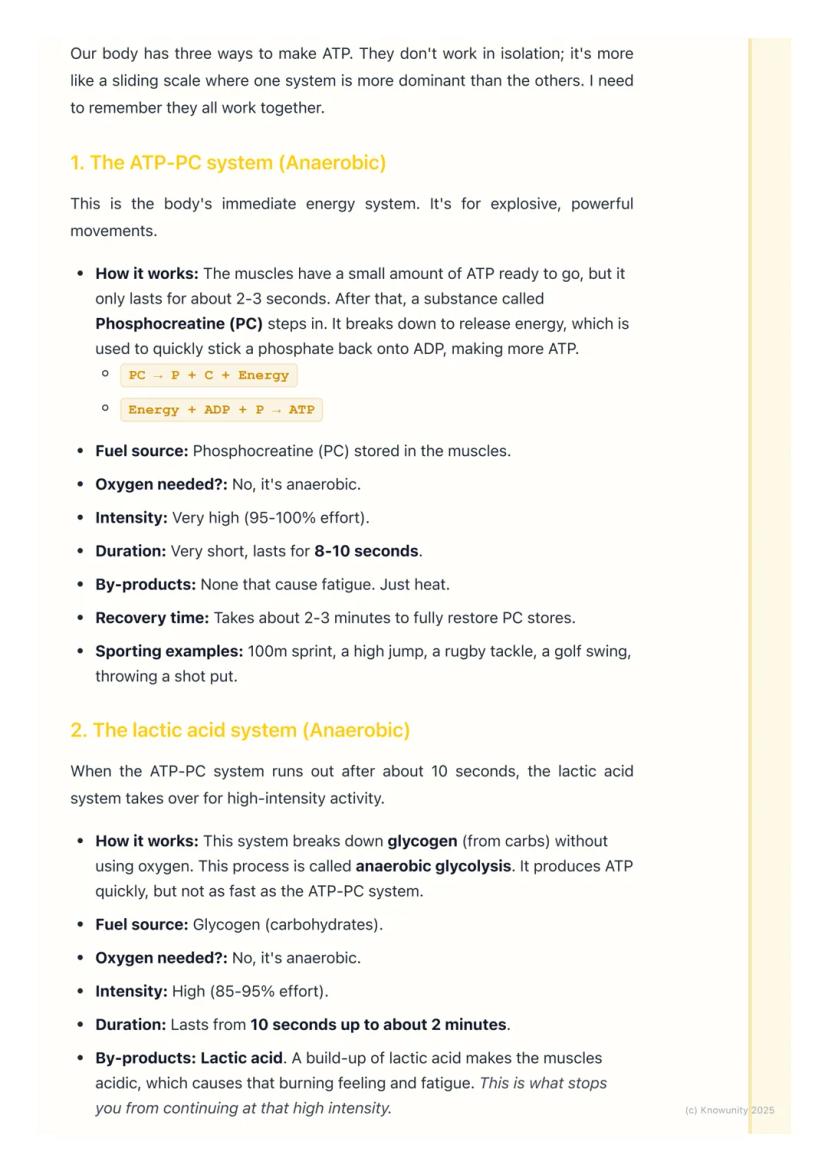
The ATP-PC System is your body's emergency energy supply. It's pure explosive power for about 8-10 seconds using phosphocreatine (PC) stored in your muscles. Think 100m sprint start or a rugby tackle - maximum effort, no oxygen needed, no nasty side effects.
The Lactic Acid System takes over when you're still going hard after 10 seconds. It breaks down glycogen (stored carbs) without oxygen, but here's the catch - it produces lactic acid that makes your muscles burn and forces you to slow down after about 2 minutes.
The Aerobic System is your endurance powerhouse. It uses oxygen to efficiently burn glycogen and fats, producing only harmless water and carbon dioxide. This system can literally keep you going for hours, but it can't produce energy fast enough for high-intensity work.
Remember: These systems don't work in isolation - they're all contributing at the same time, with one being dominant depending on what you're doing.
3
of 5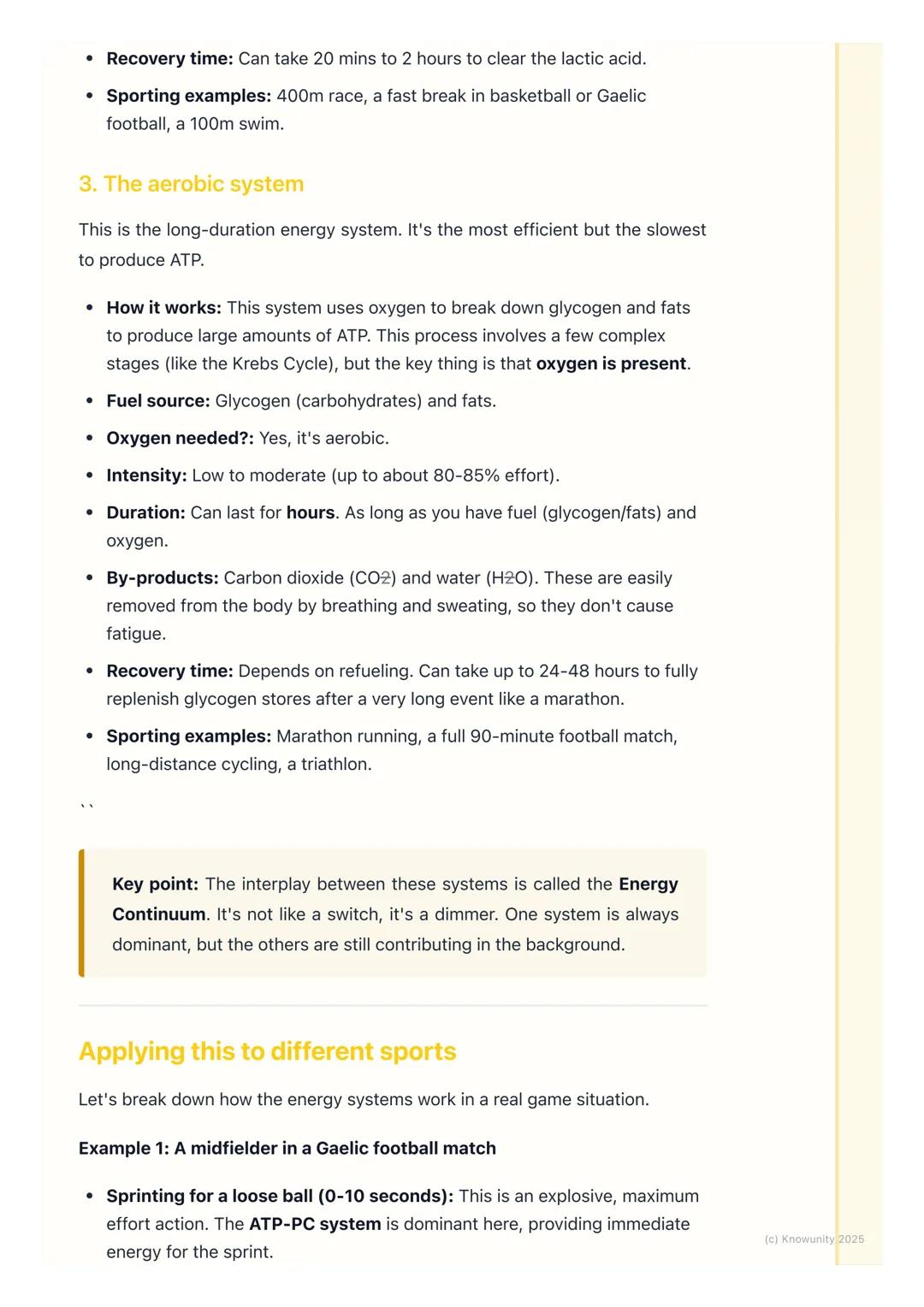
Real Sport Applications
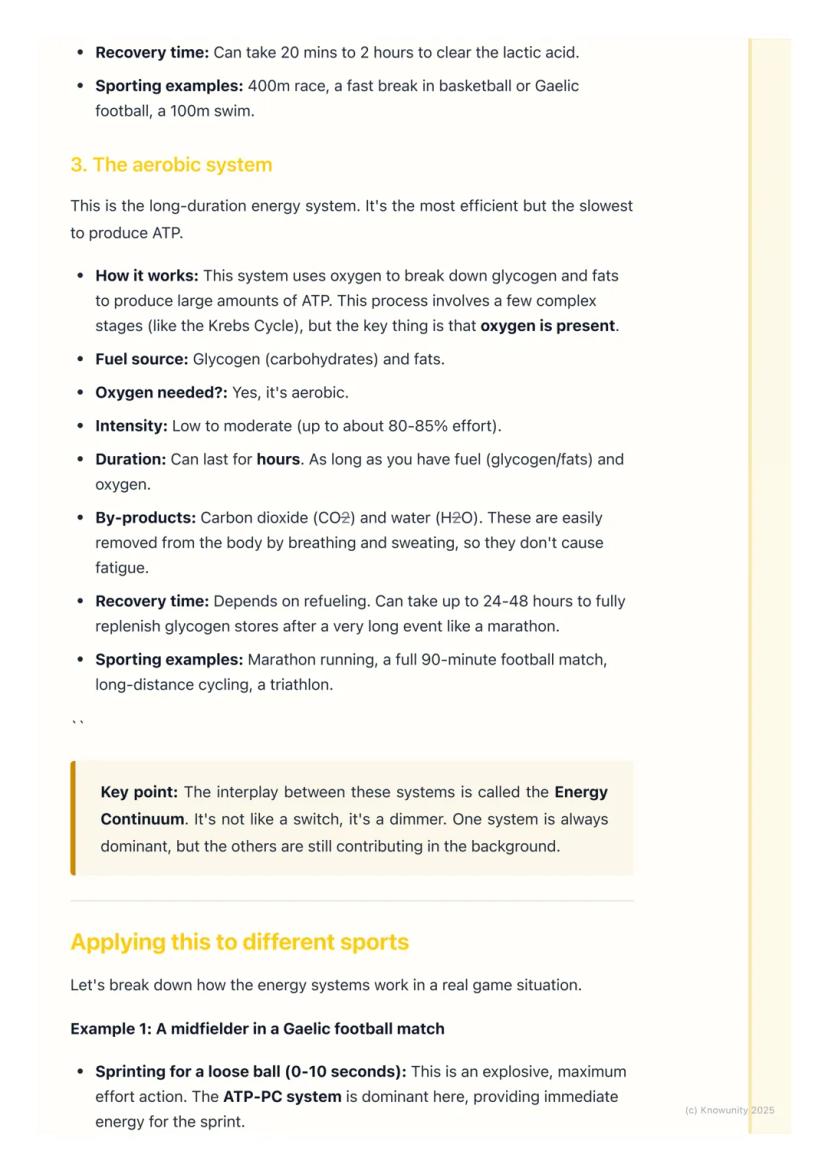
Let's look at a Gaelic football midfielder during a match. When they sprint for a loose ball , the ATP-PC system dominates, giving that explosive burst. During a gut-busting run up the pitch , the lactic acid system takes over - that's why their legs start burning.
For the rest of the 70-minute match, the aerobic system is doing most of the work during jogging and recovery periods. It's also busy helping to clear lactic acid and restock the anaerobic systems during breaks in play.
A 400m sprinter is the perfect example of lactic acid system dominance. The first 50m uses ATP-PC for that explosive start, then lactic acid takes over for the brutal middle section. By the final 100m, lactic acid buildup is causing that wall of pain every 400m runner knows too well.
Exam Gold: Never say the systems work "one at a time" - always mention the dominant system and how they work together on the energy continuum.
4
of 5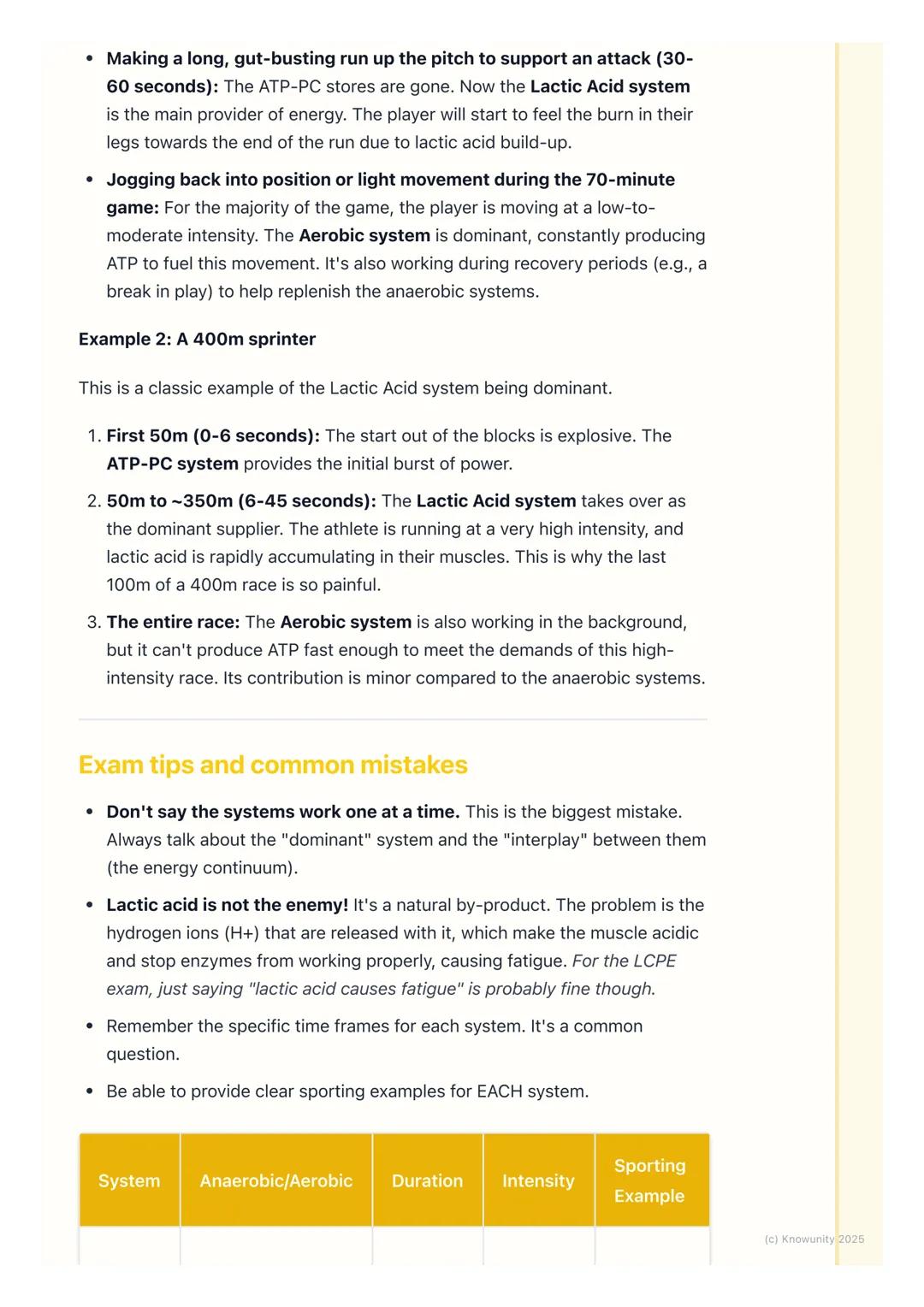
Key Details and Exam Tips
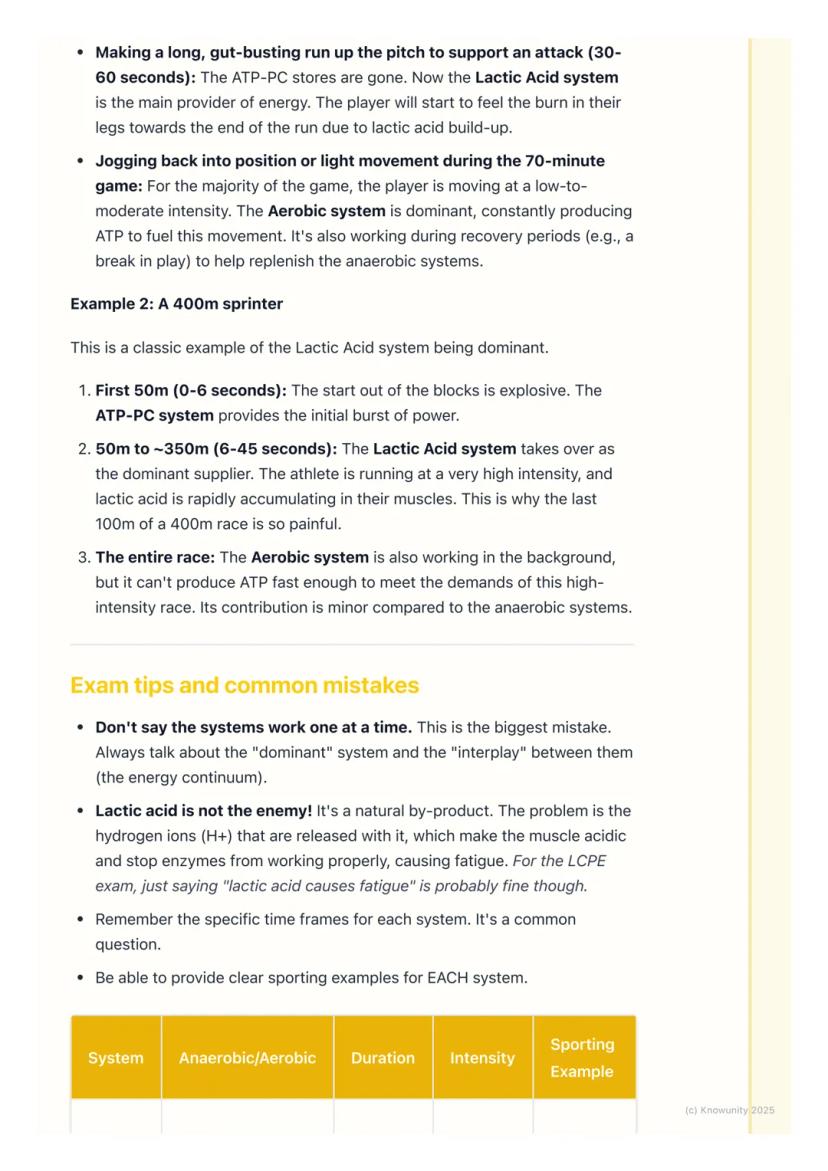
Here's what you absolutely need to know for exams: ATP-PC lasts 8-10 seconds at maximum intensity using PC as fuel. Lactic acid system goes from 10 seconds to 2 minutes at high intensity using glycogen, producing that burning sensation. Aerobic system kicks in properly after 2 minutes, using glycogen and fats with oxygen for sustained activity.
The recovery times are crucial too. ATP-PC stores refill in 2-3 minutes, lactic acid takes 20 minutes to 2 hours to clear, and full glycogen restoration can take up to 48 hours after really long events.
Common exam mistakes include saying systems work separately (they don't), forgetting that all systems contribute simultaneously, and mixing up the time frames. Also remember - it's not actually the lactic acid that causes fatigue, but the hydrogen ions that make muscles acidic.
Pro Tip: Learn one clear sporting example for each system - shot put , 400m sprint (lactic acid), and marathon (aerobic). You'll definitely need these in exams.
5
of 5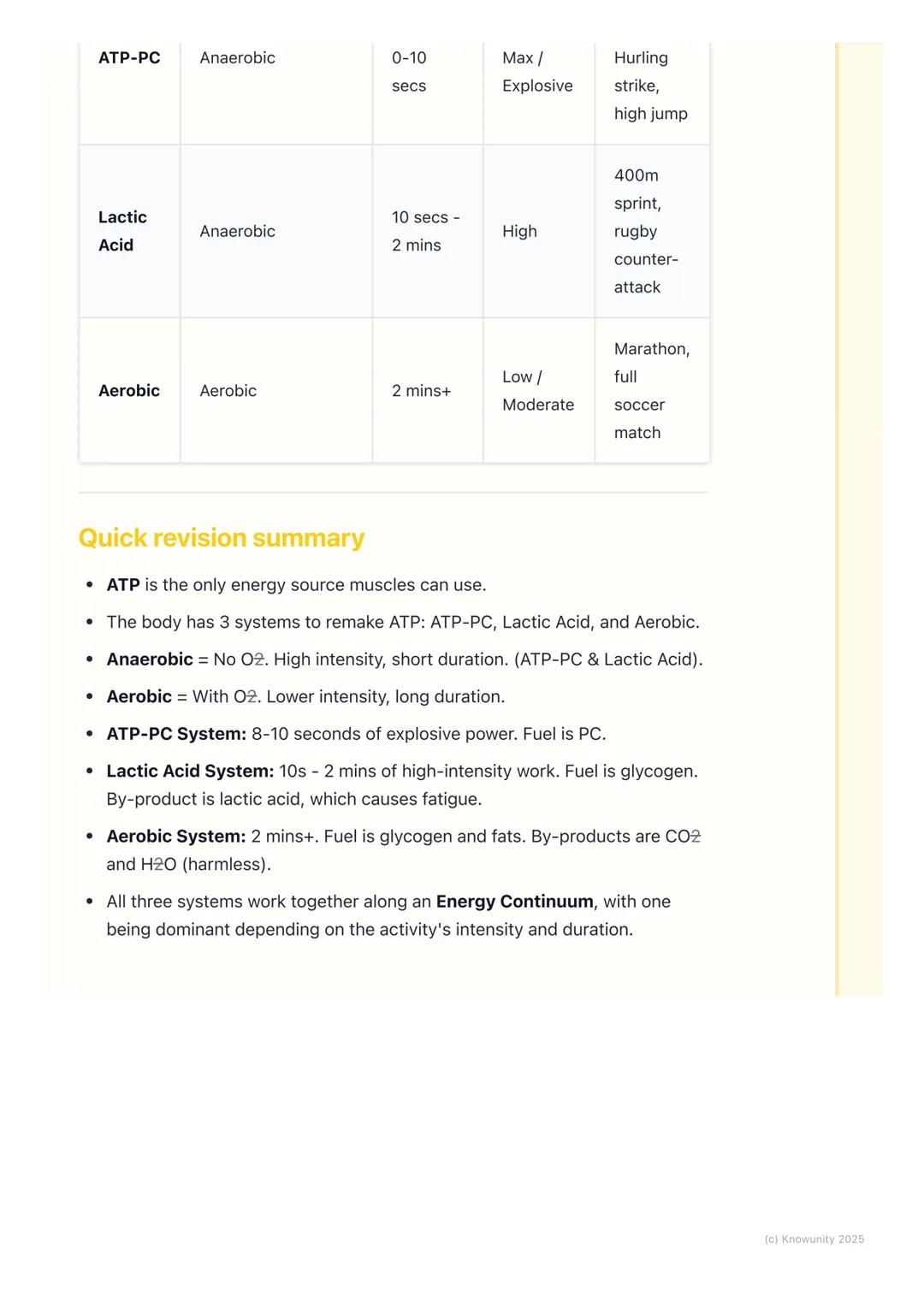
Quick Revision Summary
Your body's energy systems work like a perfectly coordinated team. The ATP-PC system handles explosive movements up to 10 seconds. The lactic acid system powers high-intensity work for 10 seconds to 2 minutes but comes with that burning penalty. The aerobic system is your long-distance champion, efficiently fueling moderate activity for hours.
Remember the energy continuum concept - these systems blend into each other rather than switching on and off. Which system dominates depends entirely on how intense your activity is and how long you're doing it for.
Master the time frames, fuel sources, and sporting examples for each system. Understanding when each system kicks in will help you make sense of training programs, why different sports feel so different, and how to pace yourself in everything from a 100m sprint to a long bike ride.
Final Check: Can you explain why a footballer can jog for 90 minutes but only sprint flat-out for 10 seconds? If yes, you've got this!
Myśleliśmy, że nigdy nie zapytasz...
Czym jest Towarzysz AI z Knowunity?
Nasz asystent AI jest specjalnie dostosowany do potrzeb uczniów. W oparciu o miliony treści, które mamy na platformie, możemy udzielać uczniom naprawdę znaczących i trafnych odpowiedzi. Ale nie chodzi tylko o odpowiedzi, towarzysz prowadzi również uczniów przez codzienne wyzwania związane z nauką, ze spersonalizowanymi planami nauki, quizami lub treściami na czacie i 100% personalizacją opartą na umiejętnościach i rozwoju uczniów.
Gdzie mogę pobrać aplikację Knowunity?
Aplikację możesz pobrać z Google Play i Apple Store.
Czy aplikacja Knowunity naprawdę jest darmowa?
Tak, masz całkowicie darmowy dostęp do wszystkich notatek w aplikacji, możesz w każdej chwili rozmawiać z Ekspertami lub ich obserwować. Możesz użyć punktów, aby odblokować pewne funkcje w aplikacji, które również możesz otrzymać za darmo. Dodatkowo oferujemy usługę Knowunity Premium, która pozwala na odblokowanie większej liczby funkcji.
Najpopularniejsze notatki z LCPE
4Najpopularniejsze notatki
9Nie ma nic odpowiedniego? Sprawdź inne przedmioty.
Zobacz, co mówią o nas nasi użytkownicy. Pokochali nas — pokochasz też i Ty.
4.6/5App Store
4.7/5Google Play
Aplikacja jest bardzo prosta i dobrze przemyślana. Do tej pory znalazłem wszystko, czego szukałem i mogłem się wiele nauczyć z innych notatek! Na pewno wykorzystam aplikację do pomocy przy robieniu prac domowych! No i oczywiście bardzo pomaga też jako inspiracja do robienia swoich notatek.
Stefan Sużytkownik iOS
Ta aplikacja jest naprawdę świetna. Jest tak wiele notatek i pomocnych informacji [...]. Moim problematycznym przedmiotem jest język niemiecki, a w aplikacji jest w czym wybierać. Dzięki tej aplikacji poprawiłam swój niemiecki. Polecam ją każdemu.
Samantha Klichużytkownik Androida
Wow, jestem w szoku. Właśnie wypróbowałam aplikację, ponieważ widziałam ją kilka razy reklamowaną na TikToku jestem absolutnie w szoku. Ta aplikacja jest POMOCĄ, której potrzebujesz w szkole i przede wszystkim oferuje tak wiele rzeczy jak notatki czy streszczenia, które są BARDZO pomocne w moim przypadku.
Annaużytkownik iOS
LCPE6 wyświetleń·Zaktualizowano Jun 8, 2026·5 stronyIntroduction to the Body's Energy Systems
Ever wonder why you can sprint for only a few seconds but jog for ages? Your body has three different energy systems that kick in depending on what you're doing. Understanding these systems will help you make sense of why... Pokaż więcej
1
of 5Zarejestruj się, aby zobaczyć notatkę. To nic nie kosztuje!
- Dostęp do wszystkich materiałów
- Popraw swoje oceny
- Dołącz do milionów studentów
Basic Energy Systems
Your muscles are basically really picky eaters - they can only use one type of fuel called ATP (Adenosine Triphosphate). Think of ATP as your body's energy currency, like coins in an arcade machine.
Here's the thing though: your body only stores enough ATP for about 2-3 seconds of movement. After that, it needs to quickly make more using three different systems. The cool part is that these systems work together on what's called the energy continuum - it's not like flicking a switch, but more like a sliding scale where one system takes the lead.
The key difference between these systems is whether they need oxygen (aerobic) or can work without oxygen (anaerobic). Anaerobic systems are lightning fast but burn out quickly, whilst aerobic systems are like marathon runners - slower to start but can keep going for hours.
Quick Tip: Remember the equation ATP → ADP + P + Energy. Your body's job is constantly sticking that phosphate back on to remake ATP!
2
of 5Zarejestruj się, aby zobaczyć notatkę. To nic nie kosztuje!
- Dostęp do wszystkich materiałów
- Popraw swoje oceny
- Dołącz do milionów studentów
The Three Energy Systems
The ATP-PC System is your body's emergency energy supply. It's pure explosive power for about 8-10 seconds using phosphocreatine (PC) stored in your muscles. Think 100m sprint start or a rugby tackle - maximum effort, no oxygen needed, no nasty side effects.
The Lactic Acid System takes over when you're still going hard after 10 seconds. It breaks down glycogen (stored carbs) without oxygen, but here's the catch - it produces lactic acid that makes your muscles burn and forces you to slow down after about 2 minutes.
The Aerobic System is your endurance powerhouse. It uses oxygen to efficiently burn glycogen and fats, producing only harmless water and carbon dioxide. This system can literally keep you going for hours, but it can't produce energy fast enough for high-intensity work.
Remember: These systems don't work in isolation - they're all contributing at the same time, with one being dominant depending on what you're doing.
3
of 5Zarejestruj się, aby zobaczyć notatkę. To nic nie kosztuje!
- Dostęp do wszystkich materiałów
- Popraw swoje oceny
- Dołącz do milionów studentów
Real Sport Applications
Let's look at a Gaelic football midfielder during a match. When they sprint for a loose ball , the ATP-PC system dominates, giving that explosive burst. During a gut-busting run up the pitch , the lactic acid system takes over - that's why their legs start burning.
For the rest of the 70-minute match, the aerobic system is doing most of the work during jogging and recovery periods. It's also busy helping to clear lactic acid and restock the anaerobic systems during breaks in play.
A 400m sprinter is the perfect example of lactic acid system dominance. The first 50m uses ATP-PC for that explosive start, then lactic acid takes over for the brutal middle section. By the final 100m, lactic acid buildup is causing that wall of pain every 400m runner knows too well.
Exam Gold: Never say the systems work "one at a time" - always mention the dominant system and how they work together on the energy continuum.
4
of 5Zarejestruj się, aby zobaczyć notatkę. To nic nie kosztuje!
- Dostęp do wszystkich materiałów
- Popraw swoje oceny
- Dołącz do milionów studentów
Key Details and Exam Tips
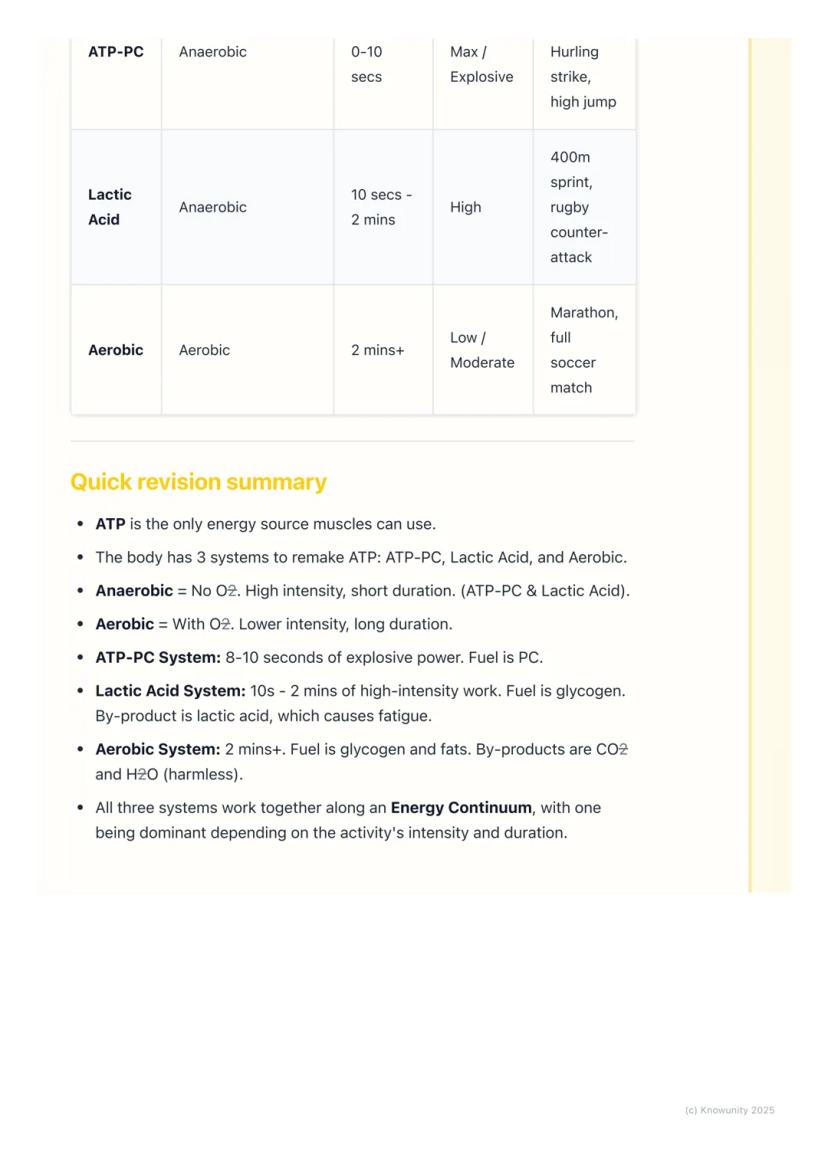
Here's what you absolutely need to know for exams: ATP-PC lasts 8-10 seconds at maximum intensity using PC as fuel. Lactic acid system goes from 10 seconds to 2 minutes at high intensity using glycogen, producing that burning sensation. Aerobic system kicks in properly after 2 minutes, using glycogen and fats with oxygen for sustained activity.
The recovery times are crucial too. ATP-PC stores refill in 2-3 minutes, lactic acid takes 20 minutes to 2 hours to clear, and full glycogen restoration can take up to 48 hours after really long events.
Common exam mistakes include saying systems work separately (they don't), forgetting that all systems contribute simultaneously, and mixing up the time frames. Also remember - it's not actually the lactic acid that causes fatigue, but the hydrogen ions that make muscles acidic.
Pro Tip: Learn one clear sporting example for each system - shot put , 400m sprint (lactic acid), and marathon (aerobic). You'll definitely need these in exams.
5
of 5Zarejestruj się, aby zobaczyć notatkę. To nic nie kosztuje!
- Dostęp do wszystkich materiałów
- Popraw swoje oceny
- Dołącz do milionów studentów
Quick Revision Summary
Your body's energy systems work like a perfectly coordinated team. The ATP-PC system handles explosive movements up to 10 seconds. The lactic acid system powers high-intensity work for 10 seconds to 2 minutes but comes with that burning penalty. The aerobic system is your long-distance champion, efficiently fueling moderate activity for hours.
Remember the energy continuum concept - these systems blend into each other rather than switching on and off. Which system dominates depends entirely on how intense your activity is and how long you're doing it for.
Master the time frames, fuel sources, and sporting examples for each system. Understanding when each system kicks in will help you make sense of training programs, why different sports feel so different, and how to pace yourself in everything from a 100m sprint to a long bike ride.
Final Check: Can you explain why a footballer can jog for 90 minutes but only sprint flat-out for 10 seconds? If yes, you've got this!
Myśleliśmy, że nigdy nie zapytasz...
Czym jest Towarzysz AI z Knowunity?
Nasz asystent AI jest specjalnie dostosowany do potrzeb uczniów. W oparciu o miliony treści, które mamy na platformie, możemy udzielać uczniom naprawdę znaczących i trafnych odpowiedzi. Ale nie chodzi tylko o odpowiedzi, towarzysz prowadzi również uczniów przez codzienne wyzwania związane z nauką, ze spersonalizowanymi planami nauki, quizami lub treściami na czacie i 100% personalizacją opartą na umiejętnościach i rozwoju uczniów.
Gdzie mogę pobrać aplikację Knowunity?
Aplikację możesz pobrać z Google Play i Apple Store.
Czy aplikacja Knowunity naprawdę jest darmowa?
Tak, masz całkowicie darmowy dostęp do wszystkich notatek w aplikacji, możesz w każdej chwili rozmawiać z Ekspertami lub ich obserwować. Możesz użyć punktów, aby odblokować pewne funkcje w aplikacji, które również możesz otrzymać za darmo. Dodatkowo oferujemy usługę Knowunity Premium, która pozwala na odblokowanie większej liczby funkcji.
Najpopularniejsze notatki z LCPE
4Najpopularniejsze notatki
9Nie ma nic odpowiedniego? Sprawdź inne przedmioty.
Zobacz, co mówią o nas nasi użytkownicy. Pokochali nas — pokochasz też i Ty.
4.6/5App Store
4.7/5Google Play
Aplikacja jest bardzo prosta i dobrze przemyślana. Do tej pory znalazłem wszystko, czego szukałem i mogłem się wiele nauczyć z innych notatek! Na pewno wykorzystam aplikację do pomocy przy robieniu prac domowych! No i oczywiście bardzo pomaga też jako inspiracja do robienia swoich notatek.
Stefan Sużytkownik iOS
Ta aplikacja jest naprawdę świetna. Jest tak wiele notatek i pomocnych informacji [...]. Moim problematycznym przedmiotem jest język niemiecki, a w aplikacji jest w czym wybierać. Dzięki tej aplikacji poprawiłam swój niemiecki. Polecam ją każdemu.
Samantha Klichużytkownik Androida
Wow, jestem w szoku. Właśnie wypróbowałam aplikację, ponieważ widziałam ją kilka razy reklamowaną na TikToku jestem absolutnie w szoku. Ta aplikacja jest POMOCĄ, której potrzebujesz w szkole i przede wszystkim oferuje tak wiele rzeczy jak notatki czy streszczenia, które są BARDZO pomocne w moim przypadku.
Annaużytkownik iOS