
Ever wonder why some songs make you feel happy whilst... Pokaż więcej
 Irish
Irish English
 Mathematics
Zarejestruj się, aby zobaczyć notatkęTo nic nie kosztuje!
Dostęp do wszystkich materiałów
Popraw swoje oceny
Dołącz do milionów studentów
Knowunity AI
Przedmioty
Triangle Congruence and Similarity Theorems
Triangle Properties and Classification
Linear Equations and Graphs
Geometric Angle Relationships
Trigonometric Functions and Identities
Equation Solving Techniques
Circle Geometry Fundamentals
Division Operations and Methods
Basic Differentiation Rules
Exponent and Logarithm Properties
Pokaż wszystkie tematy
Human Organ Systems
Reproductive Cell Cycles
Biological Sciences Subdisciplines
Cellular Energy Metabolism
Autotrophic Energy Processes
Inheritance Patterns and Principles
Biomolecular Structure and Organization
Cell Cycle and Division Mechanics
Cellular Organization and Development
Biological Structural Organization
Pokaż wszystkie tematy
Chemical Sciences and Applications
Atomic Structure and Composition
Molecular Electron Structure Representation
Atomic Electron Behavior
Matter Properties and Water
Mole Concept and Calculations
Gas Laws and Behavior
Periodic Table Organization
Chemical Thermodynamics Fundamentals
Chemical Bond Types and Properties
Pokaż wszystkie tematy
European Renaissance and Enlightenment
European Cultural Movements 800-1920
American Revolution Era 1763-1797
American Civil War 1861-1865
Global Imperial Systems
Mongol and Chinese Dynasties
U.S. Presidents and World Leaders
Historical Sources and Documentation
World Wars Era and Impact
World Religious Systems
Pokaż wszystkie tematy
Classic and Contemporary Novels
Literary Character Analysis
Rhetorical Theory and Practice
Classic Literary Narratives
Reading Analysis and Interpretation
Narrative Structure and Techniques
English Language Components
Influential English-Language Authors
Basic Sentence Structure
Narrative Voice and Perspective
Pokaż wszystkie tematy
1
•
Zaktualizowano Mar 12, 2026
•
Ever wonder why some songs make you feel happy whilst... Pokaż więcej
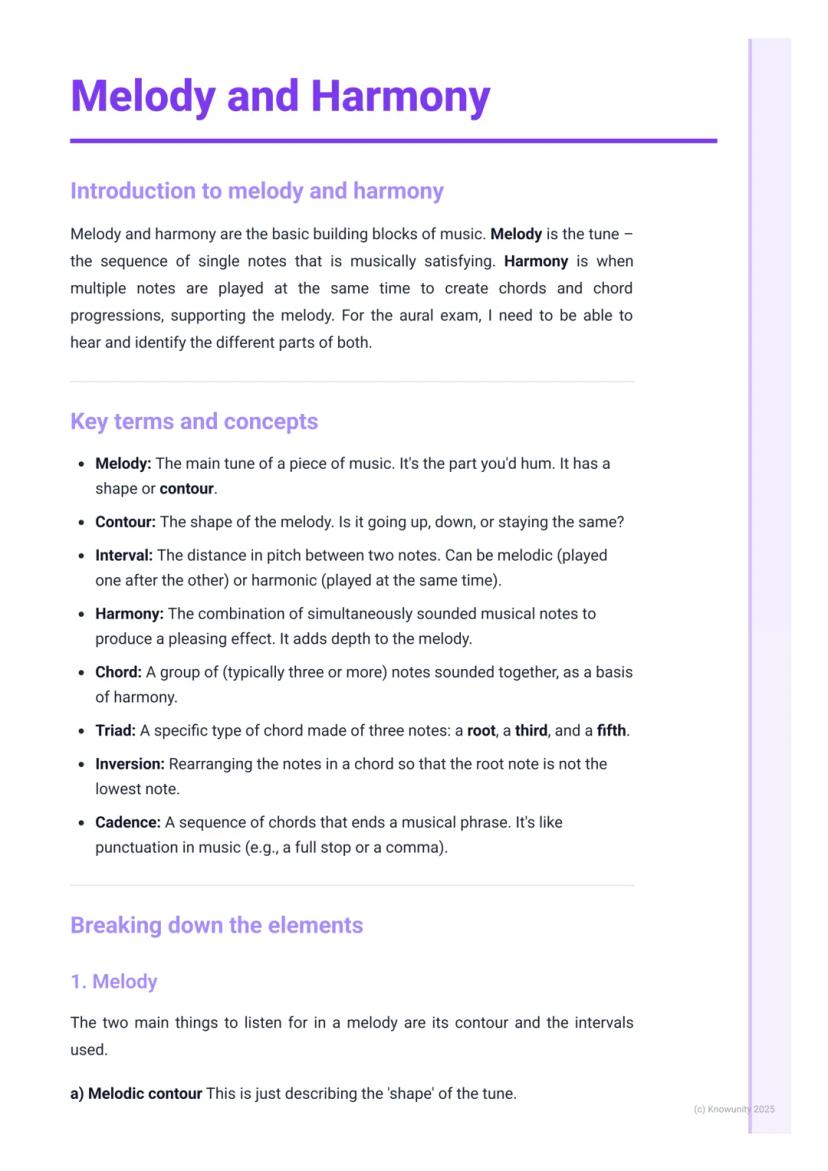
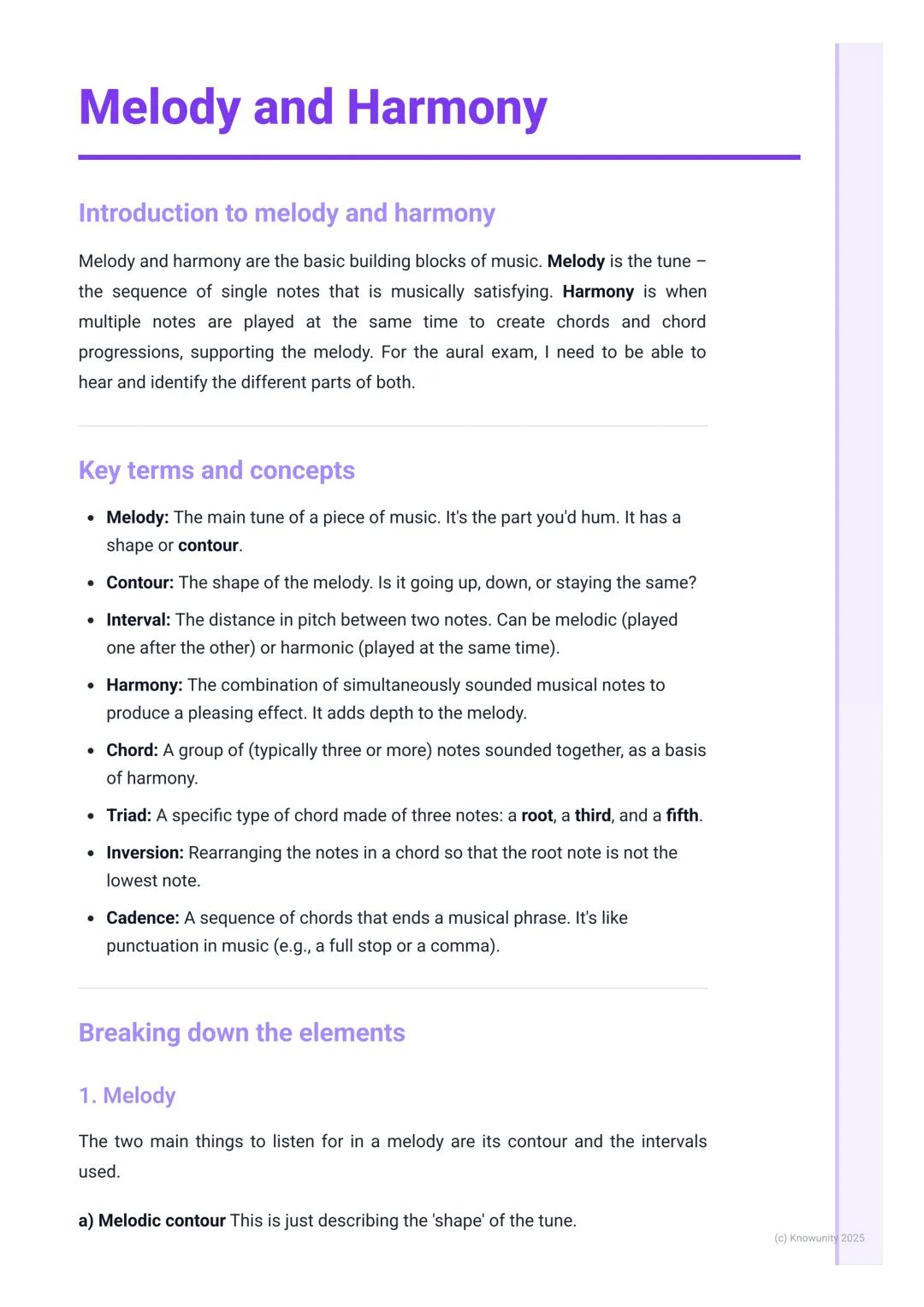
Music is basically made up of two main elements that work together. Melody is the tune you'd hum along to - that sequence of single notes that gets stuck in your head. Harmony happens when multiple notes are played simultaneously to create chords that support and enhance the melody.
Think of melody as the main character in a film, whilst harmony is the supporting cast that makes the story richer. For your aural exam, you'll need to identify different parts of both by ear.
Melody has a shape called contour - it can go up, down, or stay roughly the same. The distance between any two notes is called an interval, and these can be played one after another (melodic) or at the same time (harmonic).
Exam Tip: The contour is often the easiest thing to identify first - just trace the shape with your finger in the air as you listen!
Your melody can move in several different ways, and each creates a distinct sound. Ascending melodies go up in pitch, whilst descending ones go down. Some melodies create an arch shape - rising then falling like a wave.
Conjunct motion means the melody moves by step (like C to D to E), creating a smooth, flowing sound. Disjunct motion involves leaps between notes (like C to G to E), which sounds more dramatic and jagged.
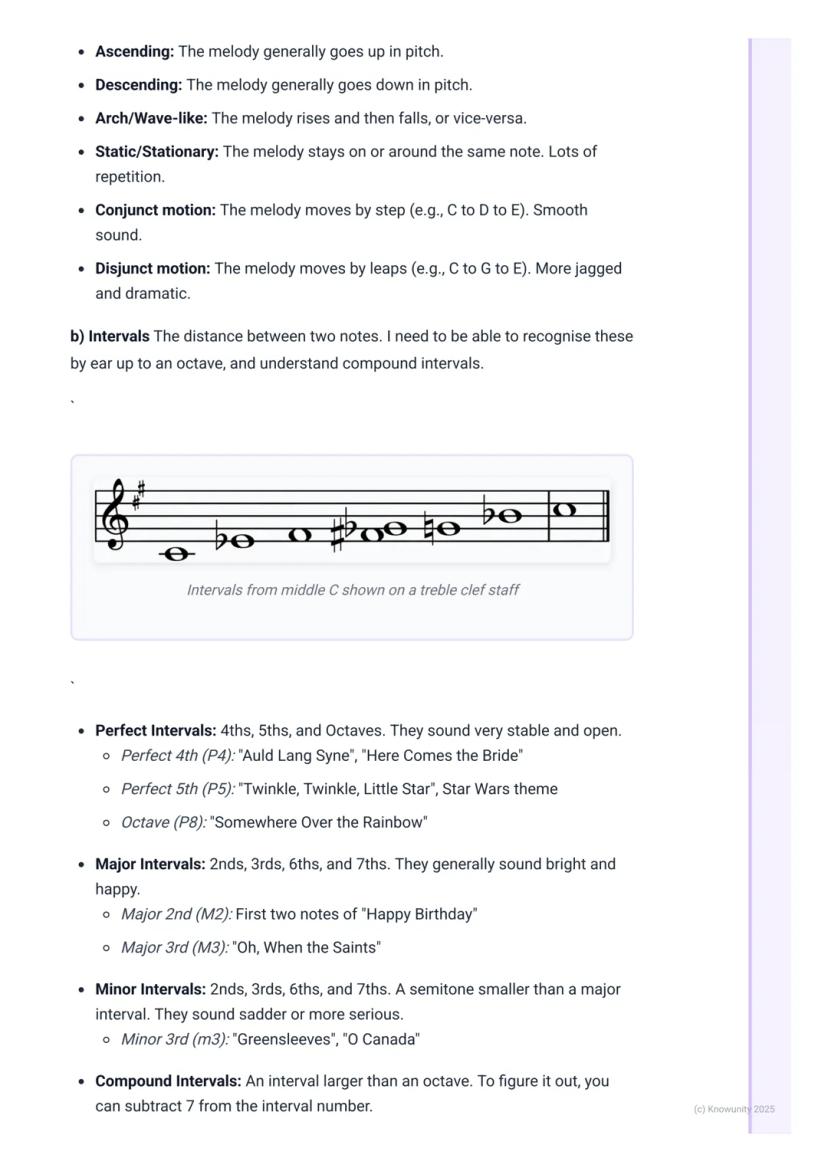
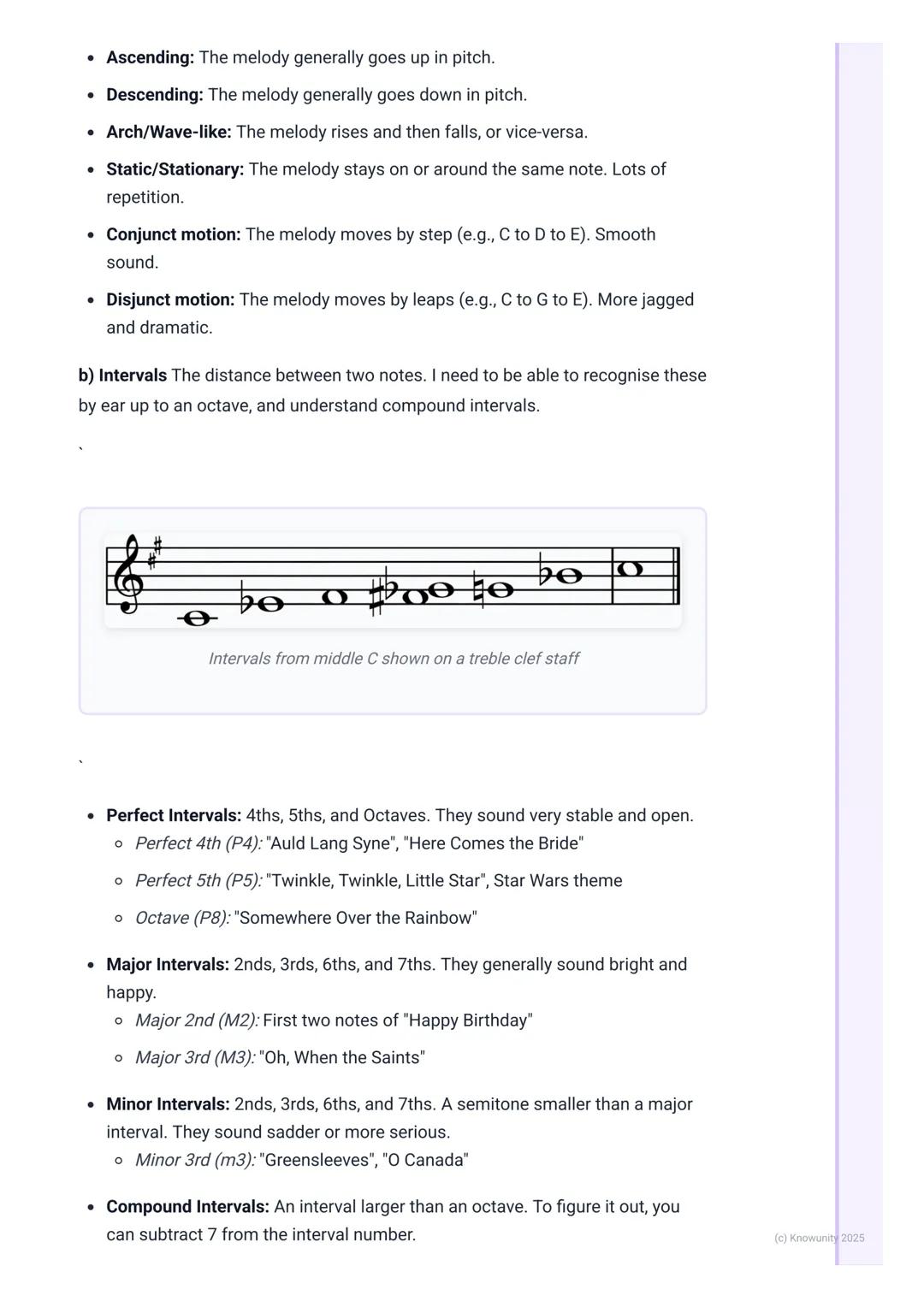
Intervals are crucial for aural recognition. Perfect intervals (4ths, 5ths, and octaves) sound very stable and open. Think "Here Comes the Bride" for a perfect 4th, or the Star Wars theme for a perfect 5th. Major intervals generally sound bright and happy, whilst minor intervals are a semitone smaller and sound sadder.
Compound intervals are simply intervals larger than an octave. To work them out, subtract 7 from the interval number - so a major 9th is really just a major 2nd played much further apart.
Memory Trick: Use familiar songs as references - "Somewhere Over the Rainbow" starts with an octave leap!
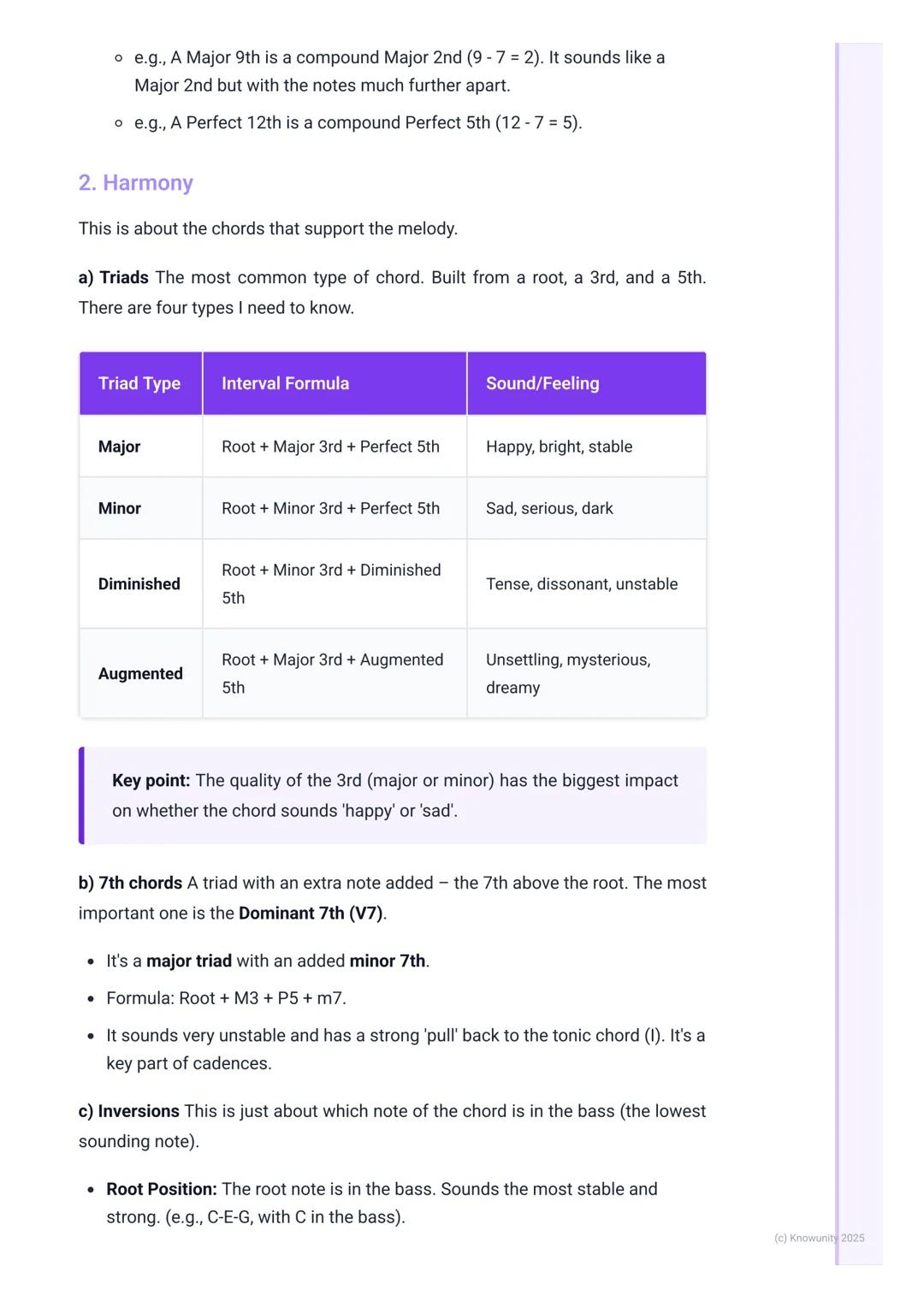
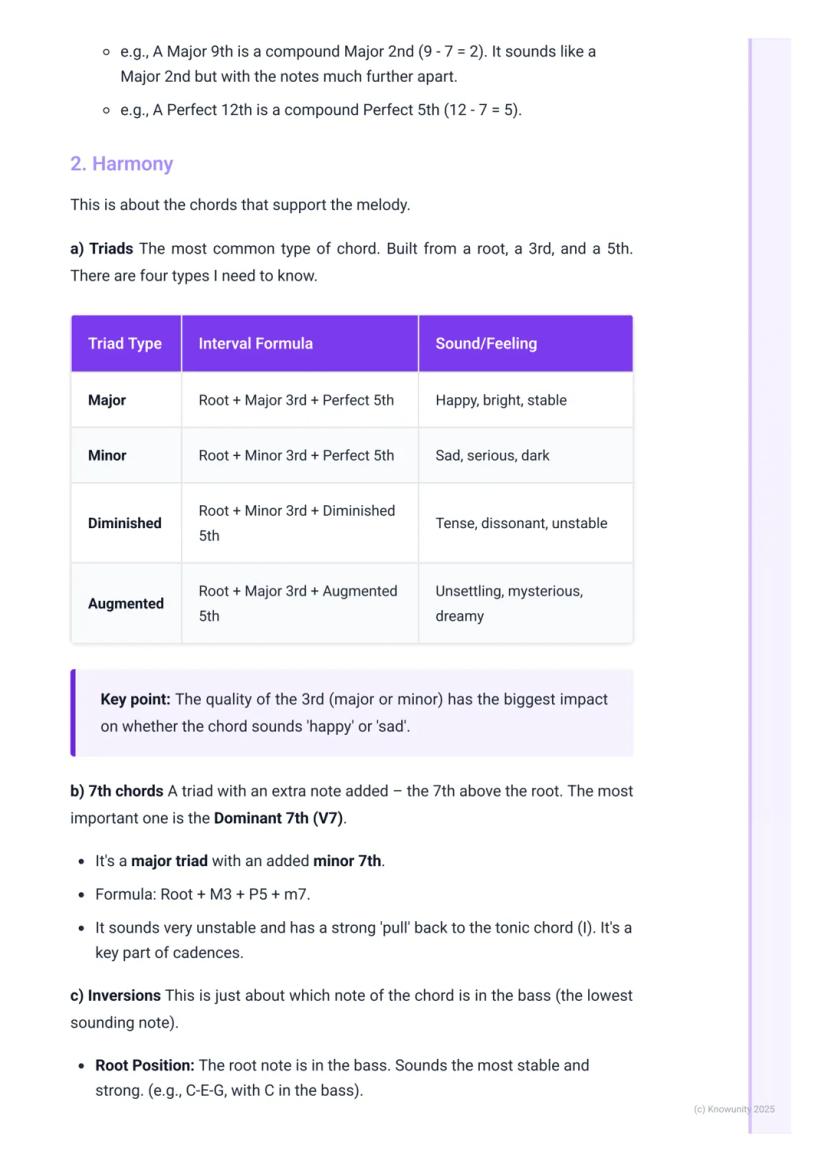
Triads are the most common chords you'll encounter, built from three notes: a root, a 3rd, and a 5th. There are four main types you need to recognise by ear.
Major triads sound happy, bright, and stable. Minor triads use a minor 3rd instead, creating that sad or serious feeling. Diminished triads sound tense and unstable, whilst augmented triads have an unsettling, mysterious quality.
The secret is that the quality of the 3rd (major or minor) has the biggest impact on whether a chord sounds happy or sad. This makes it the most important note to focus on when identifying triads.
Seventh chords add an extra layer of complexity. The most important is the dominant 7th (V7), which creates a strong pull back to the home chord. It's built from a major triad with an added minor 7th, giving it that distinctive "needs to resolve" sound.
Quick Check: If a chord sounds like it desperately wants to go somewhere else, it's probably a dominant 7th!
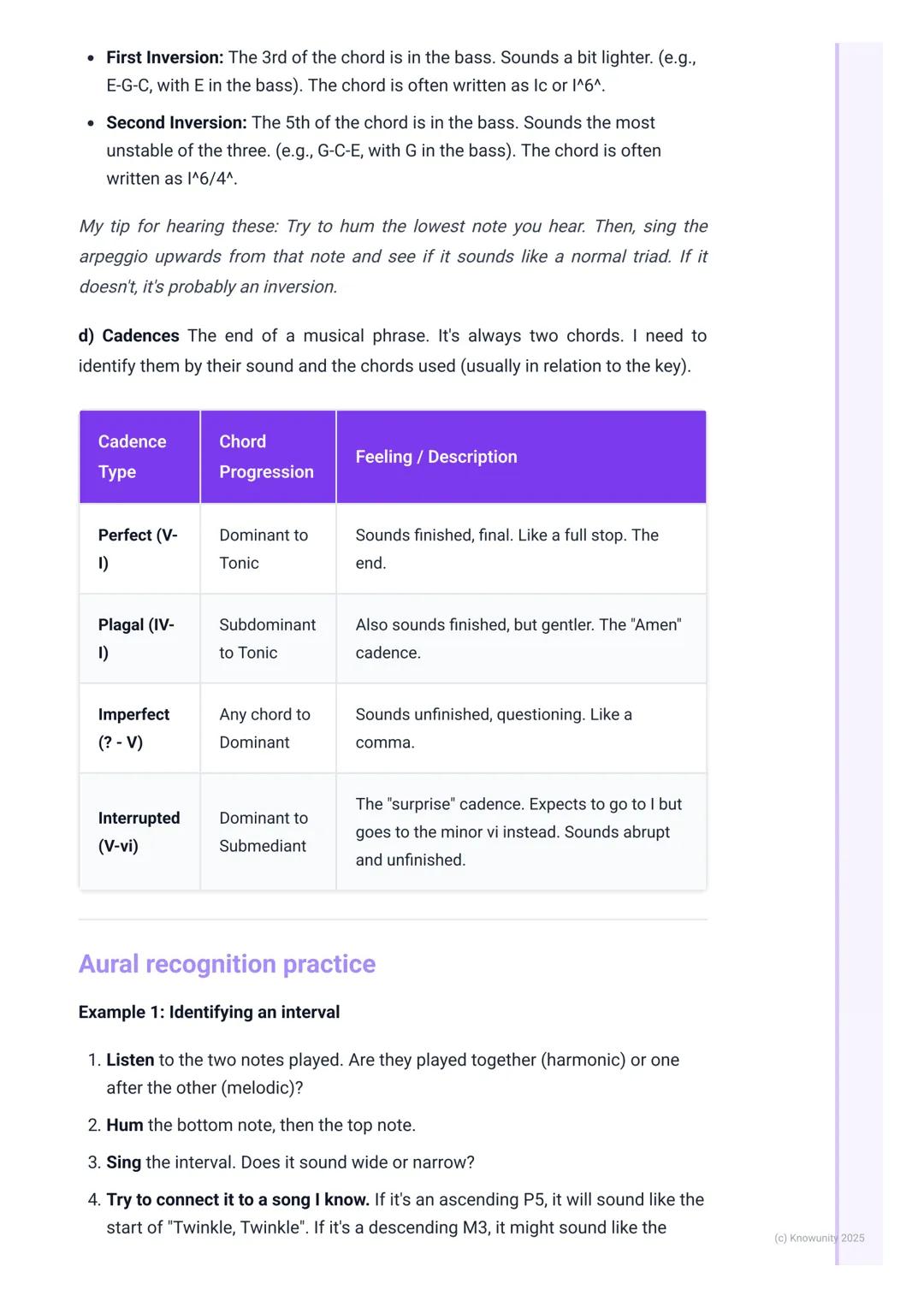
Inversions simply refer to which note of the chord is in the bass (lowest part). Root position has the root note in the bass and sounds most stable. First inversion puts the 3rd in the bass, creating a lighter feel, whilst second inversion has the 5th in the bass and sounds the most unstable.
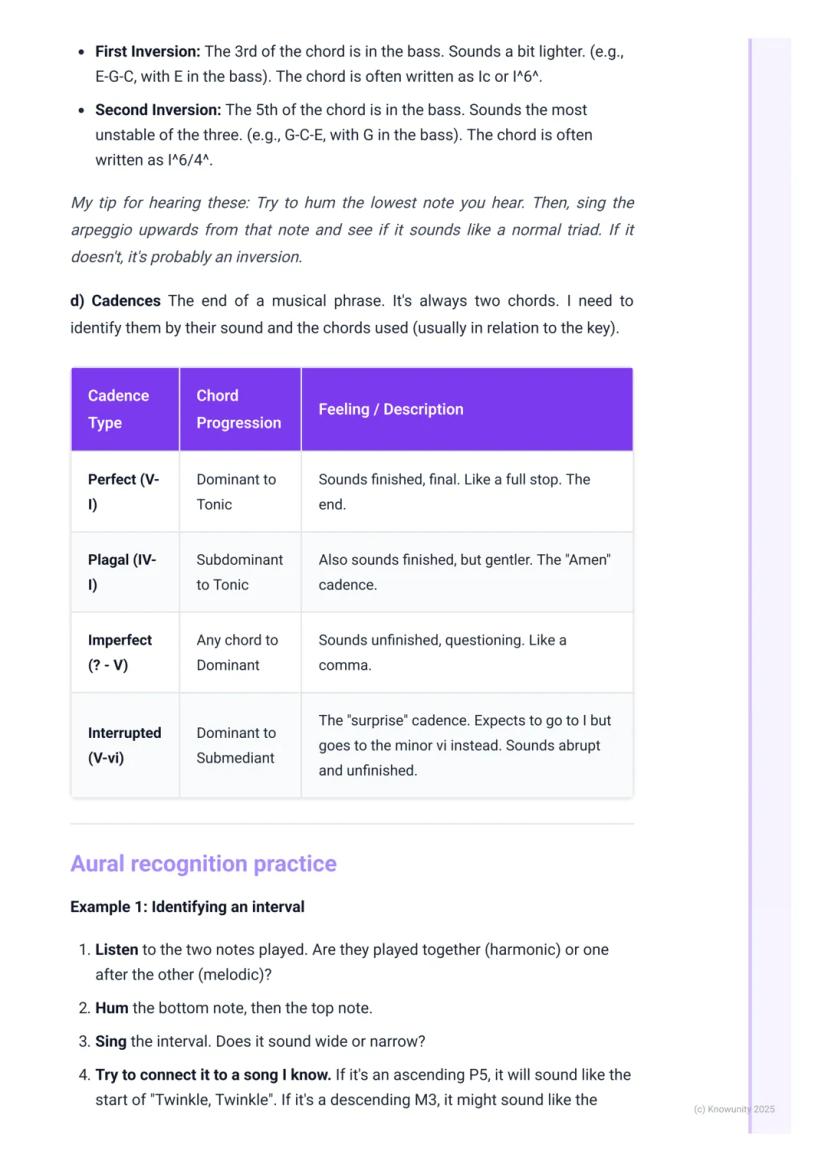
Cadences are like punctuation marks in music - they're always two chords that end a musical phrase. Perfect cadences sound completely finished, like a full stop. Plagal cadences also sound finished but gentler, often called the "Amen" cadence.
Imperfect cadences end on the dominant chord and sound unfinished, like a comma asking a question. Interrupted cadences are the surprise ending - they trick your ear by going to the minor vi chord instead of the expected I.
For your exam, don't just memorise chord numbers - learn how each cadence feels. Under pressure, recognising the emotional effect is much more reliable than trying to analyse chord progressions.
Exam Strategy: Always listen to the bass line first when identifying inversions - it's your biggest clue!
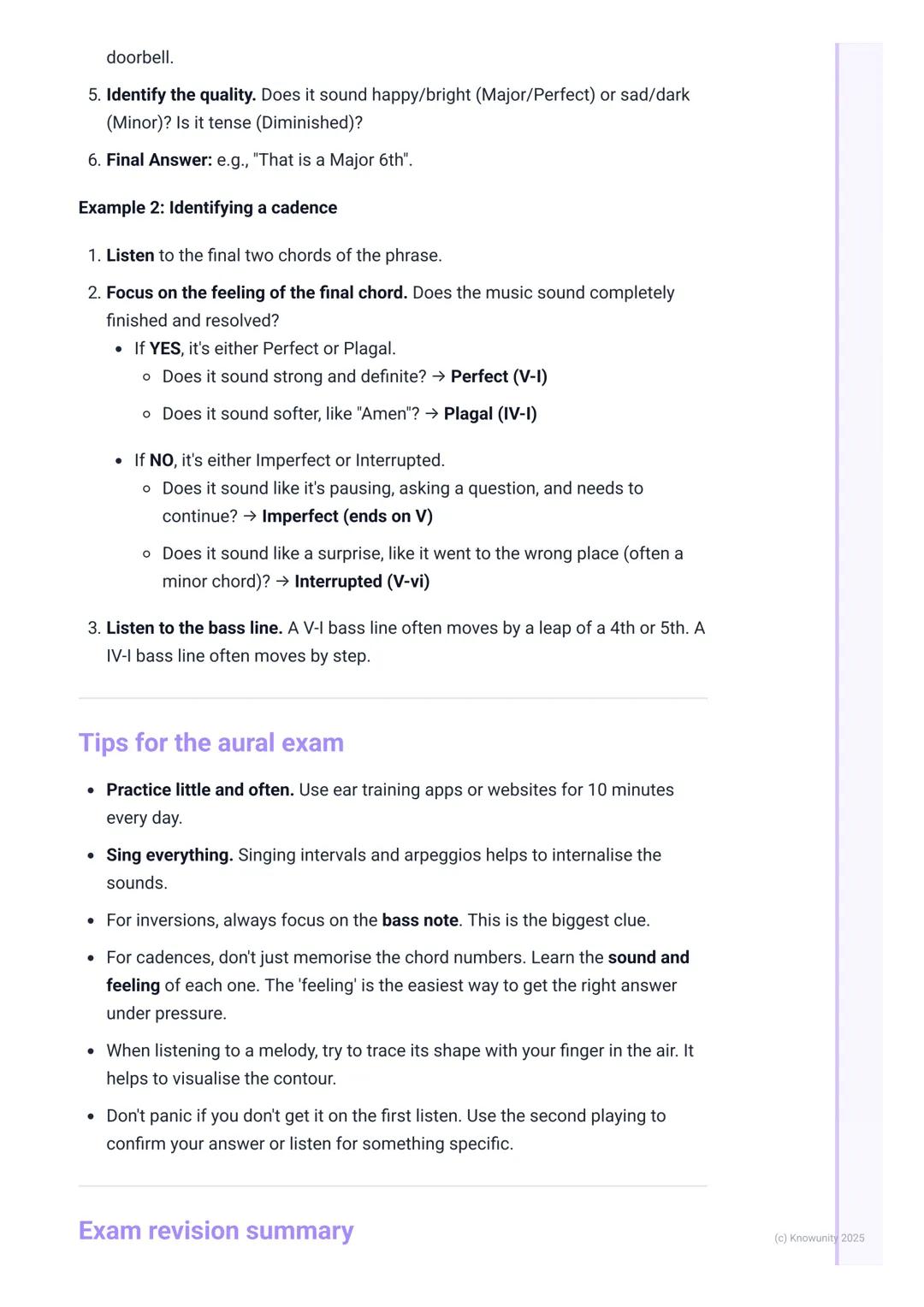
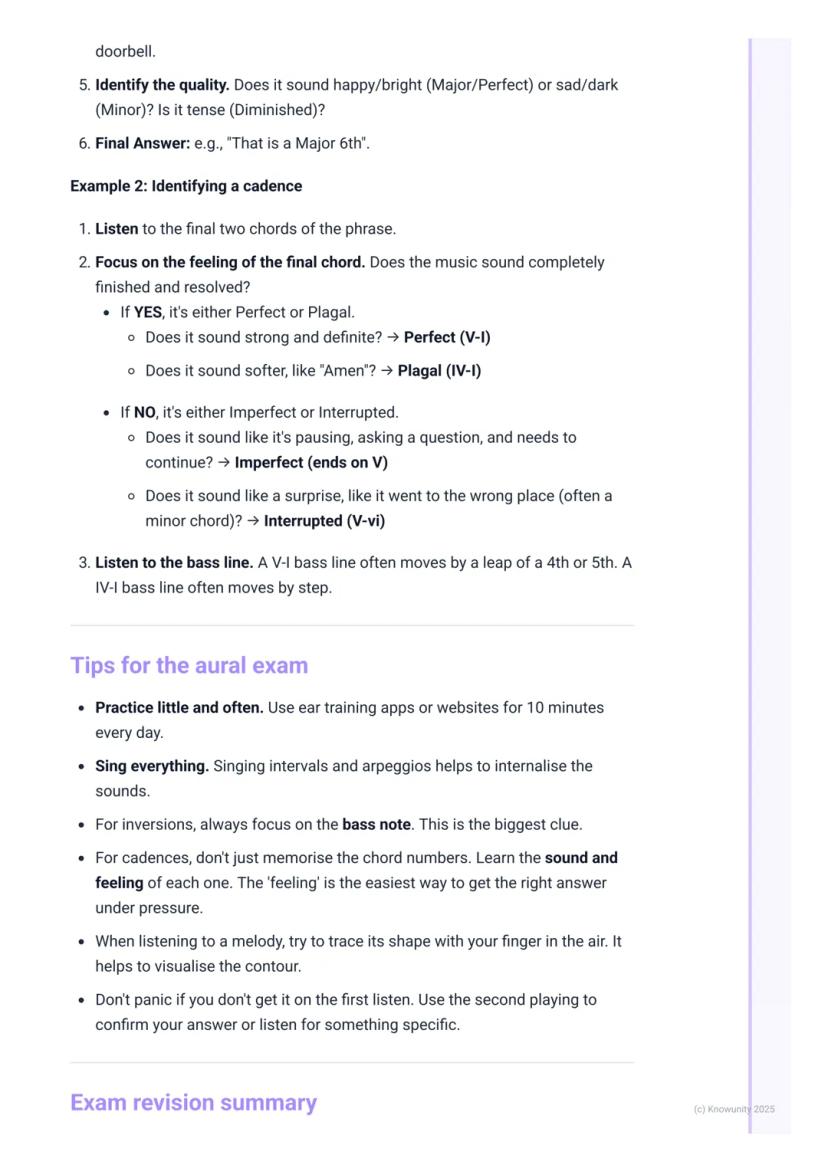
When identifying intervals in your exam, start by determining if they're played together (harmonic) or separately (melodic). Hum both notes, then connect the sound to a song you know - this reference method is incredibly reliable under exam pressure.
For cadences, focus on the feeling of the final chord first. Does the music sound completely resolved and finished? If yes, it's either perfect or plagal. If it sounds unfinished or questioning, it's either imperfect or interrupted.
The bass line movement gives you additional clues. A V-I progression often moves by a leap of a 4th or 5th, whilst a IV-I progression typically moves by step.
Singing everything helps massively with internalising these sounds. Spend just 10 minutes daily with ear training apps, and always sing intervals and arpeggios rather than just listening passively.
Golden Rule: Don't panic if you don't get it on first listen - use the second playing to confirm your answer or focus on one specific element!
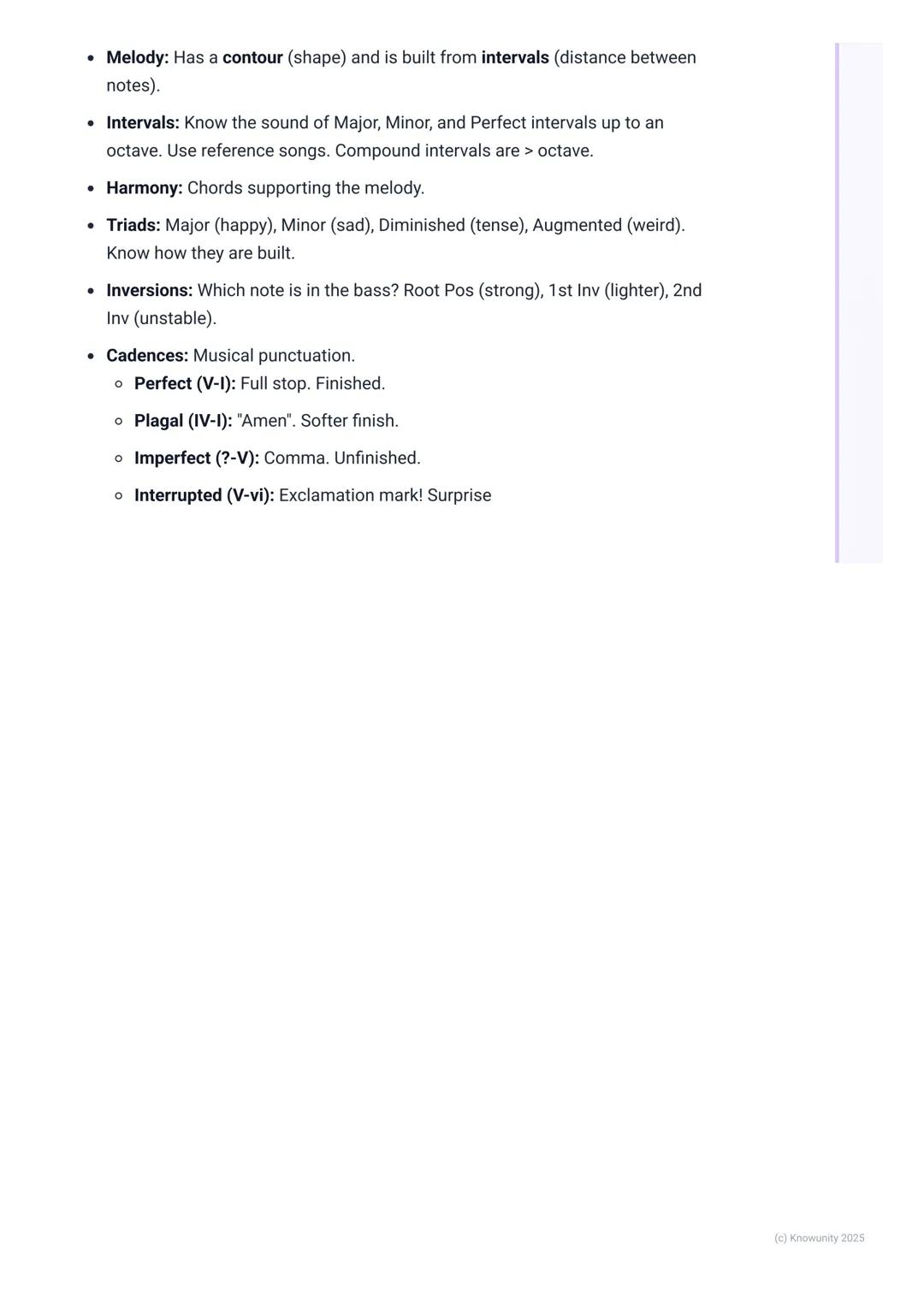
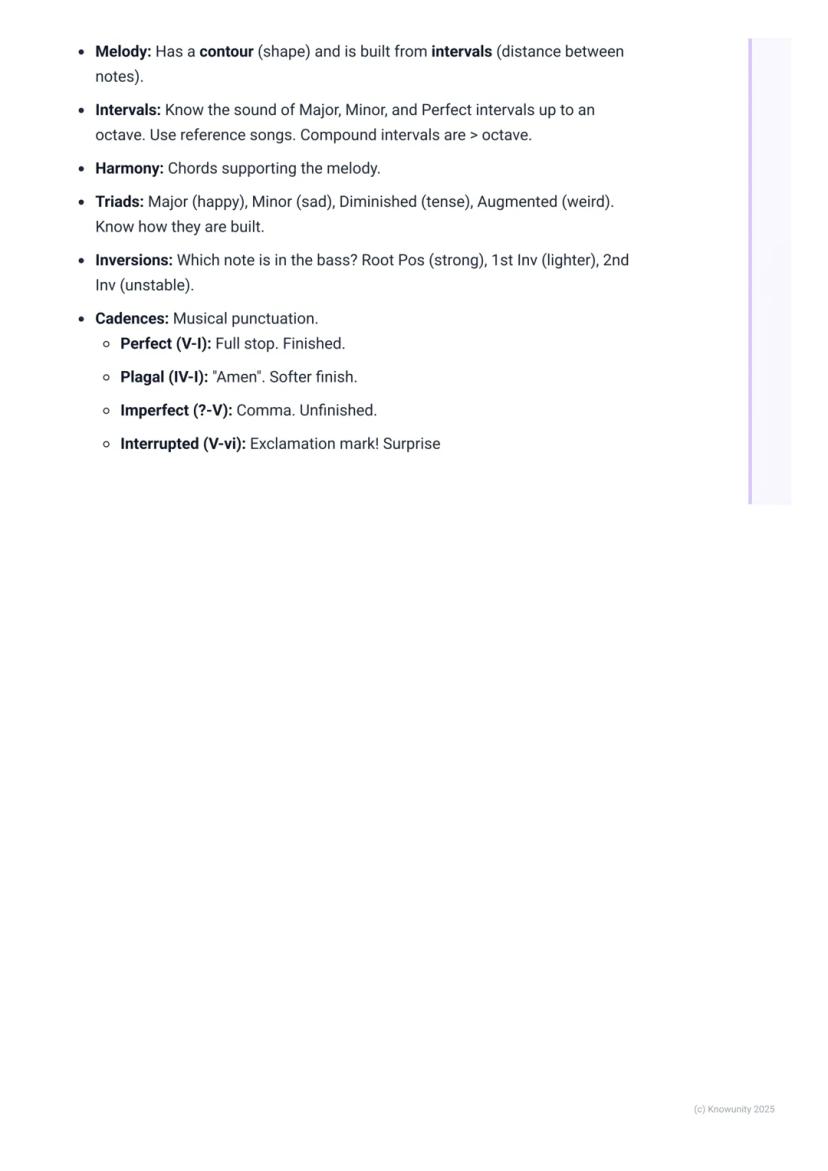
Melody is all about contour (shape) and intervals (distances between notes). Know your major, minor, and perfect intervals up to an octave, and remember that compound intervals are just regular intervals played more than an octave apart.
Harmony centres on chords supporting the melody. Master your triad recognition: major sounds happy, minor sounds sad, diminished sounds tense, and augmented sounds mysterious.
Inversions depend on which note is in the bass - root position sounds strongest, first inversion lighter, and second inversion most unstable.
Cadences are musical punctuation: perfect is a full stop, plagal is a gentle "Amen," imperfect ending on V is a questioning comma, and interrupted is a surprise exclamation mark.
Remember, the feeling of the music is often more reliable than technical analysis during exams. Trust your ears and the emotional responses these musical elements create.
Final Tip: Practice tracing melodic contours with your finger in the air - it helps visualise what you're hearing!
Nasz asystent AI jest specjalnie dostosowany do potrzeb uczniów. W oparciu o miliony treści, które mamy na platformie, możemy udzielać uczniom naprawdę znaczących i trafnych odpowiedzi. Ale nie chodzi tylko o odpowiedzi, towarzysz prowadzi również uczniów przez codzienne wyzwania związane z nauką, ze spersonalizowanymi planami nauki, quizami lub treściami na czacie i 100% personalizacją opartą na umiejętnościach i rozwoju uczniów.
Aplikację możesz pobrać z Google Play i Apple Store.
Tak, masz całkowicie darmowy dostęp do wszystkich notatek w aplikacji, możesz w każdej chwili rozmawiać z Ekspertami lub ich obserwować. Możesz użyć punktów, aby odblokować pewne funkcje w aplikacji, które również możesz otrzymać za darmo. Dodatkowo oferujemy usługę Knowunity Premium, która pozwala na odblokowanie większej liczby funkcji.
App Store
Google Play
Aplikacja jest bardzo prosta i dobrze przemyślana. Do tej pory znalazłem wszystko, czego szukałem i mogłem się wiele nauczyć z innych notatek! Na pewno wykorzystam aplikację do pomocy przy robieniu prac domowych! No i oczywiście bardzo pomaga też jako inspiracja do robienia swoich notatek.
Stefan S
użytkownik iOS
Ta aplikacja jest naprawdę świetna. Jest tak wiele notatek i pomocnych informacji [...]. Moim problematycznym przedmiotem jest język niemiecki, a w aplikacji jest w czym wybierać. Dzięki tej aplikacji poprawiłam swój niemiecki. Polecam ją każdemu.
Samantha Klich
użytkownik Androida
Wow, jestem w szoku. Właśnie wypróbowałam aplikację, ponieważ widziałam ją kilka razy reklamowaną na TikToku jestem absolutnie w szoku. Ta aplikacja jest POMOCĄ, której potrzebujesz w szkole i przede wszystkim oferuje tak wiele rzeczy jak notatki czy streszczenia, które są BARDZO pomocne w moim przypadku.
Anna
użytkownik iOS
Kocham tę aplikację! Pomaga mi w zadaniach domowych, motywuje mnie i polepsza mi dzień. Dzięki tej aplikacji moje oceny się poprawiły. Lepszej aplikacji nie znajdę!🩷
Patrycja
użytkowniczka iOS
Super aplikacja! Ma odpowiedzi na wszystkie zadania. Testuję ją od paru miesięcy i jest po prostu perfekcyjna.
Szymon
użytkownik Android
Super aplikacja do nauki i sprawdzania wiedzy. Można znaleźć notatki z WSZYSTKICH przedmiotów. Polecam tym, którzy celują w oceny 5 i 6 😄
Szymon
użytkownik iOS
Aplikacja jest po prostu świetna! Wystarczy, że wpiszę w pasku wyszukiwania swój temat i od razu mam wyniki. Nie muszę oglądać 10 filmów na YouTube, żeby coś zrozumieć, więc oszczędzam swój czas. Po prostu polecam!
Kuba T
użytkownik Androida
W szkole byłem bardzo kiepski z matematyki, ale dzięki tej aplikacji radzę sobie teraz lepiej. Jestem bardzo wdzięczny, że ją stworzyliście.
Kriss
użytkownik Androida
Korzystam z Knowunity od ponad roku i jest mega! Najlepsze opcje z tej apki: ⭐️ Gotowe notatki ⭐️ Spersonalizowane treści ⭐️ Dostęp do chatu GPT W WERSJI SZKOLNEJ ⭐️ Konwersacje z innymi uczniami 🤍 NAUKA WRESZCIE NIE JEST NUDNA 🤍
Gosia
użytkowniczka Android
Bardzo lubię aplikację Knowunity, ponieważ pomaga mi w nauce. Odkąd ją mam moje oceny się poprawiają :)
Sara
użytkowniczka iOS
QUIZY I FISZKI SĄ SUPER PRZYDATNE I UWIELBIAM Knowunity AI. TO JEST DOSŁOWNIE JAK CHATGPT ALE MĄDRZEJSZY!! POMÓGŁ MI NAWET Z PROBLEMAMI Z TUSZEM DO RZĘS!! A TAKŻE Z PRAWDZIWYMI PRZEDMIOTAMI! OCZYWIŚCIE 😍😁😲🤑💗✨🎀😮
Krzysztof
użytkownik Android
Bardzo fajna aplikacja. Pomaga przygotować się do sprawdzianu, kartkówki lub odpowiedzi ustnej.
Oliwia
użytkowniczka iOS
Aplikacja jest bardzo prosta i dobrze przemyślana. Do tej pory znalazłem wszystko, czego szukałem i mogłem się wiele nauczyć z innych notatek! Na pewno wykorzystam aplikację do pomocy przy robieniu prac domowych! No i oczywiście bardzo pomaga też jako inspiracja do robienia swoich notatek.
Stefan S
użytkownik iOS
Ta aplikacja jest naprawdę świetna. Jest tak wiele notatek i pomocnych informacji [...]. Moim problematycznym przedmiotem jest język niemiecki, a w aplikacji jest w czym wybierać. Dzięki tej aplikacji poprawiłam swój niemiecki. Polecam ją każdemu.
Samantha Klich
użytkownik Androida
Wow, jestem w szoku. Właśnie wypróbowałam aplikację, ponieważ widziałam ją kilka razy reklamowaną na TikToku jestem absolutnie w szoku. Ta aplikacja jest POMOCĄ, której potrzebujesz w szkole i przede wszystkim oferuje tak wiele rzeczy jak notatki czy streszczenia, które są BARDZO pomocne w moim przypadku.
Anna
użytkownik iOS
Kocham tę aplikację! Pomaga mi w zadaniach domowych, motywuje mnie i polepsza mi dzień. Dzięki tej aplikacji moje oceny się poprawiły. Lepszej aplikacji nie znajdę!🩷
Patrycja
użytkowniczka iOS
Super aplikacja! Ma odpowiedzi na wszystkie zadania. Testuję ją od paru miesięcy i jest po prostu perfekcyjna.
Szymon
użytkownik Android
Super aplikacja do nauki i sprawdzania wiedzy. Można znaleźć notatki z WSZYSTKICH przedmiotów. Polecam tym, którzy celują w oceny 5 i 6 😄
Szymon
użytkownik iOS
Aplikacja jest po prostu świetna! Wystarczy, że wpiszę w pasku wyszukiwania swój temat i od razu mam wyniki. Nie muszę oglądać 10 filmów na YouTube, żeby coś zrozumieć, więc oszczędzam swój czas. Po prostu polecam!
Kuba T
użytkownik Androida
W szkole byłem bardzo kiepski z matematyki, ale dzięki tej aplikacji radzę sobie teraz lepiej. Jestem bardzo wdzięczny, że ją stworzyliście.
Kriss
użytkownik Androida
Korzystam z Knowunity od ponad roku i jest mega! Najlepsze opcje z tej apki: ⭐️ Gotowe notatki ⭐️ Spersonalizowane treści ⭐️ Dostęp do chatu GPT W WERSJI SZKOLNEJ ⭐️ Konwersacje z innymi uczniami 🤍 NAUKA WRESZCIE NIE JEST NUDNA 🤍
Gosia
użytkowniczka Android
Bardzo lubię aplikację Knowunity, ponieważ pomaga mi w nauce. Odkąd ją mam moje oceny się poprawiają :)
Sara
użytkowniczka iOS
QUIZY I FISZKI SĄ SUPER PRZYDATNE I UWIELBIAM Knowunity AI. TO JEST DOSŁOWNIE JAK CHATGPT ALE MĄDRZEJSZY!! POMÓGŁ MI NAWET Z PROBLEMAMI Z TUSZEM DO RZĘS!! A TAKŻE Z PRAWDZIWYMI PRZEDMIOTAMI! OCZYWIŚCIE 😍😁😲🤑💗✨🎀😮
Krzysztof
użytkownik Android
Bardzo fajna aplikacja. Pomaga przygotować się do sprawdzianu, kartkówki lub odpowiedzi ustnej.
Oliwia
użytkowniczka iOS
Ever wonder why some songs make you feel happy whilst others sound sad, or how musicians know when a song is "finished"? It all comes down to melody and harmony- the fundamental building blocks that create every piece of... Pokaż więcej
Dostęp do wszystkich materiałów
Popraw swoje oceny
Dołącz do milionów studentów
Music is basically made up of two main elements that work together. Melody is the tune you'd hum along to - that sequence of single notes that gets stuck in your head. Harmony happens when multiple notes are played simultaneously to create chords that support and enhance the melody.
Think of melody as the main character in a film, whilst harmony is the supporting cast that makes the story richer. For your aural exam, you'll need to identify different parts of both by ear.
Melody has a shape called contour - it can go up, down, or stay roughly the same. The distance between any two notes is called an interval, and these can be played one after another (melodic) or at the same time (harmonic).
Exam Tip: The contour is often the easiest thing to identify first - just trace the shape with your finger in the air as you listen!
Dostęp do wszystkich materiałów
Popraw swoje oceny
Dołącz do milionów studentów
Your melody can move in several different ways, and each creates a distinct sound. Ascending melodies go up in pitch, whilst descending ones go down. Some melodies create an arch shape - rising then falling like a wave.
Conjunct motion means the melody moves by step (like C to D to E), creating a smooth, flowing sound. Disjunct motion involves leaps between notes (like C to G to E), which sounds more dramatic and jagged.
Intervals are crucial for aural recognition. Perfect intervals (4ths, 5ths, and octaves) sound very stable and open. Think "Here Comes the Bride" for a perfect 4th, or the Star Wars theme for a perfect 5th. Major intervals generally sound bright and happy, whilst minor intervals are a semitone smaller and sound sadder.
Compound intervals are simply intervals larger than an octave. To work them out, subtract 7 from the interval number - so a major 9th is really just a major 2nd played much further apart.
Memory Trick: Use familiar songs as references - "Somewhere Over the Rainbow" starts with an octave leap!
Dostęp do wszystkich materiałów
Popraw swoje oceny
Dołącz do milionów studentów
Triads are the most common chords you'll encounter, built from three notes: a root, a 3rd, and a 5th. There are four main types you need to recognise by ear.
Major triads sound happy, bright, and stable. Minor triads use a minor 3rd instead, creating that sad or serious feeling. Diminished triads sound tense and unstable, whilst augmented triads have an unsettling, mysterious quality.
The secret is that the quality of the 3rd (major or minor) has the biggest impact on whether a chord sounds happy or sad. This makes it the most important note to focus on when identifying triads.
Seventh chords add an extra layer of complexity. The most important is the dominant 7th (V7), which creates a strong pull back to the home chord. It's built from a major triad with an added minor 7th, giving it that distinctive "needs to resolve" sound.
Quick Check: If a chord sounds like it desperately wants to go somewhere else, it's probably a dominant 7th!
Dostęp do wszystkich materiałów
Popraw swoje oceny
Dołącz do milionów studentów
Inversions simply refer to which note of the chord is in the bass (lowest part). Root position has the root note in the bass and sounds most stable. First inversion puts the 3rd in the bass, creating a lighter feel, whilst second inversion has the 5th in the bass and sounds the most unstable.
Cadences are like punctuation marks in music - they're always two chords that end a musical phrase. Perfect cadences sound completely finished, like a full stop. Plagal cadences also sound finished but gentler, often called the "Amen" cadence.
Imperfect cadences end on the dominant chord and sound unfinished, like a comma asking a question. Interrupted cadences are the surprise ending - they trick your ear by going to the minor vi chord instead of the expected I.
For your exam, don't just memorise chord numbers - learn how each cadence feels. Under pressure, recognising the emotional effect is much more reliable than trying to analyse chord progressions.
Exam Strategy: Always listen to the bass line first when identifying inversions - it's your biggest clue!
Dostęp do wszystkich materiałów
Popraw swoje oceny
Dołącz do milionów studentów
When identifying intervals in your exam, start by determining if they're played together (harmonic) or separately (melodic). Hum both notes, then connect the sound to a song you know - this reference method is incredibly reliable under exam pressure.
For cadences, focus on the feeling of the final chord first. Does the music sound completely resolved and finished? If yes, it's either perfect or plagal. If it sounds unfinished or questioning, it's either imperfect or interrupted.
The bass line movement gives you additional clues. A V-I progression often moves by a leap of a 4th or 5th, whilst a IV-I progression typically moves by step.
Singing everything helps massively with internalising these sounds. Spend just 10 minutes daily with ear training apps, and always sing intervals and arpeggios rather than just listening passively.
Golden Rule: Don't panic if you don't get it on first listen - use the second playing to confirm your answer or focus on one specific element!
Dostęp do wszystkich materiałów
Popraw swoje oceny
Dołącz do milionów studentów
Melody is all about contour (shape) and intervals (distances between notes). Know your major, minor, and perfect intervals up to an octave, and remember that compound intervals are just regular intervals played more than an octave apart.
Harmony centres on chords supporting the melody. Master your triad recognition: major sounds happy, minor sounds sad, diminished sounds tense, and augmented sounds mysterious.
Inversions depend on which note is in the bass - root position sounds strongest, first inversion lighter, and second inversion most unstable.
Cadences are musical punctuation: perfect is a full stop, plagal is a gentle "Amen," imperfect ending on V is a questioning comma, and interrupted is a surprise exclamation mark.
Remember, the feeling of the music is often more reliable than technical analysis during exams. Trust your ears and the emotional responses these musical elements create.
Final Tip: Practice tracing melodic contours with your finger in the air - it helps visualise what you're hearing!
Nasz asystent AI jest specjalnie dostosowany do potrzeb uczniów. W oparciu o miliony treści, które mamy na platformie, możemy udzielać uczniom naprawdę znaczących i trafnych odpowiedzi. Ale nie chodzi tylko o odpowiedzi, towarzysz prowadzi również uczniów przez codzienne wyzwania związane z nauką, ze spersonalizowanymi planami nauki, quizami lub treściami na czacie i 100% personalizacją opartą na umiejętnościach i rozwoju uczniów.
Aplikację możesz pobrać z Google Play i Apple Store.
Tak, masz całkowicie darmowy dostęp do wszystkich notatek w aplikacji, możesz w każdej chwili rozmawiać z Ekspertami lub ich obserwować. Możesz użyć punktów, aby odblokować pewne funkcje w aplikacji, które również możesz otrzymać za darmo. Dodatkowo oferujemy usługę Knowunity Premium, która pozwala na odblokowanie większej liczby funkcji.
0
Inteligentne Narzędzia NOWE
Przekształć te notatki w: ✓ 50+ Pytań Testowych ✓ Interaktywne Fiszki ✓ Pełny egzamin próbny ✓ Plany Eseju
App Store
Google Play
Aplikacja jest bardzo prosta i dobrze przemyślana. Do tej pory znalazłem wszystko, czego szukałem i mogłem się wiele nauczyć z innych notatek! Na pewno wykorzystam aplikację do pomocy przy robieniu prac domowych! No i oczywiście bardzo pomaga też jako inspiracja do robienia swoich notatek.
Stefan S
użytkownik iOS
Ta aplikacja jest naprawdę świetna. Jest tak wiele notatek i pomocnych informacji [...]. Moim problematycznym przedmiotem jest język niemiecki, a w aplikacji jest w czym wybierać. Dzięki tej aplikacji poprawiłam swój niemiecki. Polecam ją każdemu.
Samantha Klich
użytkownik Androida
Wow, jestem w szoku. Właśnie wypróbowałam aplikację, ponieważ widziałam ją kilka razy reklamowaną na TikToku jestem absolutnie w szoku. Ta aplikacja jest POMOCĄ, której potrzebujesz w szkole i przede wszystkim oferuje tak wiele rzeczy jak notatki czy streszczenia, które są BARDZO pomocne w moim przypadku.
Anna
użytkownik iOS
Kocham tę aplikację! Pomaga mi w zadaniach domowych, motywuje mnie i polepsza mi dzień. Dzięki tej aplikacji moje oceny się poprawiły. Lepszej aplikacji nie znajdę!🩷
Patrycja
użytkowniczka iOS
Super aplikacja! Ma odpowiedzi na wszystkie zadania. Testuję ją od paru miesięcy i jest po prostu perfekcyjna.
Szymon
użytkownik Android
Super aplikacja do nauki i sprawdzania wiedzy. Można znaleźć notatki z WSZYSTKICH przedmiotów. Polecam tym, którzy celują w oceny 5 i 6 😄
Szymon
użytkownik iOS
Aplikacja jest po prostu świetna! Wystarczy, że wpiszę w pasku wyszukiwania swój temat i od razu mam wyniki. Nie muszę oglądać 10 filmów na YouTube, żeby coś zrozumieć, więc oszczędzam swój czas. Po prostu polecam!
Kuba T
użytkownik Androida
W szkole byłem bardzo kiepski z matematyki, ale dzięki tej aplikacji radzę sobie teraz lepiej. Jestem bardzo wdzięczny, że ją stworzyliście.
Kriss
użytkownik Androida
Korzystam z Knowunity od ponad roku i jest mega! Najlepsze opcje z tej apki: ⭐️ Gotowe notatki ⭐️ Spersonalizowane treści ⭐️ Dostęp do chatu GPT W WERSJI SZKOLNEJ ⭐️ Konwersacje z innymi uczniami 🤍 NAUKA WRESZCIE NIE JEST NUDNA 🤍
Gosia
użytkowniczka Android
Bardzo lubię aplikację Knowunity, ponieważ pomaga mi w nauce. Odkąd ją mam moje oceny się poprawiają :)
Sara
użytkowniczka iOS
QUIZY I FISZKI SĄ SUPER PRZYDATNE I UWIELBIAM Knowunity AI. TO JEST DOSŁOWNIE JAK CHATGPT ALE MĄDRZEJSZY!! POMÓGŁ MI NAWET Z PROBLEMAMI Z TUSZEM DO RZĘS!! A TAKŻE Z PRAWDZIWYMI PRZEDMIOTAMI! OCZYWIŚCIE 😍😁😲🤑💗✨🎀😮
Krzysztof
użytkownik Android
Bardzo fajna aplikacja. Pomaga przygotować się do sprawdzianu, kartkówki lub odpowiedzi ustnej.
Oliwia
użytkowniczka iOS
Aplikacja jest bardzo prosta i dobrze przemyślana. Do tej pory znalazłem wszystko, czego szukałem i mogłem się wiele nauczyć z innych notatek! Na pewno wykorzystam aplikację do pomocy przy robieniu prac domowych! No i oczywiście bardzo pomaga też jako inspiracja do robienia swoich notatek.
Stefan S
użytkownik iOS
Ta aplikacja jest naprawdę świetna. Jest tak wiele notatek i pomocnych informacji [...]. Moim problematycznym przedmiotem jest język niemiecki, a w aplikacji jest w czym wybierać. Dzięki tej aplikacji poprawiłam swój niemiecki. Polecam ją każdemu.
Samantha Klich
użytkownik Androida
Wow, jestem w szoku. Właśnie wypróbowałam aplikację, ponieważ widziałam ją kilka razy reklamowaną na TikToku jestem absolutnie w szoku. Ta aplikacja jest POMOCĄ, której potrzebujesz w szkole i przede wszystkim oferuje tak wiele rzeczy jak notatki czy streszczenia, które są BARDZO pomocne w moim przypadku.
Anna
użytkownik iOS
Kocham tę aplikację! Pomaga mi w zadaniach domowych, motywuje mnie i polepsza mi dzień. Dzięki tej aplikacji moje oceny się poprawiły. Lepszej aplikacji nie znajdę!🩷
Patrycja
użytkowniczka iOS
Super aplikacja! Ma odpowiedzi na wszystkie zadania. Testuję ją od paru miesięcy i jest po prostu perfekcyjna.
Szymon
użytkownik Android
Super aplikacja do nauki i sprawdzania wiedzy. Można znaleźć notatki z WSZYSTKICH przedmiotów. Polecam tym, którzy celują w oceny 5 i 6 😄
Szymon
użytkownik iOS
Aplikacja jest po prostu świetna! Wystarczy, że wpiszę w pasku wyszukiwania swój temat i od razu mam wyniki. Nie muszę oglądać 10 filmów na YouTube, żeby coś zrozumieć, więc oszczędzam swój czas. Po prostu polecam!
Kuba T
użytkownik Androida
W szkole byłem bardzo kiepski z matematyki, ale dzięki tej aplikacji radzę sobie teraz lepiej. Jestem bardzo wdzięczny, że ją stworzyliście.
Kriss
użytkownik Androida
Korzystam z Knowunity od ponad roku i jest mega! Najlepsze opcje z tej apki: ⭐️ Gotowe notatki ⭐️ Spersonalizowane treści ⭐️ Dostęp do chatu GPT W WERSJI SZKOLNEJ ⭐️ Konwersacje z innymi uczniami 🤍 NAUKA WRESZCIE NIE JEST NUDNA 🤍
Gosia
użytkowniczka Android
Bardzo lubię aplikację Knowunity, ponieważ pomaga mi w nauce. Odkąd ją mam moje oceny się poprawiają :)
Sara
użytkowniczka iOS
QUIZY I FISZKI SĄ SUPER PRZYDATNE I UWIELBIAM Knowunity AI. TO JEST DOSŁOWNIE JAK CHATGPT ALE MĄDRZEJSZY!! POMÓGŁ MI NAWET Z PROBLEMAMI Z TUSZEM DO RZĘS!! A TAKŻE Z PRAWDZIWYMI PRZEDMIOTAMI! OCZYWIŚCIE 😍😁😲🤑💗✨🎀😮
Krzysztof
użytkownik Android
Bardzo fajna aplikacja. Pomaga przygotować się do sprawdzianu, kartkówki lub odpowiedzi ustnej.
Oliwia
użytkowniczka iOS