
Ever wondered what makes your favourite songs so catchy? It's... Pokaż więcej
 Music5 wyświetleń·Zaktualizowano May 31, 2026·5 strony
Understanding Beat and Rhythm in Music
1 / 5
1
of 5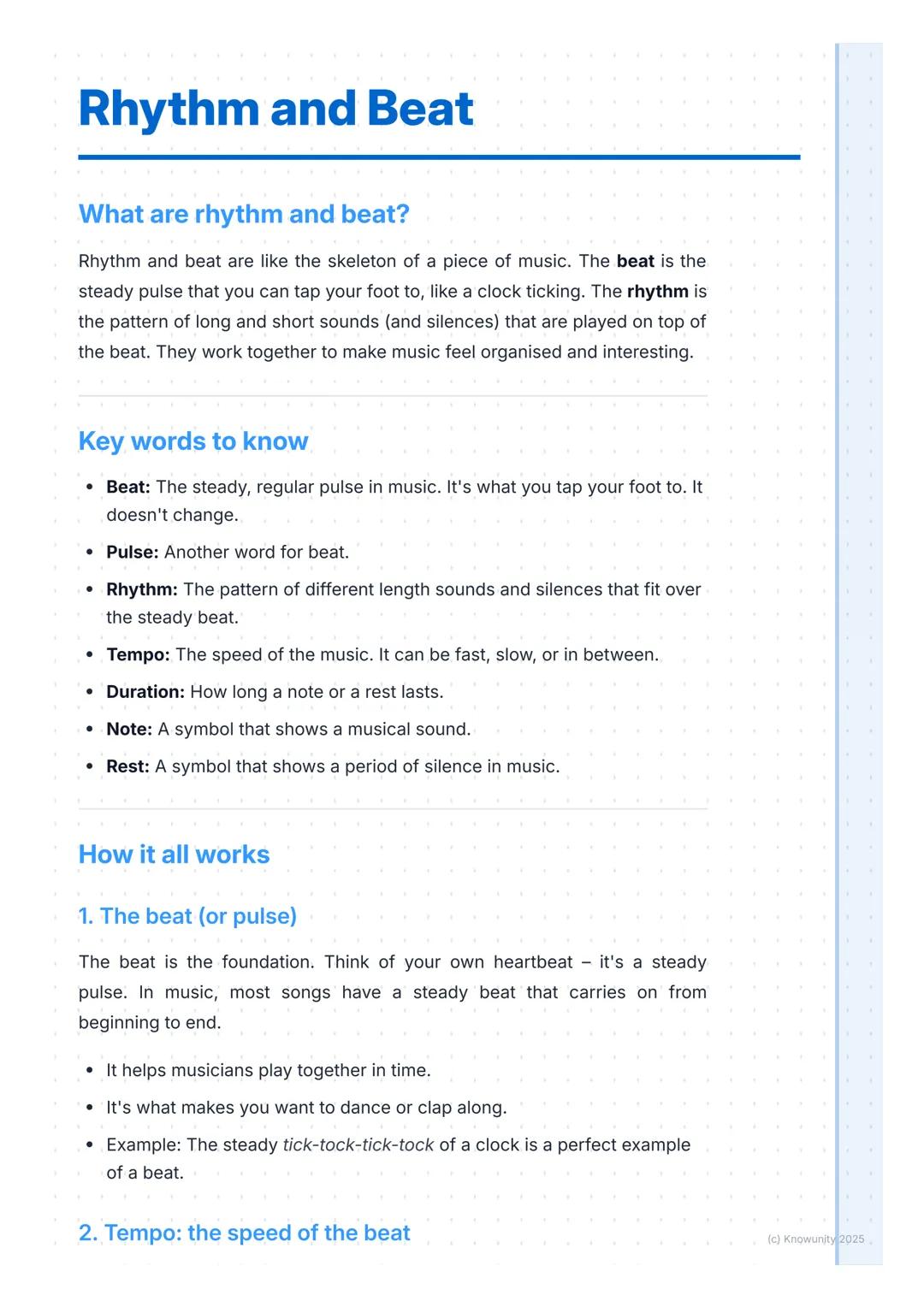
What Are Rhythm and Beat?
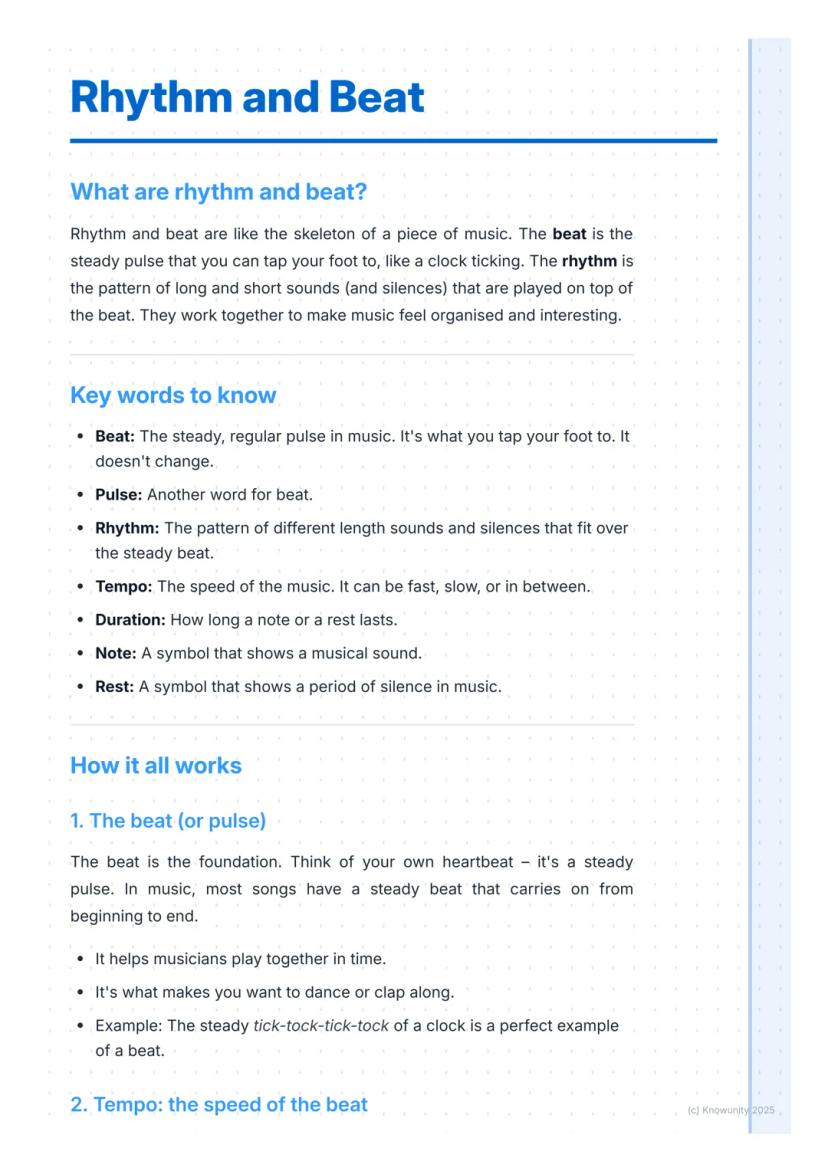
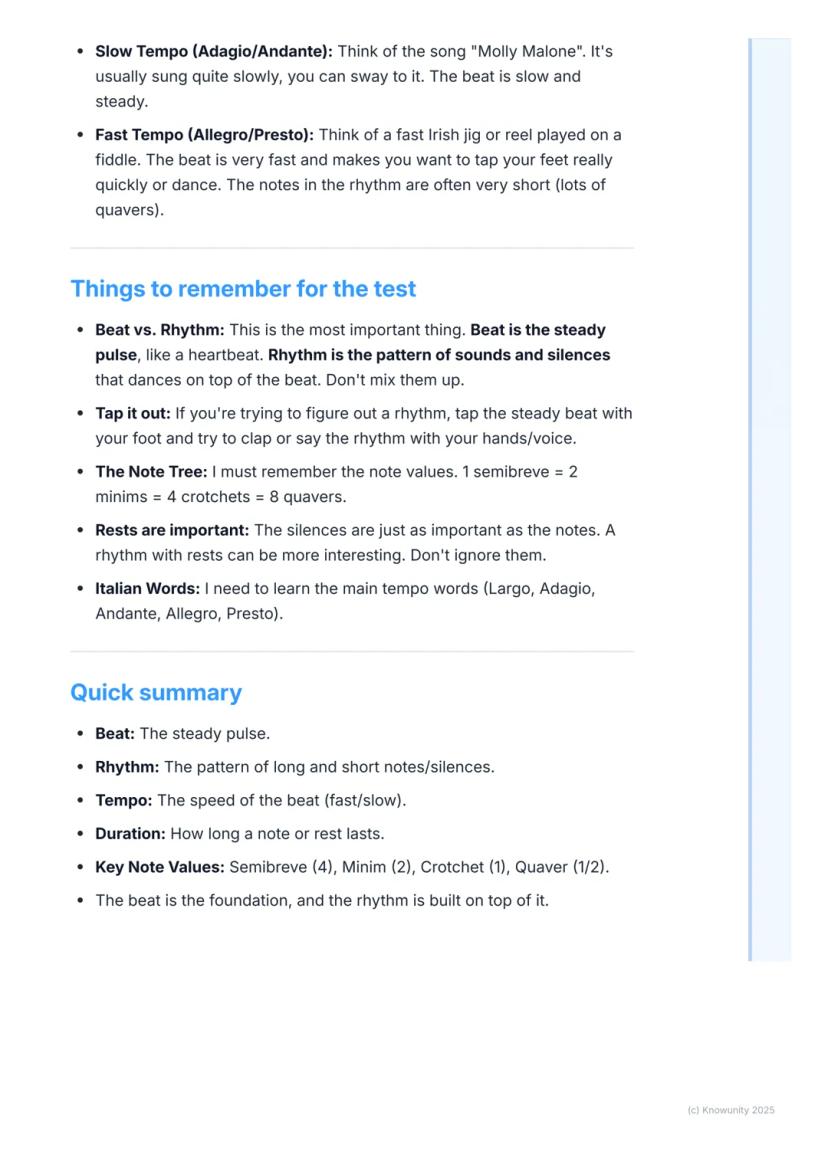
Think of music like a skeleton - the beat is the steady backbone that holds everything together, whilst the rhythm is the exciting pattern that dances on top. The beat is that steady pulse you naturally tap your foot to, just like a clock ticking away. It never changes and keeps everything organised.
Rhythm is much more interesting - it's the pattern of long and short sounds (plus the silences) that make each song unique. When you combine beat and rhythm, you get music that feels both steady and exciting at the same time.
Musicians use the beat to stay together when playing, which is why bands don't fall apart on stage! The pulse is just another word for beat, so don't get confused if you see both terms.
Quick Tip: Try listening to any song and tapping your foot - that steady tap is the beat, whilst everything else happening is the rhythm!
2
of 5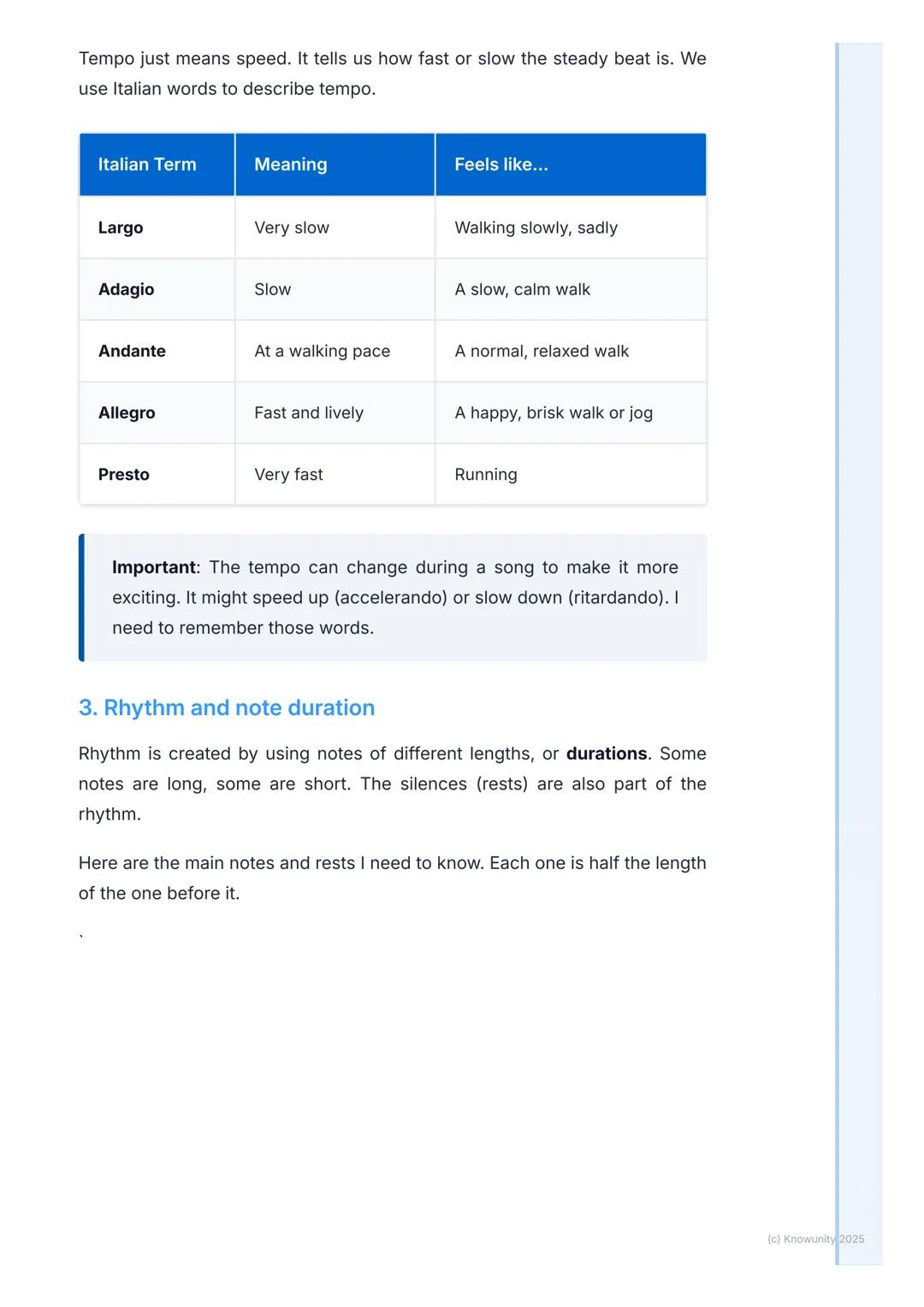
Understanding Tempo
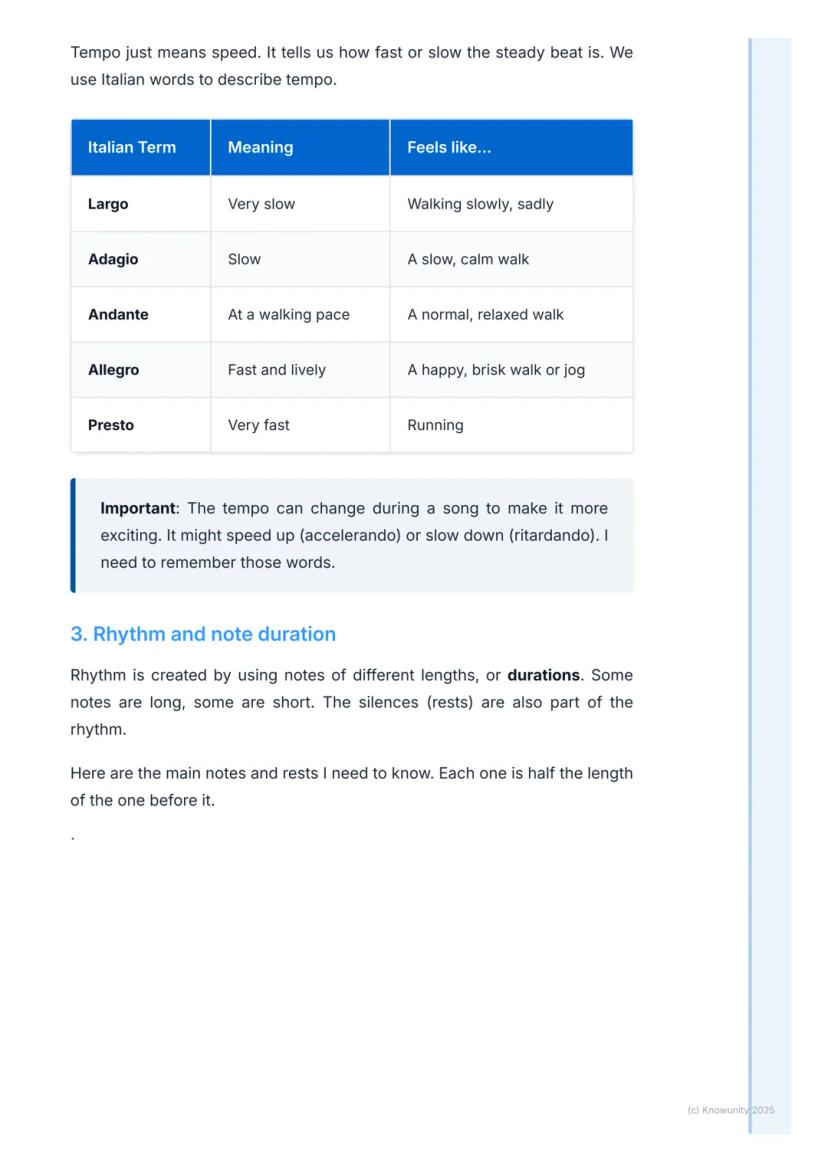
Tempo simply means how fast or slow the music goes. Musicians use fancy Italian words to describe different speeds, but they're actually quite logical once you think about them as different types of walking.
Largo means very slow - imagine walking sadly after losing a match. Adagio is slow like a calm, peaceful walk. Andante feels like your normal walking pace to school. Allegro is fast and lively, like rushing to meet your mates. Presto is super fast - basically running!
Here's the cool bit: tempo can change during a song to create excitement. When music speeds up, it's called accelerando. When it slows down, it's called ritardando. Think about how film music builds up during action scenes!
Remember This: Most Irish jigs are Allegro or Presto, whilst traditional ballads like "Molly Malone" are usually Andante or Adagio.
3
of 5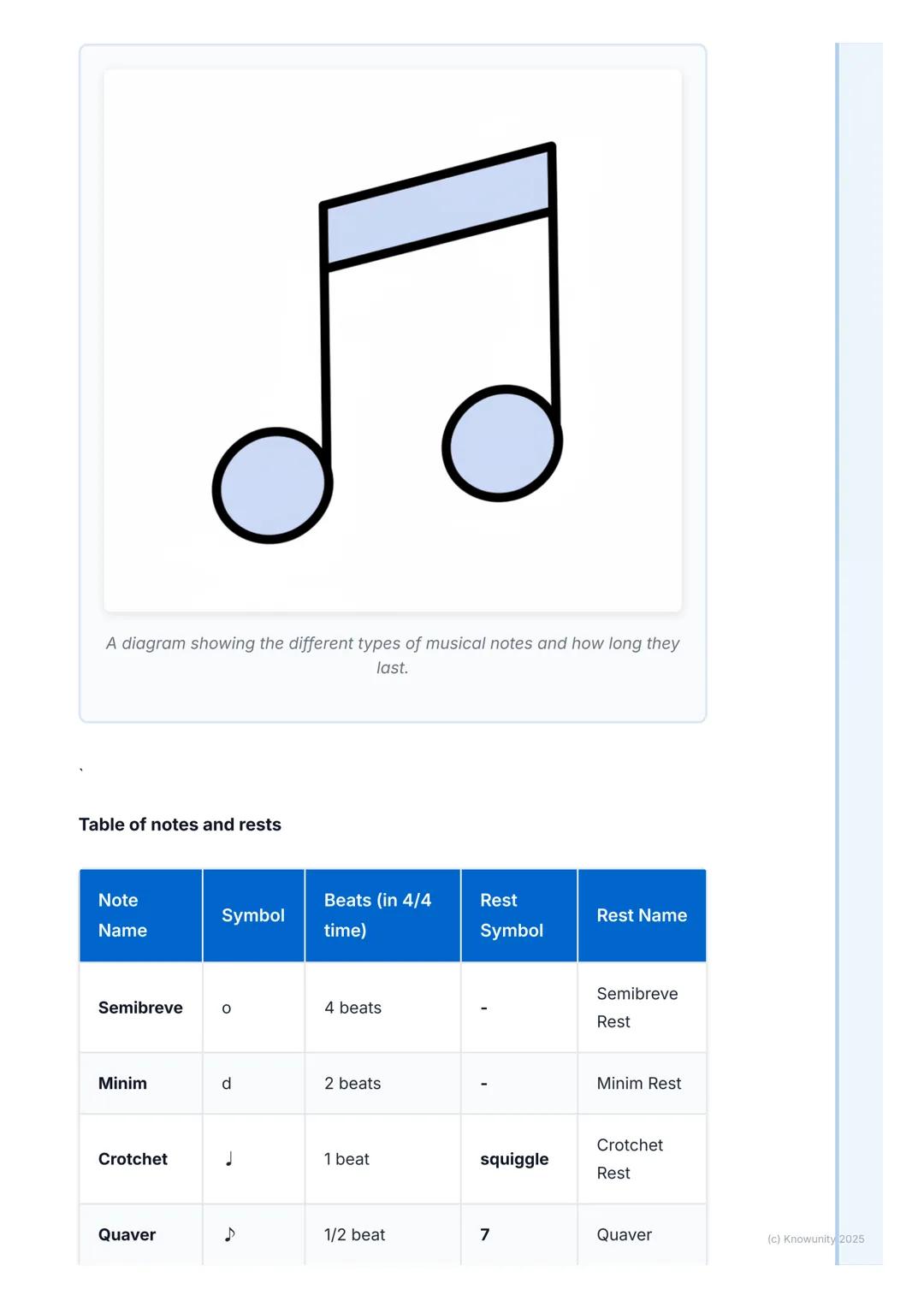
Note Values and Duration
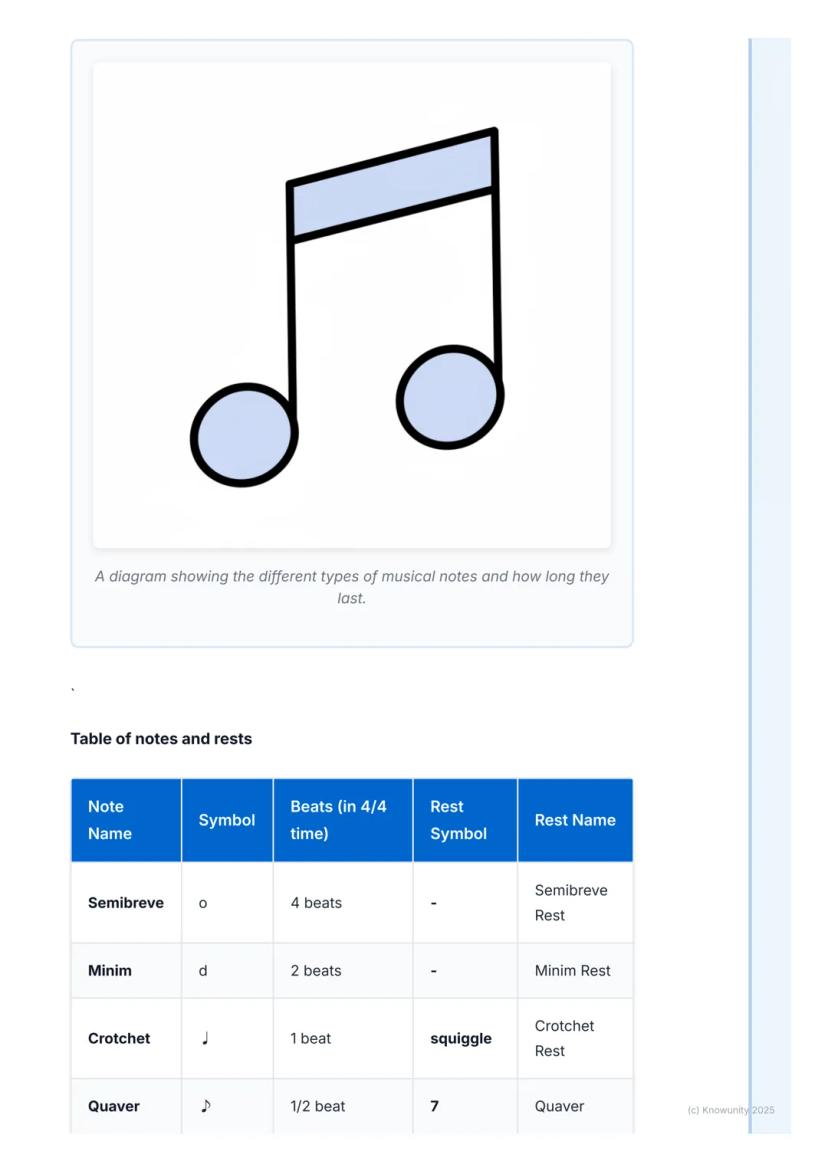
This is where rhythm gets its building blocks. Different notes last for different amounts of time - some are long, some are short. Think of it like a family tree where each note is exactly half the length of the one above it.
A semibreve lasts for 4 beats (the longest), a minim lasts for 2 beats, a crotchet lasts for 1 beat, and a quaver lasts for half a beat. It's like cutting a pizza in half, then in half again!
Rests are the silent gaps in music, and they're just as important as the notes themselves. Each note has a matching rest that lasts the same amount of time. The silences often make rhythms more interesting than constant noise would.
Memory Trick: Remember "1 semibreve = 2 minims = 4 crotchets = 8 quavers" - it's like a mathematical pattern that never changes!
4
of 5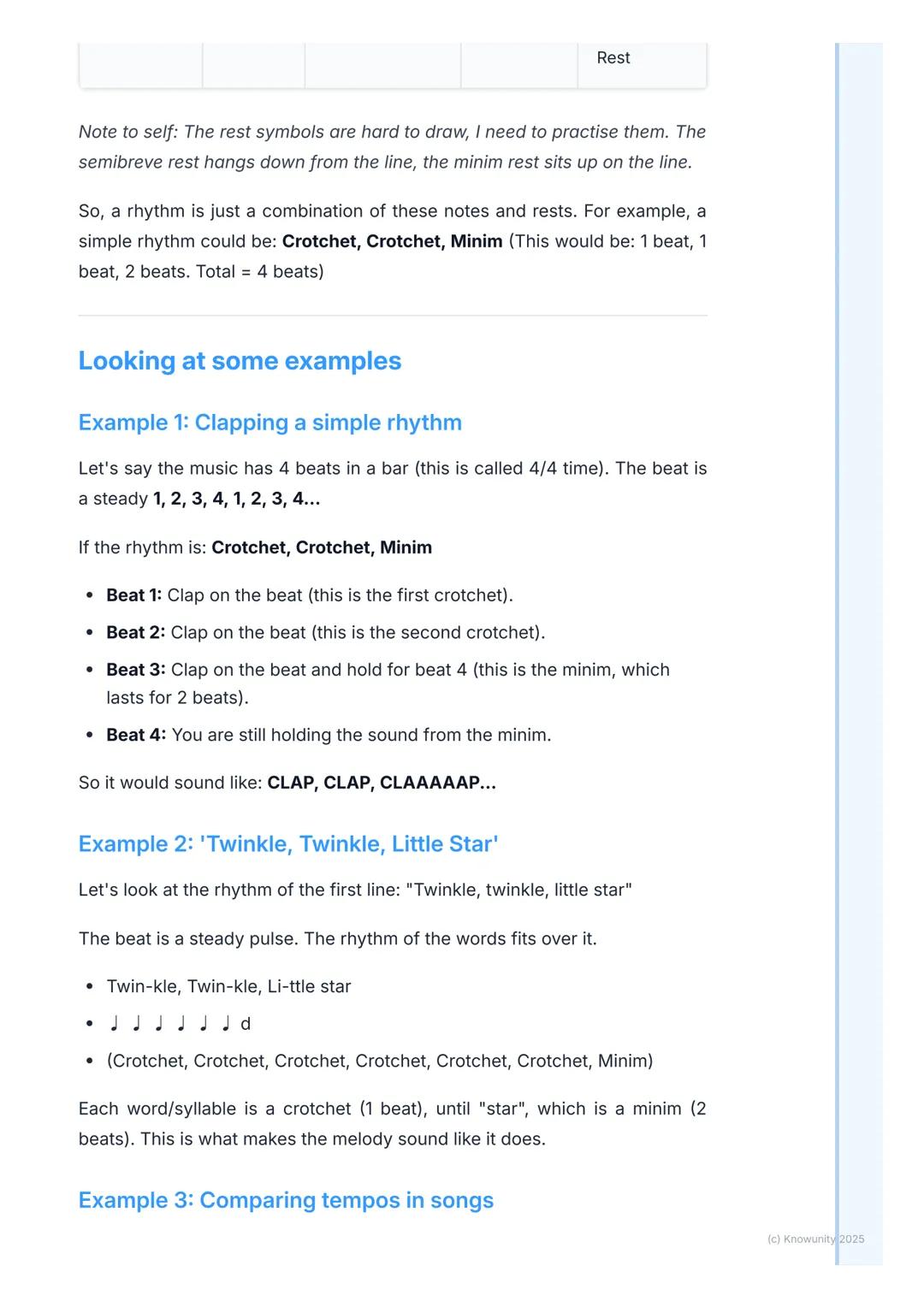
Putting It All Together
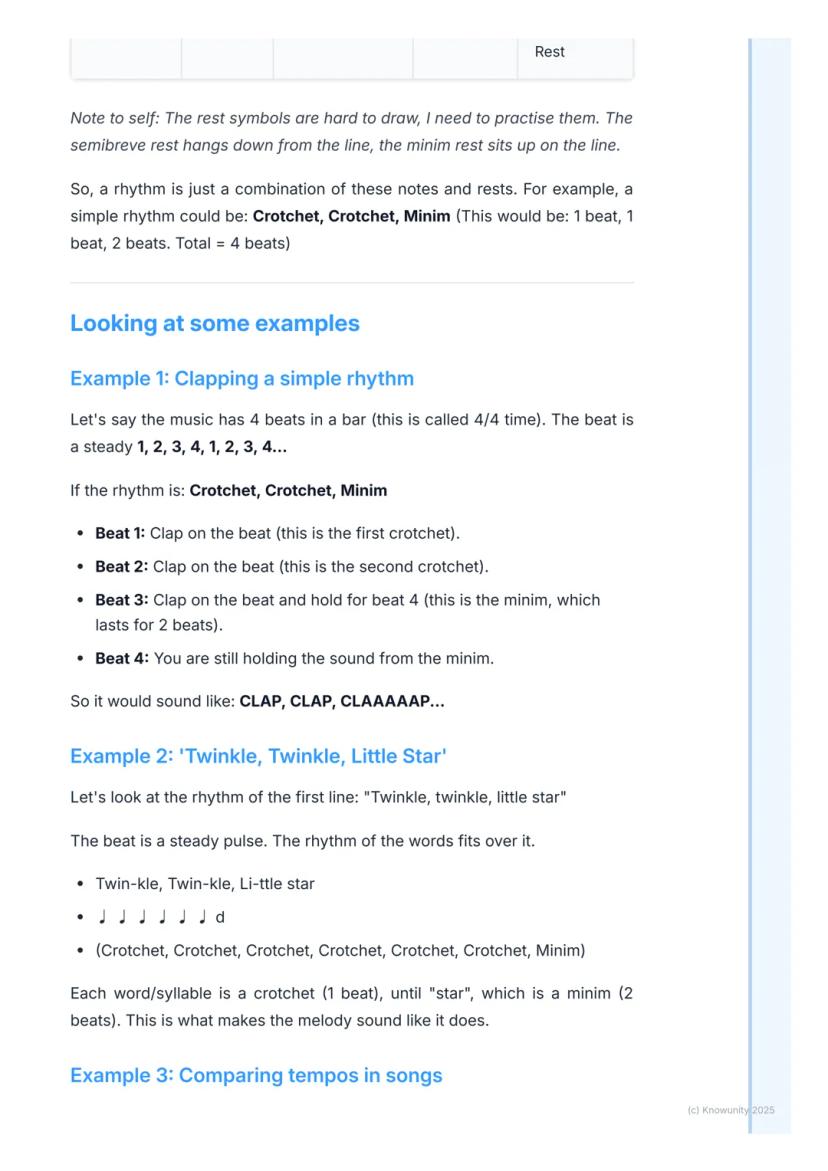
Let's see how this works with something you know. In "Twinkle, Twinkle, Little Star", each syllable gets one beat (crotchet), but "star" gets stretched out for two beats (minim). That's why it sounds complete at the end of the line.
When you're clapping rhythms, keep your foot tapping the steady beat whilst your hands clap the rhythm pattern. It's like patting your head and rubbing your stomach - tricky at first, but brilliant once you've got it!
Most popular music uses 4/4 time, which means there are 4 beats in each section (called a bar). Count along: 1, 2, 3, 4, 1, 2, 3, 4... and you'll hear how songs are organised into these groups.
Practice Tip: Try clapping simple patterns like "clap, clap, clap-hold-hold, clap" whilst keeping your foot tapping steadily - this builds your rhythm skills!
5
of 5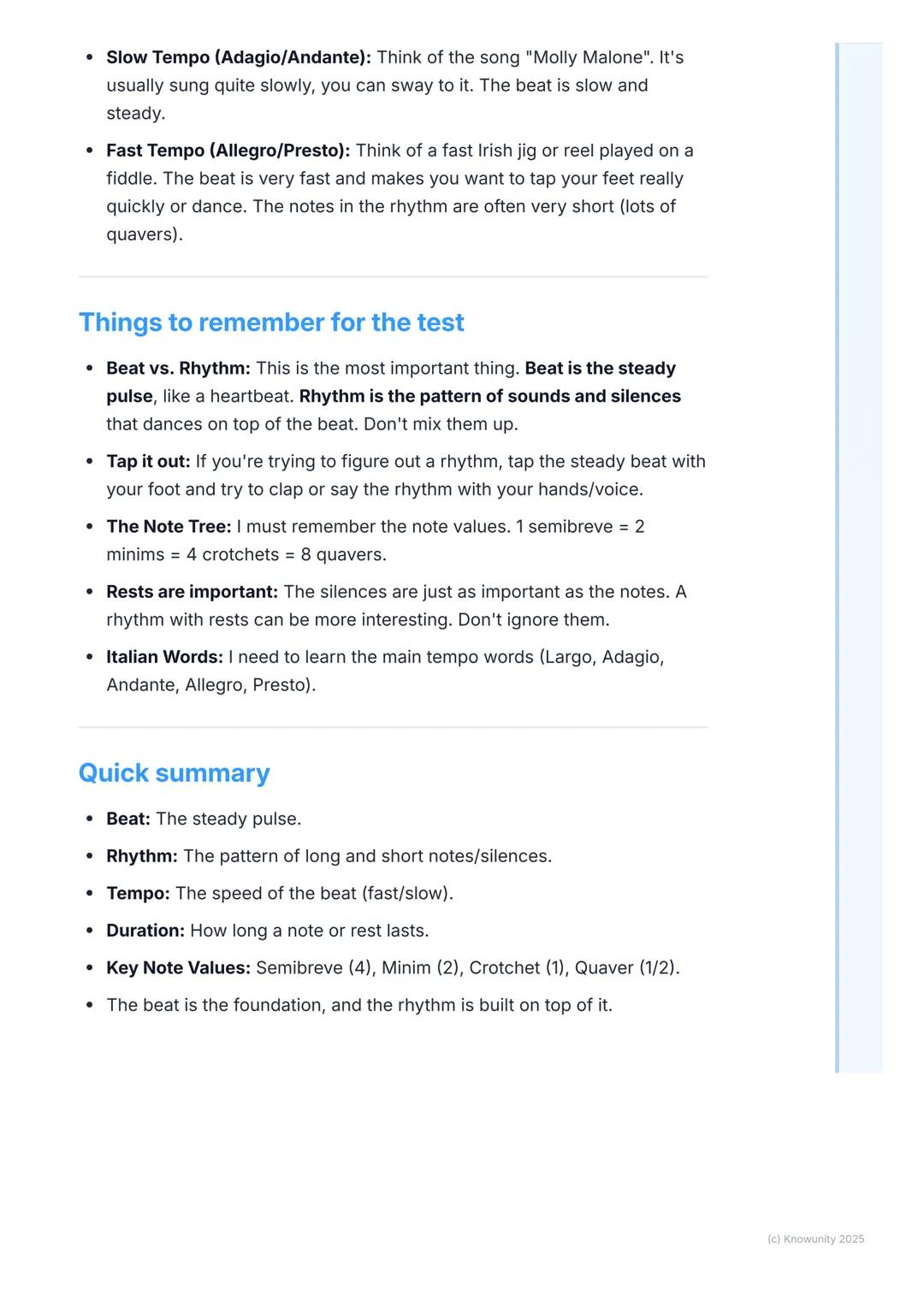
Test Success Tips
The most important thing to remember is that beat and rhythm are different. Beat = steady pulse (like your heartbeat), rhythm = the exciting pattern on top. Mix these up and you'll lose marks, so drill this difference into your brain!
For your exams, practice the note value relationships. Know that a semibreve equals 4 crotchets, and be able to work out simple rhythm patterns. The Italian tempo terms pop up regularly, so memorise Largo through to Presto.
Don't forget about rests - they're not just empty space, they're crucial parts of rhythms that create interest and breathing room. Many students ignore rests in exams and miss easy marks.
Exam Strategy: If you're stuck on a rhythm question, tap out the beat first, then work out where the sounds and silences fit over that steady pulse.
Myśleliśmy, że nigdy nie zapytasz...
Czym jest Towarzysz AI z Knowunity?
Nasz asystent AI jest specjalnie dostosowany do potrzeb uczniów. W oparciu o miliony treści, które mamy na platformie, możemy udzielać uczniom naprawdę znaczących i trafnych odpowiedzi. Ale nie chodzi tylko o odpowiedzi, towarzysz prowadzi również uczniów przez codzienne wyzwania związane z nauką, ze spersonalizowanymi planami nauki, quizami lub treściami na czacie i 100% personalizacją opartą na umiejętnościach i rozwoju uczniów.
Gdzie mogę pobrać aplikację Knowunity?
Aplikację możesz pobrać z Google Play i Apple Store.
Czy aplikacja Knowunity naprawdę jest darmowa?
Tak, masz całkowicie darmowy dostęp do wszystkich notatek w aplikacji, możesz w każdej chwili rozmawiać z Ekspertami lub ich obserwować. Możesz użyć punktów, aby odblokować pewne funkcje w aplikacji, które również możesz otrzymać za darmo. Dodatkowo oferujemy usługę Knowunity Premium, która pozwala na odblokowanie większej liczby funkcji.
Najpopularniejsze notatki z Music
1Najpopularniejsze notatki
9Nie ma nic odpowiedniego? Sprawdź inne przedmioty.
Zobacz, co mówią o nas nasi użytkownicy. Pokochali nas — pokochasz też i Ty.
4.6/5App Store
4.7/5Google Play
Aplikacja jest bardzo prosta i dobrze przemyślana. Do tej pory znalazłem wszystko, czego szukałem i mogłem się wiele nauczyć z innych notatek! Na pewno wykorzystam aplikację do pomocy przy robieniu prac domowych! No i oczywiście bardzo pomaga też jako inspiracja do robienia swoich notatek.
Stefan Sużytkownik iOS
Ta aplikacja jest naprawdę świetna. Jest tak wiele notatek i pomocnych informacji [...]. Moim problematycznym przedmiotem jest język niemiecki, a w aplikacji jest w czym wybierać. Dzięki tej aplikacji poprawiłam swój niemiecki. Polecam ją każdemu.
Samantha Klichużytkownik Androida
Wow, jestem w szoku. Właśnie wypróbowałam aplikację, ponieważ widziałam ją kilka razy reklamowaną na TikToku jestem absolutnie w szoku. Ta aplikacja jest POMOCĄ, której potrzebujesz w szkole i przede wszystkim oferuje tak wiele rzeczy jak notatki czy streszczenia, które są BARDZO pomocne w moim przypadku.
Annaużytkownik iOS
Music5 wyświetleń·Zaktualizowano May 31, 2026·5 stronyUnderstanding Beat and Rhythm in Music
Ever wondered what makes your favourite songs so catchy? It's all about rhythm and beat - the musical elements that make you want to tap your feet and dance along. Understanding these concepts is like learning the secret language that... Pokaż więcej
1
of 5Zarejestruj się, aby zobaczyć notatkę. To nic nie kosztuje!
- Dostęp do wszystkich materiałów
- Popraw swoje oceny
- Dołącz do milionów studentów
What Are Rhythm and Beat?
Think of music like a skeleton - the beat is the steady backbone that holds everything together, whilst the rhythm is the exciting pattern that dances on top. The beat is that steady pulse you naturally tap your foot to, just like a clock ticking away. It never changes and keeps everything organised.
Rhythm is much more interesting - it's the pattern of long and short sounds (plus the silences) that make each song unique. When you combine beat and rhythm, you get music that feels both steady and exciting at the same time.
Musicians use the beat to stay together when playing, which is why bands don't fall apart on stage! The pulse is just another word for beat, so don't get confused if you see both terms.
Quick Tip: Try listening to any song and tapping your foot - that steady tap is the beat, whilst everything else happening is the rhythm!
2
of 5Zarejestruj się, aby zobaczyć notatkę. To nic nie kosztuje!
- Dostęp do wszystkich materiałów
- Popraw swoje oceny
- Dołącz do milionów studentów
Understanding Tempo
Tempo simply means how fast or slow the music goes. Musicians use fancy Italian words to describe different speeds, but they're actually quite logical once you think about them as different types of walking.
Largo means very slow - imagine walking sadly after losing a match. Adagio is slow like a calm, peaceful walk. Andante feels like your normal walking pace to school. Allegro is fast and lively, like rushing to meet your mates. Presto is super fast - basically running!
Here's the cool bit: tempo can change during a song to create excitement. When music speeds up, it's called accelerando. When it slows down, it's called ritardando. Think about how film music builds up during action scenes!
Remember This: Most Irish jigs are Allegro or Presto, whilst traditional ballads like "Molly Malone" are usually Andante or Adagio.
3
of 5Zarejestruj się, aby zobaczyć notatkę. To nic nie kosztuje!
- Dostęp do wszystkich materiałów
- Popraw swoje oceny
- Dołącz do milionów studentów
Note Values and Duration
This is where rhythm gets its building blocks. Different notes last for different amounts of time - some are long, some are short. Think of it like a family tree where each note is exactly half the length of the one above it.
A semibreve lasts for 4 beats (the longest), a minim lasts for 2 beats, a crotchet lasts for 1 beat, and a quaver lasts for half a beat. It's like cutting a pizza in half, then in half again!
Rests are the silent gaps in music, and they're just as important as the notes themselves. Each note has a matching rest that lasts the same amount of time. The silences often make rhythms more interesting than constant noise would.
Memory Trick: Remember "1 semibreve = 2 minims = 4 crotchets = 8 quavers" - it's like a mathematical pattern that never changes!
4
of 5Zarejestruj się, aby zobaczyć notatkę. To nic nie kosztuje!
- Dostęp do wszystkich materiałów
- Popraw swoje oceny
- Dołącz do milionów studentów
Putting It All Together
Let's see how this works with something you know. In "Twinkle, Twinkle, Little Star", each syllable gets one beat (crotchet), but "star" gets stretched out for two beats (minim). That's why it sounds complete at the end of the line.
When you're clapping rhythms, keep your foot tapping the steady beat whilst your hands clap the rhythm pattern. It's like patting your head and rubbing your stomach - tricky at first, but brilliant once you've got it!
Most popular music uses 4/4 time, which means there are 4 beats in each section (called a bar). Count along: 1, 2, 3, 4, 1, 2, 3, 4... and you'll hear how songs are organised into these groups.
Practice Tip: Try clapping simple patterns like "clap, clap, clap-hold-hold, clap" whilst keeping your foot tapping steadily - this builds your rhythm skills!
5
of 5Zarejestruj się, aby zobaczyć notatkę. To nic nie kosztuje!
- Dostęp do wszystkich materiałów
- Popraw swoje oceny
- Dołącz do milionów studentów
Test Success Tips
The most important thing to remember is that beat and rhythm are different. Beat = steady pulse (like your heartbeat), rhythm = the exciting pattern on top. Mix these up and you'll lose marks, so drill this difference into your brain!
For your exams, practice the note value relationships. Know that a semibreve equals 4 crotchets, and be able to work out simple rhythm patterns. The Italian tempo terms pop up regularly, so memorise Largo through to Presto.
Don't forget about rests - they're not just empty space, they're crucial parts of rhythms that create interest and breathing room. Many students ignore rests in exams and miss easy marks.
Exam Strategy: If you're stuck on a rhythm question, tap out the beat first, then work out where the sounds and silences fit over that steady pulse.
Myśleliśmy, że nigdy nie zapytasz...
Czym jest Towarzysz AI z Knowunity?
Nasz asystent AI jest specjalnie dostosowany do potrzeb uczniów. W oparciu o miliony treści, które mamy na platformie, możemy udzielać uczniom naprawdę znaczących i trafnych odpowiedzi. Ale nie chodzi tylko o odpowiedzi, towarzysz prowadzi również uczniów przez codzienne wyzwania związane z nauką, ze spersonalizowanymi planami nauki, quizami lub treściami na czacie i 100% personalizacją opartą na umiejętnościach i rozwoju uczniów.
Gdzie mogę pobrać aplikację Knowunity?
Aplikację możesz pobrać z Google Play i Apple Store.
Czy aplikacja Knowunity naprawdę jest darmowa?
Tak, masz całkowicie darmowy dostęp do wszystkich notatek w aplikacji, możesz w każdej chwili rozmawiać z Ekspertami lub ich obserwować. Możesz użyć punktów, aby odblokować pewne funkcje w aplikacji, które również możesz otrzymać za darmo. Dodatkowo oferujemy usługę Knowunity Premium, która pozwala na odblokowanie większej liczby funkcji.
Najpopularniejsze notatki z Music
1Najpopularniejsze notatki
9Nie ma nic odpowiedniego? Sprawdź inne przedmioty.
Zobacz, co mówią o nas nasi użytkownicy. Pokochali nas — pokochasz też i Ty.
4.6/5App Store
4.7/5Google Play
Aplikacja jest bardzo prosta i dobrze przemyślana. Do tej pory znalazłem wszystko, czego szukałem i mogłem się wiele nauczyć z innych notatek! Na pewno wykorzystam aplikację do pomocy przy robieniu prac domowych! No i oczywiście bardzo pomaga też jako inspiracja do robienia swoich notatek.
Stefan Sużytkownik iOS
Ta aplikacja jest naprawdę świetna. Jest tak wiele notatek i pomocnych informacji [...]. Moim problematycznym przedmiotem jest język niemiecki, a w aplikacji jest w czym wybierać. Dzięki tej aplikacji poprawiłam swój niemiecki. Polecam ją każdemu.
Samantha Klichużytkownik Androida
Wow, jestem w szoku. Właśnie wypróbowałam aplikację, ponieważ widziałam ją kilka razy reklamowaną na TikToku jestem absolutnie w szoku. Ta aplikacja jest POMOCĄ, której potrzebujesz w szkole i przede wszystkim oferuje tak wiele rzeczy jak notatki czy streszczenia, które są BARDZO pomocne w moim przypadku.
Annaużytkownik iOS