
Welcome to the world of scientific exploration in the laboratory!... Pokaż więcej
 Science184 wyświetleń·Zaktualizowano Jun 6, 2026·18 strony
Grade 7 Science Lab Safety and Equipment Guide
1 / 10
1
of 10
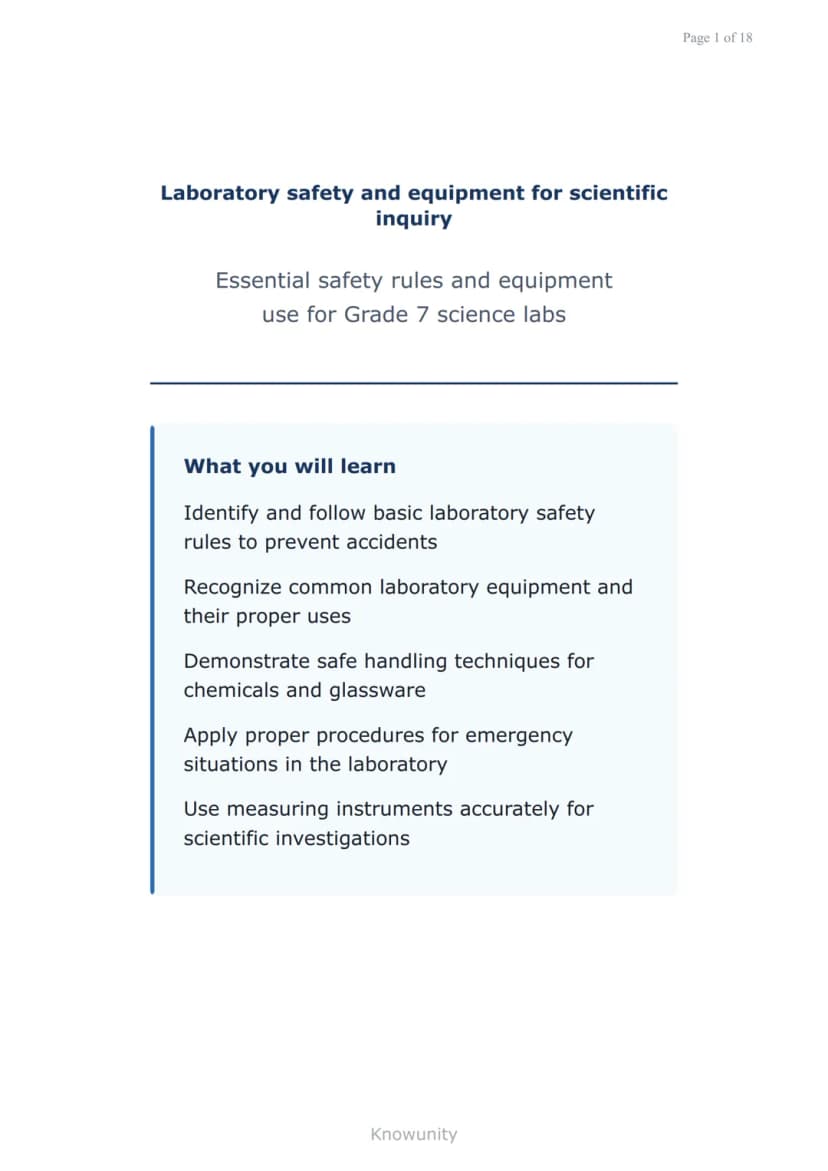
Laboratory Safety and Equipment for Scientific Inquiry
The laboratory is where science comes alive through experiments! Working in a lab is exciting, but it also comes with responsibilities to keep yourself and others safe.
In your Grade 7 science labs, you'll learn how to identify and follow basic safety rules that prevent accidents. You'll become familiar with common laboratory equipment and develop proper techniques for handling chemicals and glassware.
You'll also learn what to do in emergency situations and how to use measuring instruments accurately. These skills aren't just for school—they're the same skills real scientists use every day!
Remember: Safety isn't boring—it's what allows you to do the coolest experiments without getting hurt!
2
of 10
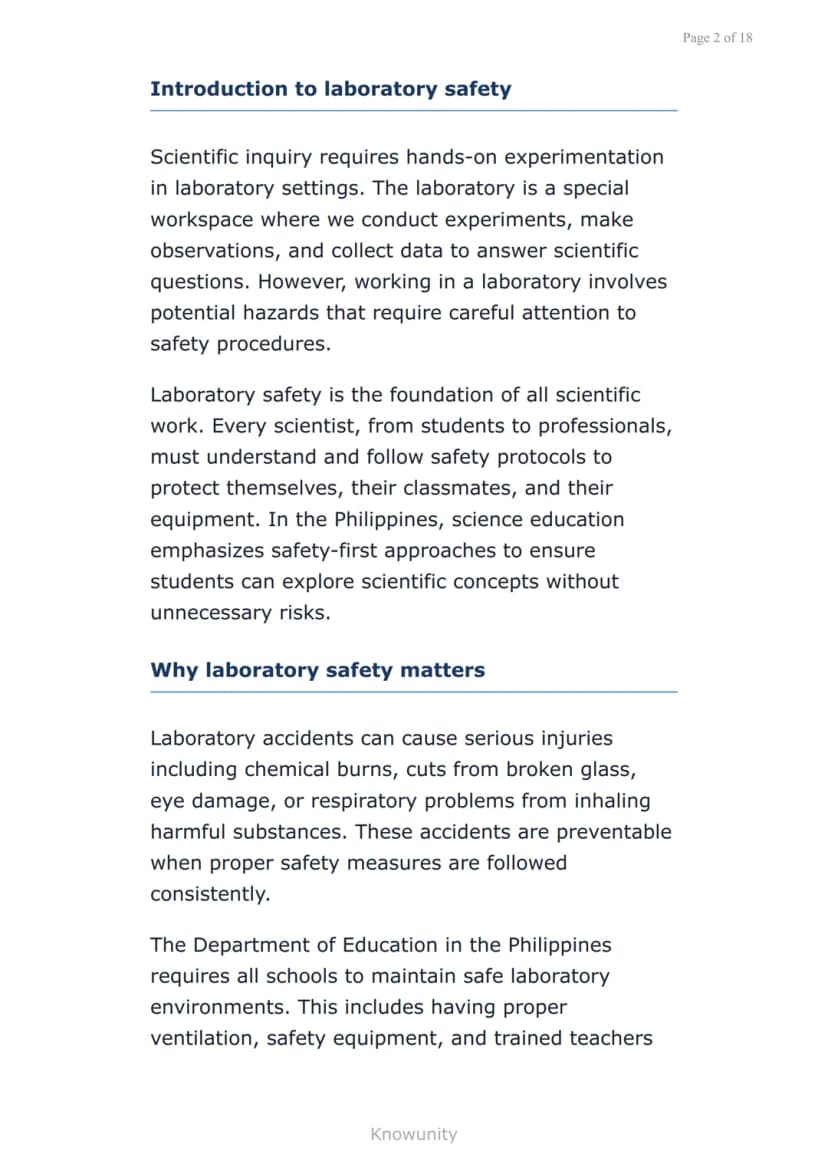
Introduction to Laboratory Safety
Every time you step into a science lab, you're entering a special workspace designed for discovery. Here you'll conduct experiments, make observations, and collect data to answer scientific questions—but this exciting work requires careful attention to safety.
Laboratory safety isn't just a set of rules—it's the foundation of all good scientific work. When everyone follows safety protocols, we protect ourselves, our classmates, and our equipment. This allows us to focus on the exciting parts of science without unnecessary risks.
Laboratory accidents can cause serious injuries like chemical burns, cuts from broken glass, or eye damage. The good news is that these accidents are completely preventable when we follow proper safety measures consistently.
Important: Safety is not an accident—it happens when we plan carefully, get proper training, and practice good laboratory habits every time we do an experiment.
3
of 10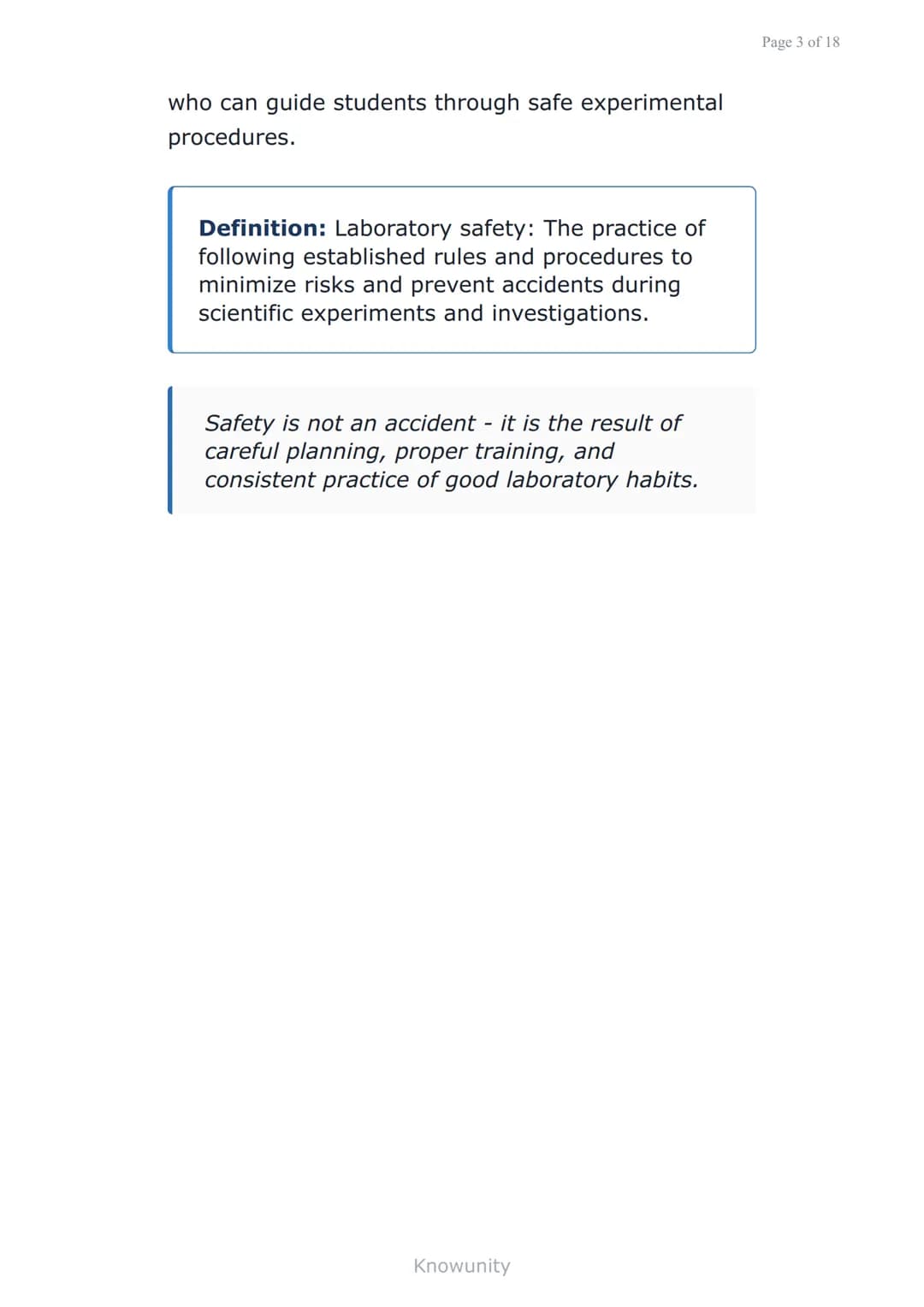
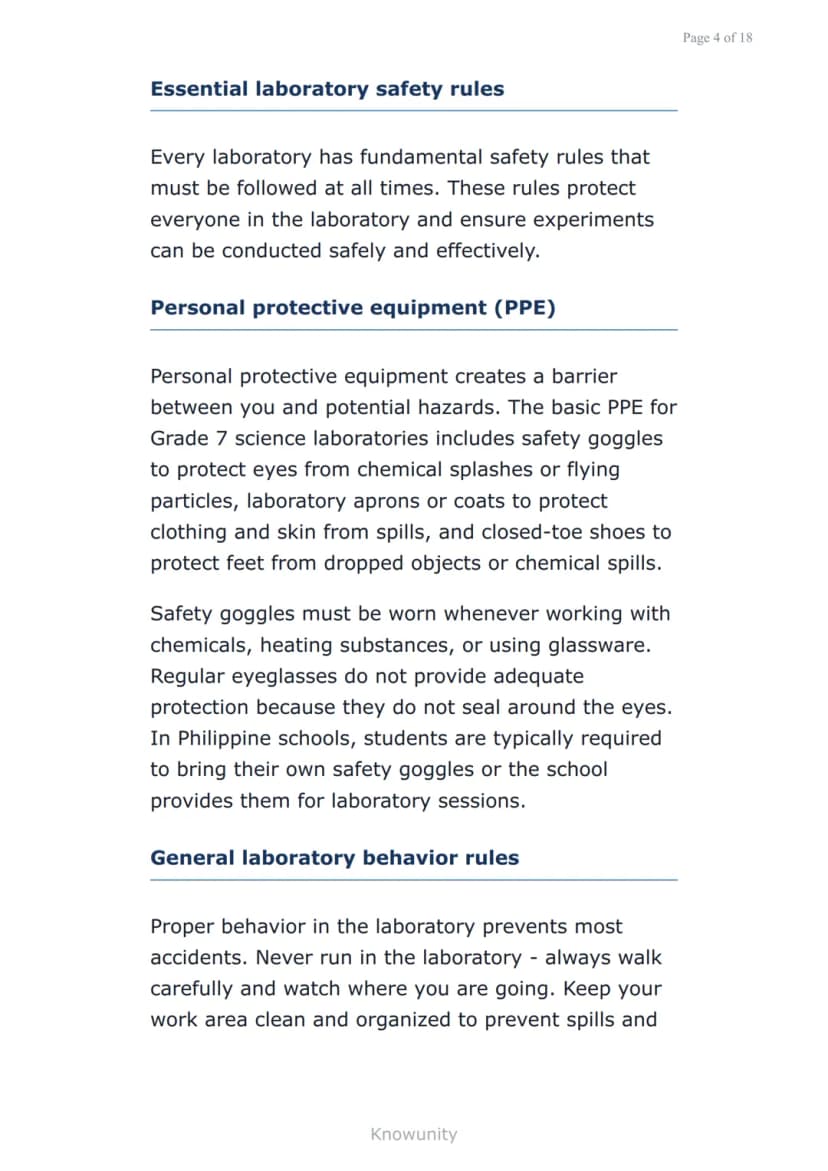
Essential Laboratory Safety Rules
The most important thing to remember about lab safety is that rules protect everyone. Following these fundamental safety guidelines ensures your experiments will be both safe and successful.
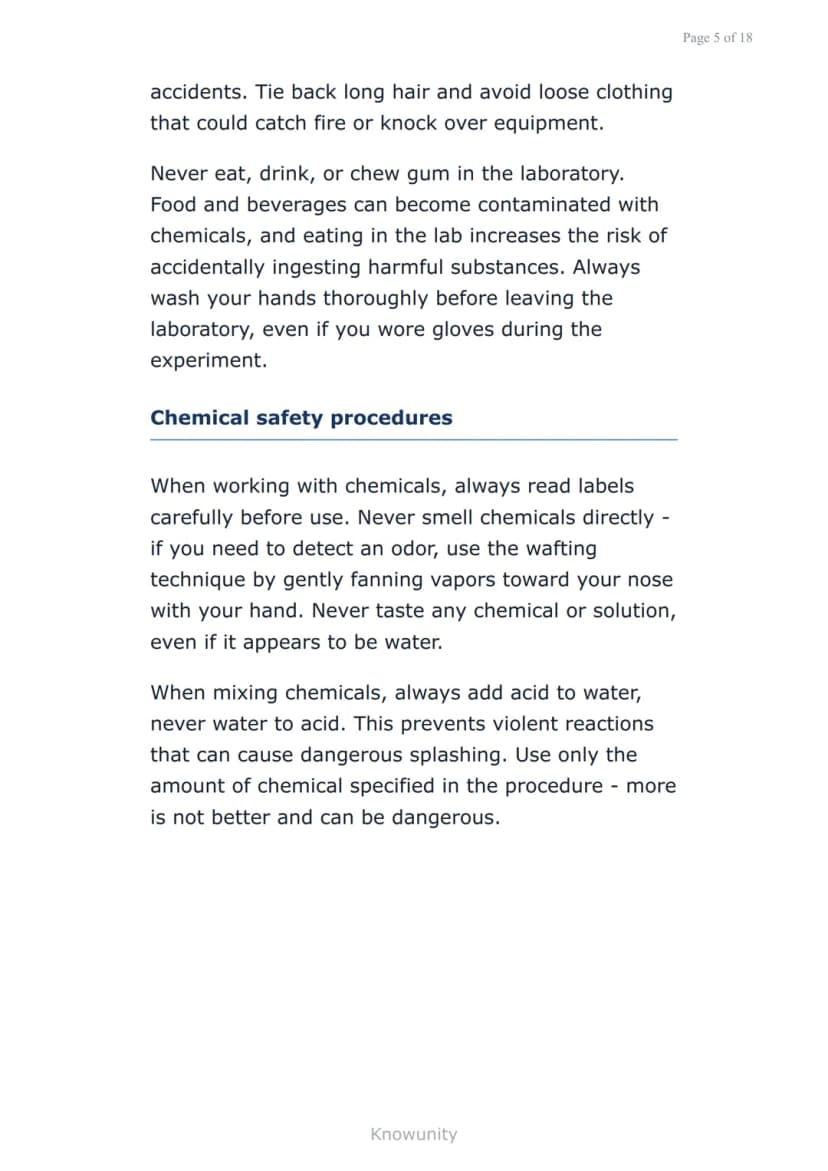
Personal protective equipment (PPE) creates a barrier between you and potential dangers. Always wear safety goggles to protect your eyes from chemical splashes, laboratory aprons to protect your clothes and skin, and closed-toe shoes to protect your feet. Remember that regular eyeglasses don't provide enough protection because they don't seal around your eyes.
Proper behavior in the lab prevents most accidents. Walk carefully (never run), keep your work area clean and organized, tie back long hair, and avoid loose clothing that could catch on equipment. Never eat, drink, or chew gum in the lab—even if you're careful, food and drinks can become contaminated with chemicals.
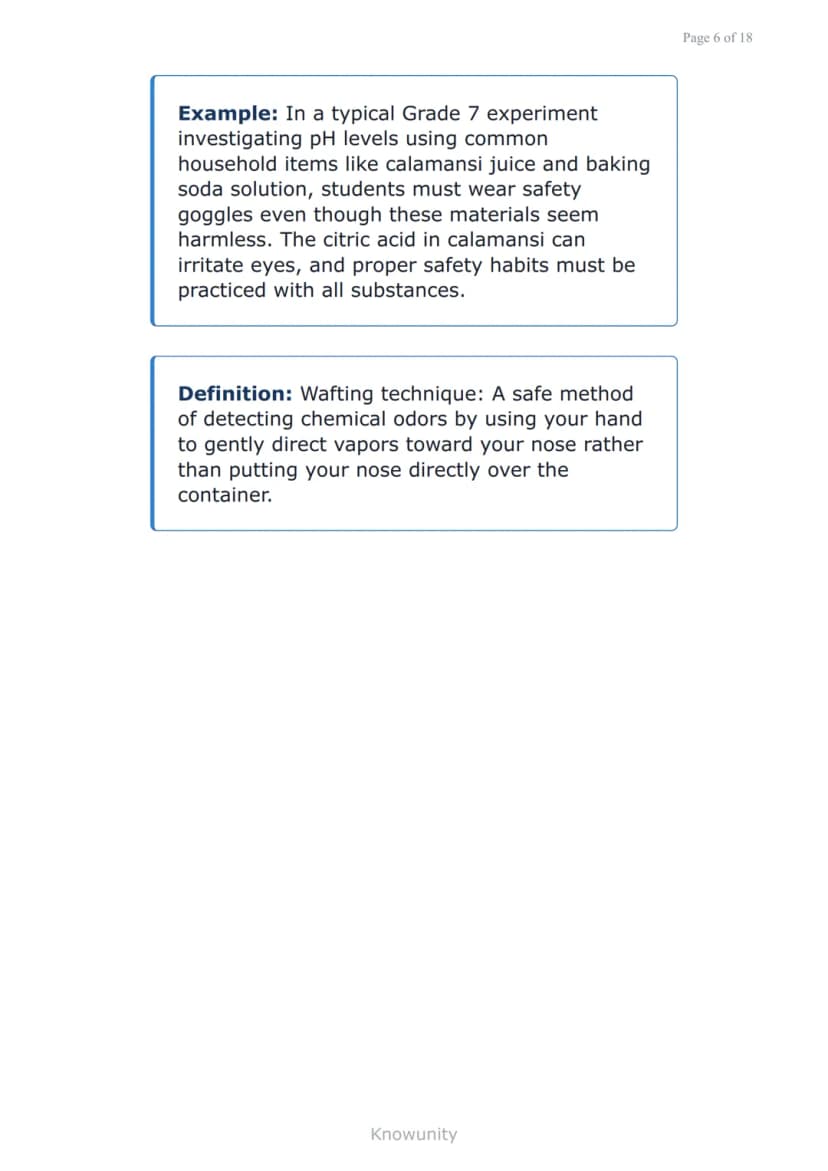
When working with chemicals, always read labels first. Never smell chemicals directly—instead, use the wafting technique by gently fanning vapors toward your nose with your hand. And remember the golden rule: always add acid to water, never water to acid!
Try this: Before each experiment, take 30 seconds to check your PPE and scan your workspace for potential hazards. This quick safety check can prevent most common accidents!
4
of 10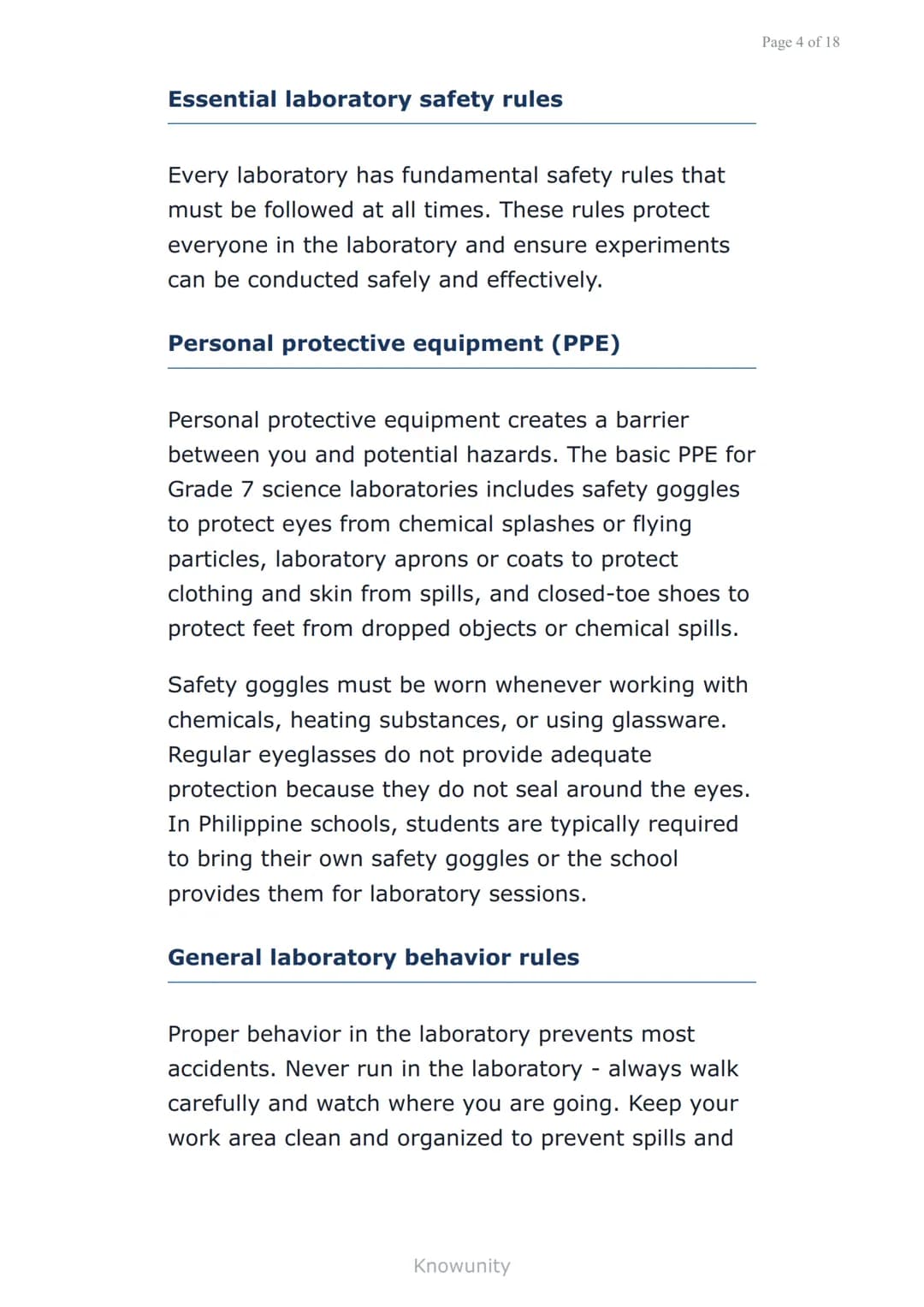
Common Laboratory Equipment and Their Uses
Knowing your lab equipment is like learning to use the tools in a workshop—each piece has a specific purpose and proper way to use it. Understanding these tools helps you conduct reliable experiments and keeps everything running smoothly.
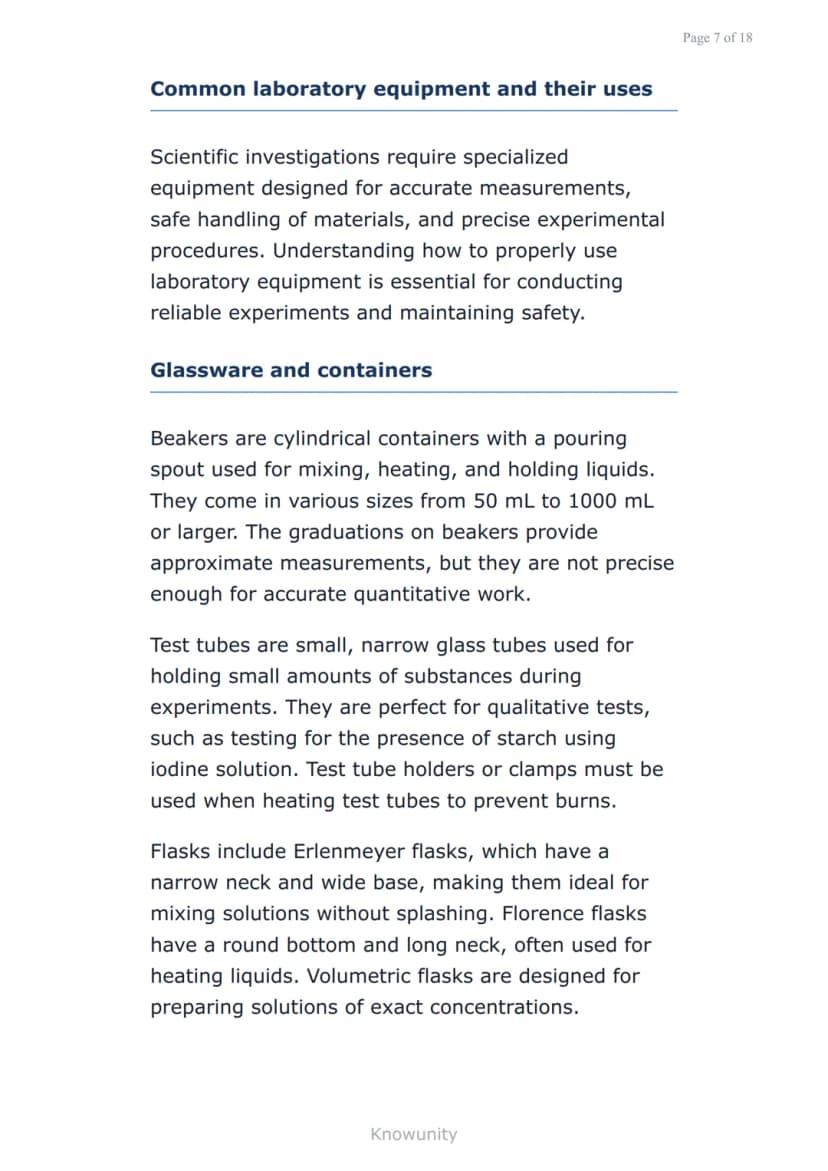
Beakers are cylindrical containers with pouring spouts used for mixing and holding liquids. Test tubes are small glass tubes perfect for small-scale reactions like testing for starch. Flasks come in different shapes—Erlenmeyer flasks have narrow necks to prevent splashing, while Florence flasks are great for heating liquids.
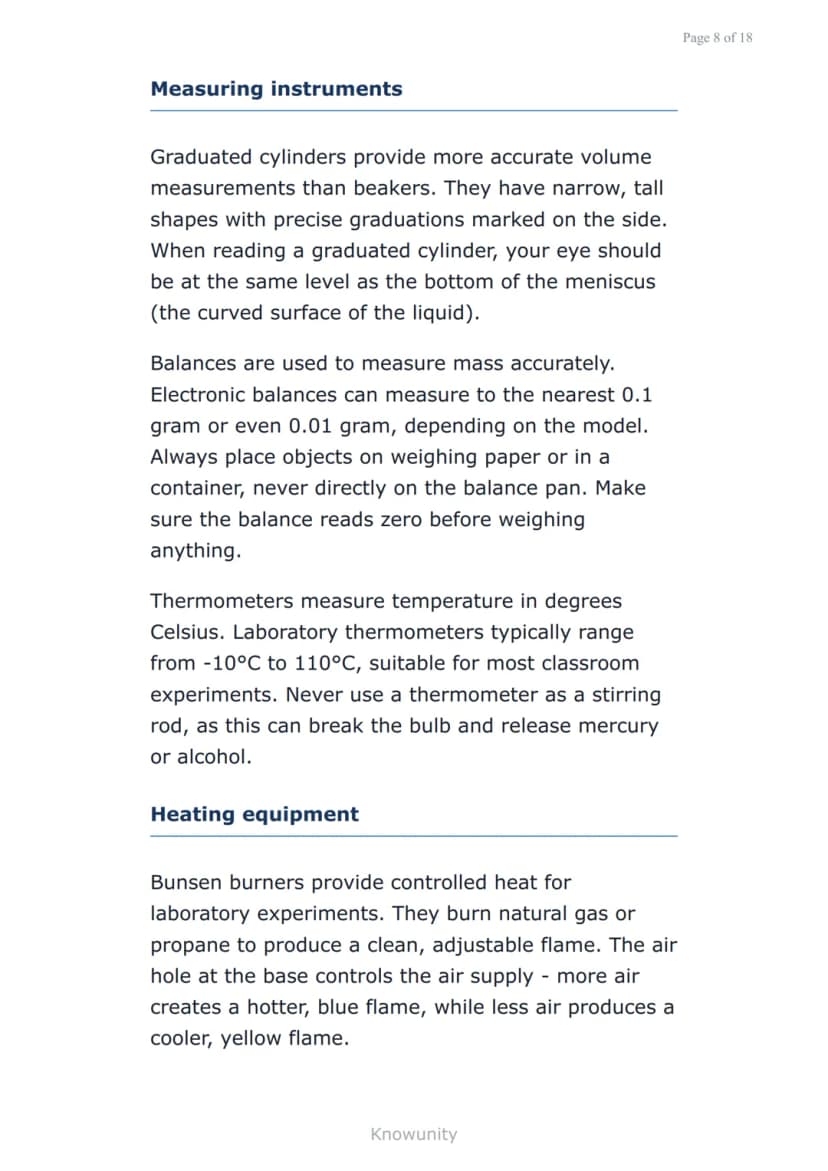
For accurate measurements, you'll use graduated cylinders (much more precise than beakers) and balances to measure mass. When reading a graduated cylinder, always put your eye at the same level as the bottom of the meniscus (the curved surface of the liquid). Thermometers measure temperature in degrees Celsius—never use them as stirring rods!
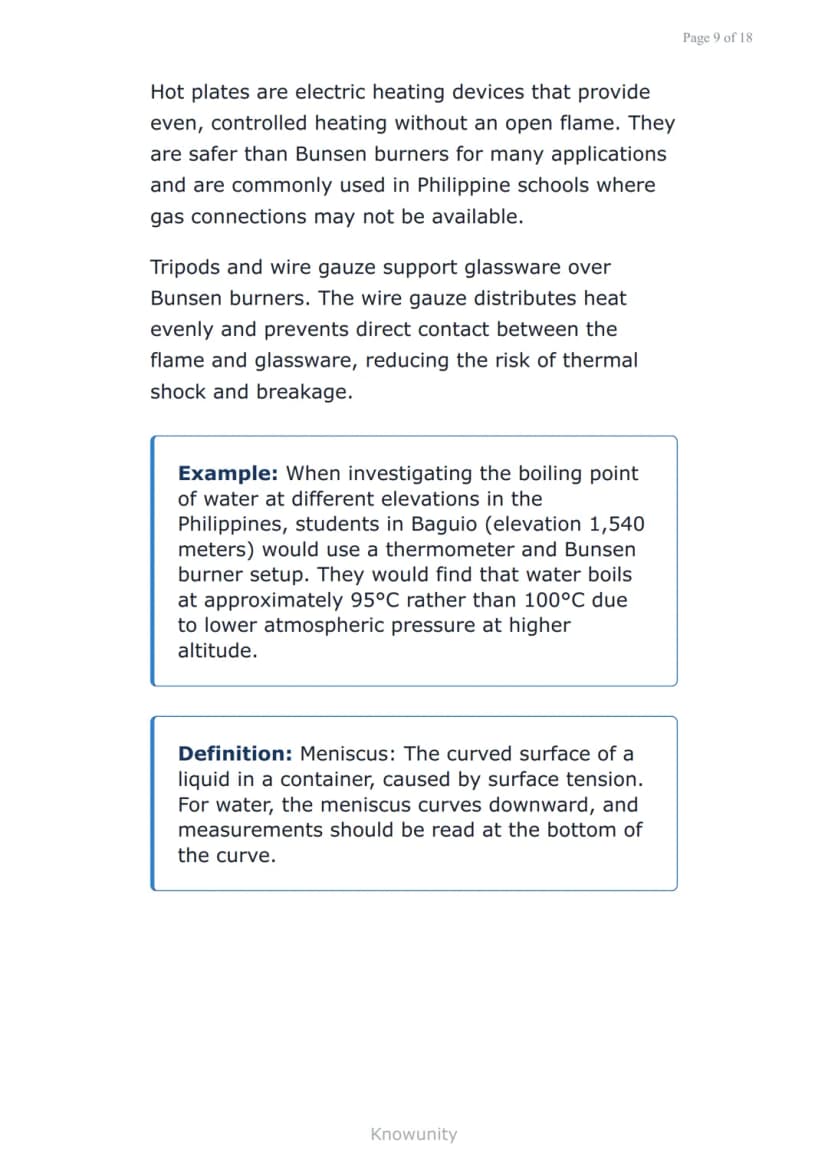
Heating equipment includes Bunsen burners for controlled heat (the air hole adjusts flame temperature), hot plates for even heating without flames, and tripods with wire gauze to support glassware and distribute heat evenly.
Cool fact: When investigating water's boiling point at different elevations, you'd find that water boils at only about 95°C in mountain areas rather than the standard 100°C because of lower atmospheric pressure at higher altitudes.
5
of 10
Proper Handling and Care of Laboratory Equipment
Taking care of lab equipment is a bit like taking care of your phone or bicycle—proper handling keeps everything working well and prevents accidents. Good habits with equipment will help your experiments succeed.
Always check glassware before using it. Look for cracks or chips that could cause it to break during your experiment. Carry beakers and flasks by supporting the bottom with one hand and steadying the side with the other. Never rush—it's better to make multiple trips than to try carrying too much at once.
When heating glassware, do it gradually to prevent thermal shock (sudden temperature changes that can make glass crack). If you're heating a test tube, point the opening away from yourself and others, and gently move the tube in the flame to spread the heat evenly.
Clean your equipment right after using it—it's much easier than trying to remove dried residue later! Rinse with water first, then use soap and a brush for thorough cleaning. Dry glassware by letting it air dry in a rack or gently patting with a clean towel. Remember that properly maintained equipment gives more accurate results in your experiments.
Pro tip: When using a graduated cylinder, place it on a flat surface and read at eye level to avoid parallax error—a measurement mistake that happens when you read from an angle instead of straight-on.
6
of 10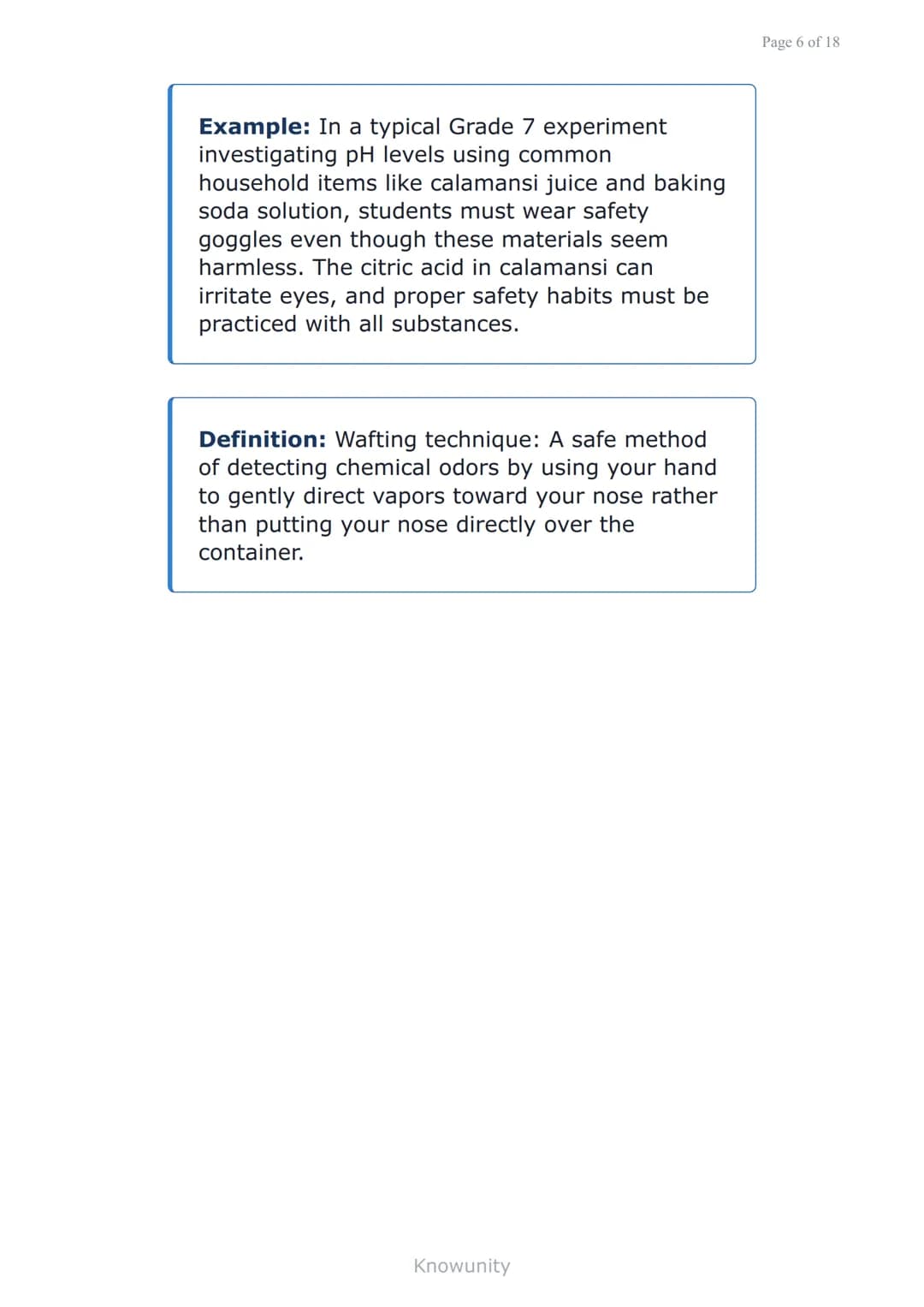
Emergency Procedures and First Aid
Even when we're careful, accidents sometimes happen in the lab. Knowing how to respond quickly can prevent a small problem from becoming serious. Think of these procedures as your emergency toolkit.
If clothing catches fire, remember: stop, drop, and roll. Don't run (this makes flames worse)! For small fires in containers, turn off gas and electrical equipment if safe to do so. Always know where fire exits, extinguishers, fire blankets, and emergency shut-off valves are located in your lab.
For chemical spills on skin, immediately flush the affected area with plenty of water for at least 15 minutes. If chemicals splash in your eyes, use the eyewash station right away, holding your eyelids open while flushing with water. For chemical spills on the lab bench or floor, tell your teacher immediately.
For cuts from broken glassware, apply direct pressure with a clean cloth to control bleeding. For burns from hot equipment, cool the area with cold running water for 10-15 minutes (don't use ice). Never try to handle serious injuries yourself—always get help from your teacher.
Remember this: The best emergency response is prevention through careful attention to safety procedures. But when accidents happen, quick and appropriate action makes all the difference!
7
of 10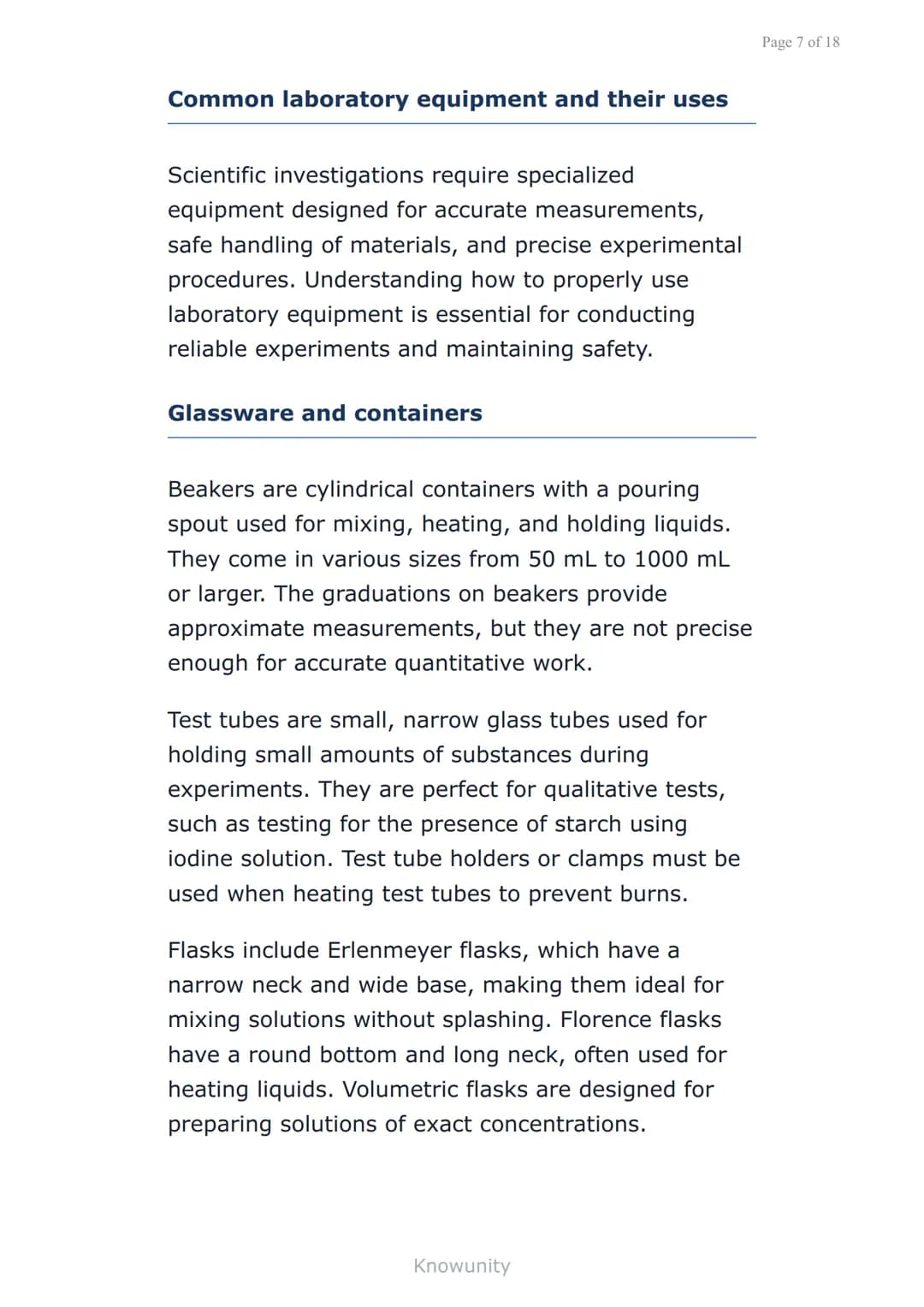
Laboratory Skills Assessment and Review
Becoming good at lab skills is like learning to ride a bike—it takes practice and regular check-ins to make sure you're doing things correctly. These skills will soon become automatic habits rather than rules you have to remember.
Before starting any experiment, run through a mental safety checklist: Are you wearing proper PPE? Is your work area clean and organized? Do you understand the potential hazards of your experiment? Do you know where safety equipment is located? Are all your materials and equipment in good condition?
Test your understanding with questions like: What should you wear when working with acids? How do you properly read a graduated cylinder? What should you do if you spill a chemical on your skin? Why do you never add water to concentrated acid? Where are emergency shut-off valves in your lab?
Practice your skills by correctly measuring liquids, using a balance properly, lighting a Bunsen burner safely, and demonstrating emergency procedures like using an eyewash station. Each experiment gives you a chance to improve your techniques and become more confident in the lab.
You've got this: Laboratory skills develop through practice. Each time you conduct an experiment safely and accurately, you're building valuable abilities that will help you throughout your science education!
8
of 10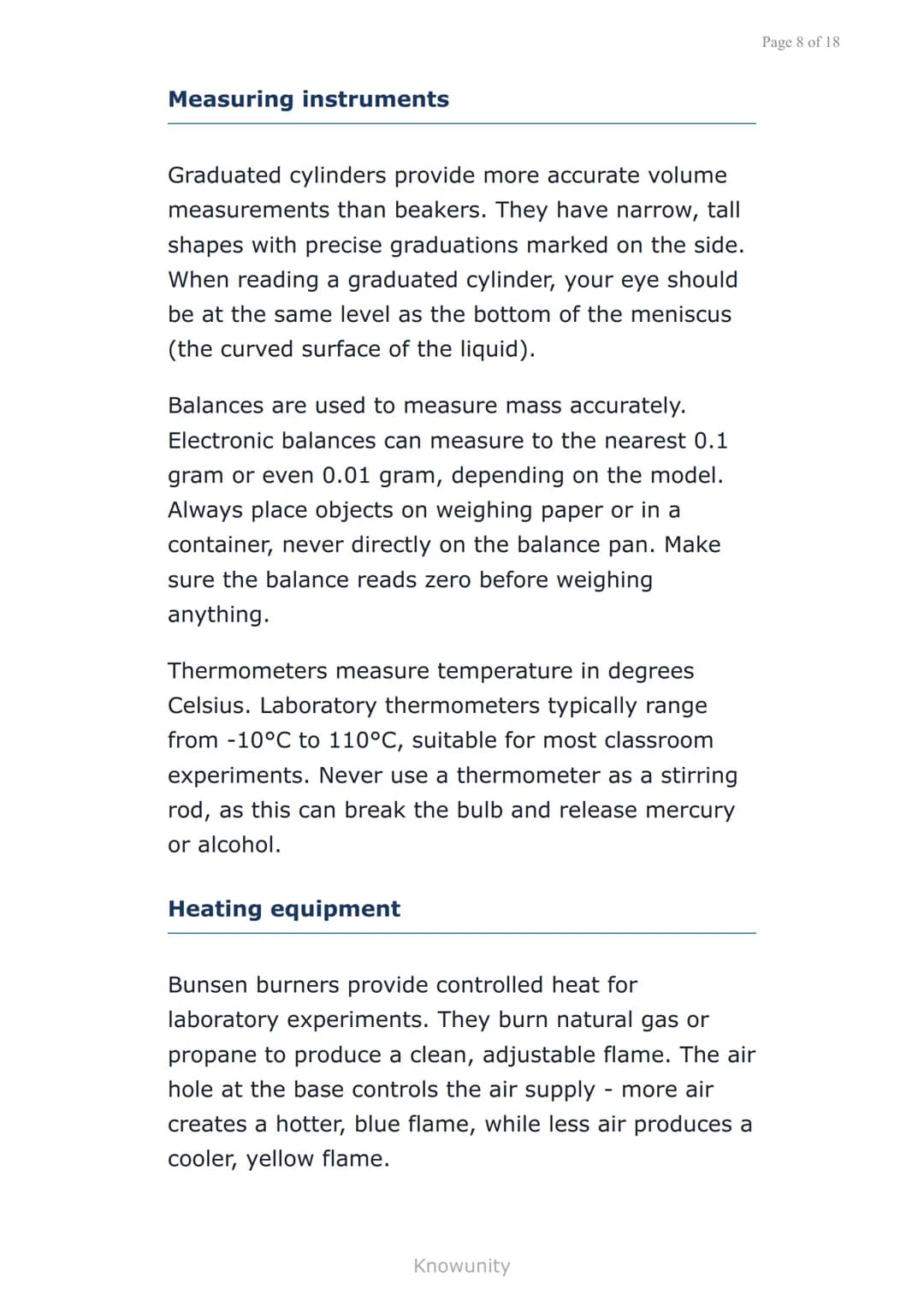
9
of 10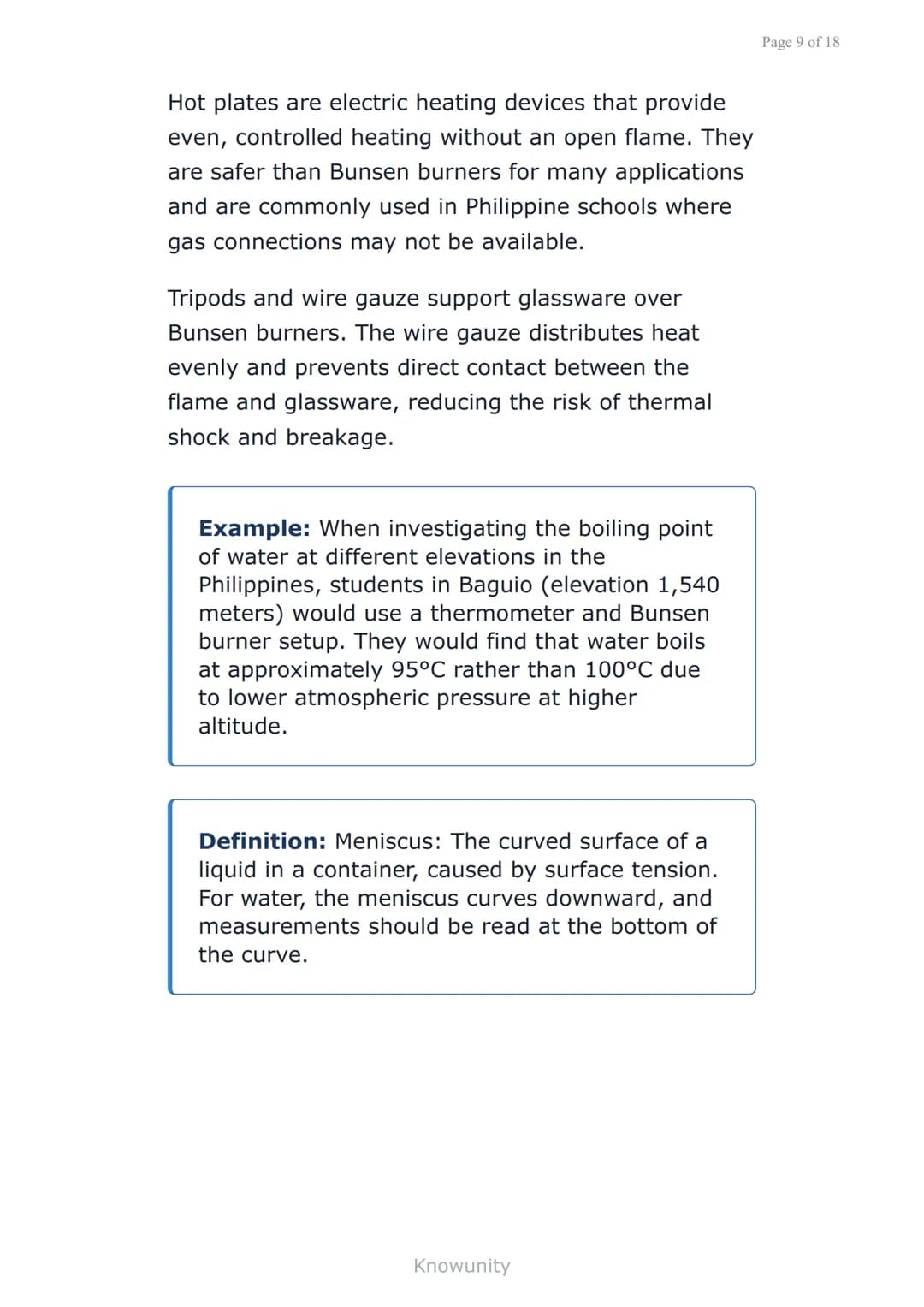
10
of 10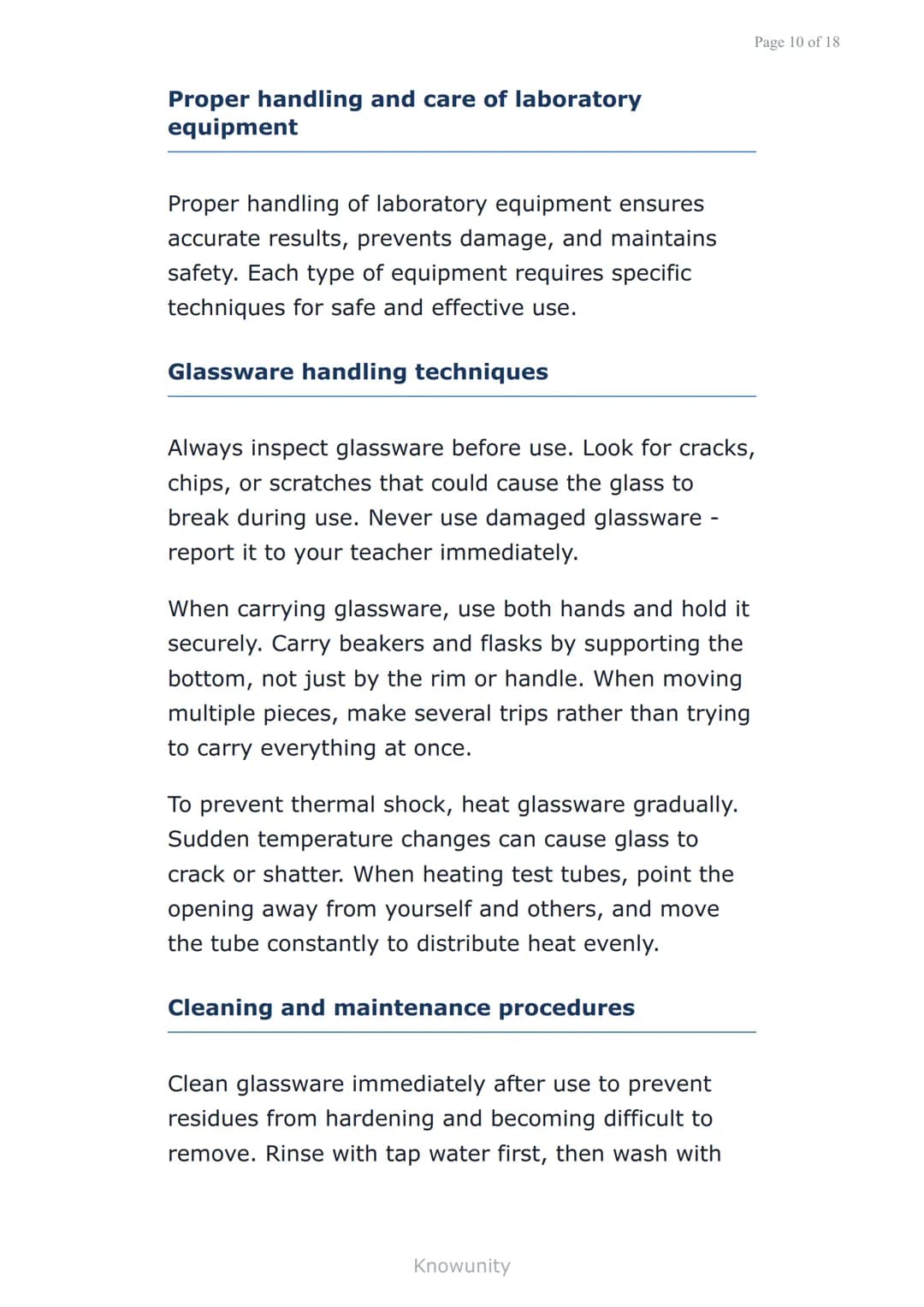
Myśleliśmy, że nigdy nie zapytasz...
Czym jest Towarzysz AI z Knowunity?
Nasz asystent AI jest specjalnie dostosowany do potrzeb uczniów. W oparciu o miliony treści, które mamy na platformie, możemy udzielać uczniom naprawdę znaczących i trafnych odpowiedzi. Ale nie chodzi tylko o odpowiedzi, towarzysz prowadzi również uczniów przez codzienne wyzwania związane z nauką, ze spersonalizowanymi planami nauki, quizami lub treściami na czacie i 100% personalizacją opartą na umiejętnościach i rozwoju uczniów.
Gdzie mogę pobrać aplikację Knowunity?
Aplikację możesz pobrać z Google Play i Apple Store.
Czy aplikacja Knowunity naprawdę jest darmowa?
Tak, masz całkowicie darmowy dostęp do wszystkich notatek w aplikacji, możesz w każdej chwili rozmawiać z Ekspertami lub ich obserwować. Możesz użyć punktów, aby odblokować pewne funkcje w aplikacji, które również możesz otrzymać za darmo. Dodatkowo oferujemy usługę Knowunity Premium, która pozwala na odblokowanie większej liczby funkcji.
Najpopularniejsze notatki: Emergency Medicine
3Najpopularniejsze notatki z Science
9Najpopularniejsze notatki
9Nie ma nic odpowiedniego? Sprawdź inne przedmioty.
Zobacz, co mówią o nas nasi użytkownicy. Pokochali nas — pokochasz też i Ty.
4.6/5App Store
4.7/5Google Play
Aplikacja jest bardzo prosta i dobrze przemyślana. Do tej pory znalazłem wszystko, czego szukałem i mogłem się wiele nauczyć z innych notatek! Na pewno wykorzystam aplikację do pomocy przy robieniu prac domowych! No i oczywiście bardzo pomaga też jako inspiracja do robienia swoich notatek.
Stefan Sużytkownik iOS
Ta aplikacja jest naprawdę świetna. Jest tak wiele notatek i pomocnych informacji [...]. Moim problematycznym przedmiotem jest język niemiecki, a w aplikacji jest w czym wybierać. Dzięki tej aplikacji poprawiłam swój niemiecki. Polecam ją każdemu.
Samantha Klichużytkownik Androida
Wow, jestem w szoku. Właśnie wypróbowałam aplikację, ponieważ widziałam ją kilka razy reklamowaną na TikToku jestem absolutnie w szoku. Ta aplikacja jest POMOCĄ, której potrzebujesz w szkole i przede wszystkim oferuje tak wiele rzeczy jak notatki czy streszczenia, które są BARDZO pomocne w moim przypadku.
Annaużytkownik iOS
Science184 wyświetleń·Zaktualizowano Jun 6, 2026·18 stronyGrade 7 Science Lab Safety and Equipment Guide
Welcome to the world of scientific exploration in the laboratory! This guide covers essential safety rules and proper equipment use that will keep you safe while conducting exciting experiments. Mastering these skills will help you become a confident young scientist... Pokaż więcej
1
of 10Zarejestruj się, aby zobaczyć notatkę. To nic nie kosztuje!
- Dostęp do wszystkich materiałów
- Popraw swoje oceny
- Dołącz do milionów studentów
Laboratory Safety and Equipment for Scientific Inquiry
The laboratory is where science comes alive through experiments! Working in a lab is exciting, but it also comes with responsibilities to keep yourself and others safe.
In your Grade 7 science labs, you'll learn how to identify and follow basic safety rules that prevent accidents. You'll become familiar with common laboratory equipment and develop proper techniques for handling chemicals and glassware.
You'll also learn what to do in emergency situations and how to use measuring instruments accurately. These skills aren't just for school—they're the same skills real scientists use every day!
Remember: Safety isn't boring—it's what allows you to do the coolest experiments without getting hurt!
2
of 10Zarejestruj się, aby zobaczyć notatkę. To nic nie kosztuje!
- Dostęp do wszystkich materiałów
- Popraw swoje oceny
- Dołącz do milionów studentów
Introduction to Laboratory Safety
Every time you step into a science lab, you're entering a special workspace designed for discovery. Here you'll conduct experiments, make observations, and collect data to answer scientific questions—but this exciting work requires careful attention to safety.
Laboratory safety isn't just a set of rules—it's the foundation of all good scientific work. When everyone follows safety protocols, we protect ourselves, our classmates, and our equipment. This allows us to focus on the exciting parts of science without unnecessary risks.
Laboratory accidents can cause serious injuries like chemical burns, cuts from broken glass, or eye damage. The good news is that these accidents are completely preventable when we follow proper safety measures consistently.
Important: Safety is not an accident—it happens when we plan carefully, get proper training, and practice good laboratory habits every time we do an experiment.
3
of 10Zarejestruj się, aby zobaczyć notatkę. To nic nie kosztuje!
- Dostęp do wszystkich materiałów
- Popraw swoje oceny
- Dołącz do milionów studentów
Essential Laboratory Safety Rules
The most important thing to remember about lab safety is that rules protect everyone. Following these fundamental safety guidelines ensures your experiments will be both safe and successful.
Personal protective equipment (PPE) creates a barrier between you and potential dangers. Always wear safety goggles to protect your eyes from chemical splashes, laboratory aprons to protect your clothes and skin, and closed-toe shoes to protect your feet. Remember that regular eyeglasses don't provide enough protection because they don't seal around your eyes.
Proper behavior in the lab prevents most accidents. Walk carefully (never run), keep your work area clean and organized, tie back long hair, and avoid loose clothing that could catch on equipment. Never eat, drink, or chew gum in the lab—even if you're careful, food and drinks can become contaminated with chemicals.
When working with chemicals, always read labels first. Never smell chemicals directly—instead, use the wafting technique by gently fanning vapors toward your nose with your hand. And remember the golden rule: always add acid to water, never water to acid!
Try this: Before each experiment, take 30 seconds to check your PPE and scan your workspace for potential hazards. This quick safety check can prevent most common accidents!
4
of 10Zarejestruj się, aby zobaczyć notatkę. To nic nie kosztuje!
- Dostęp do wszystkich materiałów
- Popraw swoje oceny
- Dołącz do milionów studentów
Common Laboratory Equipment and Their Uses
Knowing your lab equipment is like learning to use the tools in a workshop—each piece has a specific purpose and proper way to use it. Understanding these tools helps you conduct reliable experiments and keeps everything running smoothly.
Beakers are cylindrical containers with pouring spouts used for mixing and holding liquids. Test tubes are small glass tubes perfect for small-scale reactions like testing for starch. Flasks come in different shapes—Erlenmeyer flasks have narrow necks to prevent splashing, while Florence flasks are great for heating liquids.
For accurate measurements, you'll use graduated cylinders (much more precise than beakers) and balances to measure mass. When reading a graduated cylinder, always put your eye at the same level as the bottom of the meniscus (the curved surface of the liquid). Thermometers measure temperature in degrees Celsius—never use them as stirring rods!
Heating equipment includes Bunsen burners for controlled heat (the air hole adjusts flame temperature), hot plates for even heating without flames, and tripods with wire gauze to support glassware and distribute heat evenly.
Cool fact: When investigating water's boiling point at different elevations, you'd find that water boils at only about 95°C in mountain areas rather than the standard 100°C because of lower atmospheric pressure at higher altitudes.
5
of 10Zarejestruj się, aby zobaczyć notatkę. To nic nie kosztuje!
- Dostęp do wszystkich materiałów
- Popraw swoje oceny
- Dołącz do milionów studentów
Proper Handling and Care of Laboratory Equipment
Taking care of lab equipment is a bit like taking care of your phone or bicycle—proper handling keeps everything working well and prevents accidents. Good habits with equipment will help your experiments succeed.
Always check glassware before using it. Look for cracks or chips that could cause it to break during your experiment. Carry beakers and flasks by supporting the bottom with one hand and steadying the side with the other. Never rush—it's better to make multiple trips than to try carrying too much at once.
When heating glassware, do it gradually to prevent thermal shock (sudden temperature changes that can make glass crack). If you're heating a test tube, point the opening away from yourself and others, and gently move the tube in the flame to spread the heat evenly.
Clean your equipment right after using it—it's much easier than trying to remove dried residue later! Rinse with water first, then use soap and a brush for thorough cleaning. Dry glassware by letting it air dry in a rack or gently patting with a clean towel. Remember that properly maintained equipment gives more accurate results in your experiments.
Pro tip: When using a graduated cylinder, place it on a flat surface and read at eye level to avoid parallax error—a measurement mistake that happens when you read from an angle instead of straight-on.
6
of 10Zarejestruj się, aby zobaczyć notatkę. To nic nie kosztuje!
- Dostęp do wszystkich materiałów
- Popraw swoje oceny
- Dołącz do milionów studentów
Emergency Procedures and First Aid
Even when we're careful, accidents sometimes happen in the lab. Knowing how to respond quickly can prevent a small problem from becoming serious. Think of these procedures as your emergency toolkit.
If clothing catches fire, remember: stop, drop, and roll. Don't run (this makes flames worse)! For small fires in containers, turn off gas and electrical equipment if safe to do so. Always know where fire exits, extinguishers, fire blankets, and emergency shut-off valves are located in your lab.
For chemical spills on skin, immediately flush the affected area with plenty of water for at least 15 minutes. If chemicals splash in your eyes, use the eyewash station right away, holding your eyelids open while flushing with water. For chemical spills on the lab bench or floor, tell your teacher immediately.
For cuts from broken glassware, apply direct pressure with a clean cloth to control bleeding. For burns from hot equipment, cool the area with cold running water for 10-15 minutes (don't use ice). Never try to handle serious injuries yourself—always get help from your teacher.
Remember this: The best emergency response is prevention through careful attention to safety procedures. But when accidents happen, quick and appropriate action makes all the difference!
7
of 10Zarejestruj się, aby zobaczyć notatkę. To nic nie kosztuje!
- Dostęp do wszystkich materiałów
- Popraw swoje oceny
- Dołącz do milionów studentów
Laboratory Skills Assessment and Review
Becoming good at lab skills is like learning to ride a bike—it takes practice and regular check-ins to make sure you're doing things correctly. These skills will soon become automatic habits rather than rules you have to remember.
Before starting any experiment, run through a mental safety checklist: Are you wearing proper PPE? Is your work area clean and organized? Do you understand the potential hazards of your experiment? Do you know where safety equipment is located? Are all your materials and equipment in good condition?
Test your understanding with questions like: What should you wear when working with acids? How do you properly read a graduated cylinder? What should you do if you spill a chemical on your skin? Why do you never add water to concentrated acid? Where are emergency shut-off valves in your lab?
Practice your skills by correctly measuring liquids, using a balance properly, lighting a Bunsen burner safely, and demonstrating emergency procedures like using an eyewash station. Each experiment gives you a chance to improve your techniques and become more confident in the lab.
You've got this: Laboratory skills develop through practice. Each time you conduct an experiment safely and accurately, you're building valuable abilities that will help you throughout your science education!
8
of 10Zarejestruj się, aby zobaczyć notatkę. To nic nie kosztuje!
- Dostęp do wszystkich materiałów
- Popraw swoje oceny
- Dołącz do milionów studentów
9
of 10Zarejestruj się, aby zobaczyć notatkę. To nic nie kosztuje!
- Dostęp do wszystkich materiałów
- Popraw swoje oceny
- Dołącz do milionów studentów
10
of 10Zarejestruj się, aby zobaczyć notatkę. To nic nie kosztuje!
- Dostęp do wszystkich materiałów
- Popraw swoje oceny
- Dołącz do milionów studentów
Myśleliśmy, że nigdy nie zapytasz...
Czym jest Towarzysz AI z Knowunity?
Nasz asystent AI jest specjalnie dostosowany do potrzeb uczniów. W oparciu o miliony treści, które mamy na platformie, możemy udzielać uczniom naprawdę znaczących i trafnych odpowiedzi. Ale nie chodzi tylko o odpowiedzi, towarzysz prowadzi również uczniów przez codzienne wyzwania związane z nauką, ze spersonalizowanymi planami nauki, quizami lub treściami na czacie i 100% personalizacją opartą na umiejętnościach i rozwoju uczniów.
Gdzie mogę pobrać aplikację Knowunity?
Aplikację możesz pobrać z Google Play i Apple Store.
Czy aplikacja Knowunity naprawdę jest darmowa?
Tak, masz całkowicie darmowy dostęp do wszystkich notatek w aplikacji, możesz w każdej chwili rozmawiać z Ekspertami lub ich obserwować. Możesz użyć punktów, aby odblokować pewne funkcje w aplikacji, które również możesz otrzymać za darmo. Dodatkowo oferujemy usługę Knowunity Premium, która pozwala na odblokowanie większej liczby funkcji.
Najpopularniejsze notatki: Emergency Medicine
3Najpopularniejsze notatki z Science
9Najpopularniejsze notatki
9Nie ma nic odpowiedniego? Sprawdź inne przedmioty.
Zobacz, co mówią o nas nasi użytkownicy. Pokochali nas — pokochasz też i Ty.
4.6/5App Store
4.7/5Google Play
Aplikacja jest bardzo prosta i dobrze przemyślana. Do tej pory znalazłem wszystko, czego szukałem i mogłem się wiele nauczyć z innych notatek! Na pewno wykorzystam aplikację do pomocy przy robieniu prac domowych! No i oczywiście bardzo pomaga też jako inspiracja do robienia swoich notatek.
Stefan Sużytkownik iOS
Ta aplikacja jest naprawdę świetna. Jest tak wiele notatek i pomocnych informacji [...]. Moim problematycznym przedmiotem jest język niemiecki, a w aplikacji jest w czym wybierać. Dzięki tej aplikacji poprawiłam swój niemiecki. Polecam ją każdemu.
Samantha Klichużytkownik Androida
Wow, jestem w szoku. Właśnie wypróbowałam aplikację, ponieważ widziałam ją kilka razy reklamowaną na TikToku jestem absolutnie w szoku. Ta aplikacja jest POMOCĄ, której potrzebujesz w szkole i przede wszystkim oferuje tak wiele rzeczy jak notatki czy streszczenia, które są BARDZO pomocne w moim przypadku.
Annaużytkownik iOS